Showing posts with label woman. Show all posts

29 June 2016

Dove empowers women to challenge traditional limits around beauty and achievement

Real women are refusing to allow other people’s judgments of their beauty to hold them back from achieving their full potential. Their empowering stories are featured in a new film from Dove - #MyBeautyMySay, created to inspire all women to rise above any of the traditional stereotypes and limits society may place on them.

The landscape that informs this film was revealed in a new study from Dove - Dove: The Global Beauty Confidence Report. It paints a picture of a world where women want to be free to look any way that makes them feel confident, but are aware of the many limits put upon them by other people’s judgments about their appearance. Seven in 10 women believe they get more compliments about how they look than on their professional achievements at work, for instance.

Dove points out that commentary and judgment focused on how women look can limit women and place pressure on them to conform to a narrow standard of beauty, and said that seven out of 10 women want to live in a world where women and girls are judged by what they do and say, not on their looks alone.

“Somewhere along the way, it has become the norm to judge women based on their appearance. Dove created #MyBeautyMySay because we believe a woman’s beauty should not be used to belittle her achievements – instead, her beauty should be celebrated on her terms,” said Jennifer Bremner, Director of Marketing, Dove. “We want women to challenge this behavior that has unfortunately become commonplace in our society. We are giving all women a platform to speak out and join us to change the conversation.”

Eight in 10 women believe every woman has something about her that is beautiful, yet many continue to feel limited by society’s judgments of their looks. In fact, one in two women with low body confidence admit they don’t feel self-assured enough to be assertive in their own life. The women featured in the #MyBeautyMySay film tell a different story. Dove selected all of the women featured in the #MyBeautyMySay film because they live the message that by embracing your own beauty, you can free yourself from the limits others place on you:

Heather Hardy, 34 – Since taking up kick-boxing as a hobby to get in shape, Hardy has been told she is too “pretty to fight.” She is now a star in the ring, fighting professionally and working to raise the profile of oft-neglected female boxers.

Jessica Torres, 25 – Even from a young age, Jessica was constantly told she could not wear stylish clothing because of her size. She rejected this criticism when she started her fashion blog, Tiny Red Shoes, as a way of telling the world she isn’t embarrassed, but proud, of the way she looks.

Rain Dove, 26 – Rain faced unfair ridicule for years as others claimed her looks were too masculine. Now she earns her living from the androgynous appearance she has made her own, working as a gender-free model in New York, US.

“As a child I was called ‘ugly’ and ‘plain’ because of my appearance, but the way I look has allowed me to set myself apart and lead a flourishing career as a gender-free model,” said Rain Dove. “I am lucky that I have been given a chance to speak out about the limits that have been placed upon me. By working with Dove, I hope to inspire others to relinquish the standards and rules society attempts to place on women.”

Interested?

View the #MyBeautyMySay film. Dove is inviting women to share their own stories of overcoming beauty limits with #MyBeautyMySay

Dove also believes in the importance of starting the conversation early in life around beauty confidence. To date, the Dove Self-Esteem Project has reached the lives of over 19 million girls with self-esteem building tools. Download the tools for the Dove Self-Esteem Project

Hashtags: #RealBeauty, #MyBeautyMySay

UOB profiles the modern Singapore woman and tailors card privileges accordingly

United Overseas Bank has released Singapore’s first profiles for the contemporary Singapore woman based on their behaviour and spending patterns. The UOB Leading Ladies report* classes the women as digital natives, young professionals and cosmopolitan leaders.

Jacquelyn Tan, Managing Director and Regional Head of Cards and Payments, UOB, said that the report elaborates on the enterprising nature and consumption patterns of Singapore women today. “The average Singapore woman is highly educated and juggles work and family at the same time. From the baby-boomer senior executive in a multinational corporation to the Generation Z Internet entrepreneur, women in Singapore contribute more than 40% to Singapore’s GDP. Their energy and passion help feed their ambition. As the saying goes, ‘Women hold up half the sky’ and for Singapore women, I would add that the sky’s the limit," she said.

“UOB was the first bank to recognise the increasing earning power of women and issued Singapore ’s first card for women only – The UOB Lady’s Card - in 1989. Women are now spending 17% faster than men do on UOB cards**. By 2020, we believe that the amount women spend will contribute close to half of the bank’s total credit card billings.”

The bank believes in understanding what women want and helping them meet their priorities through life’s many stages, from their tertiary years, as they build their careers and through to retirement. Recent data shows that women in Singapore*** are generally spending more on their credit cards as their incomes increase and priorities change through different life stages. There has been a clear upward trend in credit card spend over the last couple of years by women aged 20 to 49 years old, with the biggest increase seen in younger age groups (20 to 29 years old and 30 to 39 years old) . Women in the 40 to 49 year old bracket charge the most to their credit cards.

The Bank has identified three archetypes for today’s Singapore woman:

Rachel, the digital native, is 18 to 25 years old. She spends S$400**** a month. Shopping, beauty and eating make up 55% of her total monthly spend Born in the age of the Internet, Rachel is technologically-savvy and typically an early adopter of new digital platforms and solutions, such as paying with her smartphone. Social media is integral for her to stay connected with friends and is a medium for self-expression.

Rachel is probably pursuing a tertiary education or is a fresh graduate who has just entered the workforce. As a consumer, she is as comfortable in brick-and-mortar stores as she is online, shopping at least twice a month at e-retailers. Rachel values off-the-beaten track travel and dining experiences. When travelling, she seeks to live as the locals do. She prefers short-term rental stays such as Airbnb to hotels.

Michelle, the young professional, 26 to 35 years old, spends S$1,000**** a month where shopping, beauty and dining make up 52% of her total monthly spend. Michelle is well-educated and career-focused. Having worked for a few years, she is likely to be financially independent and interested in long-term investments to build her retirement nest egg.

Michelle is often strapped for personal time and values spending her weekends with family and friends. When travelling, she is likely to indulge in the finer things in life, such as dining experiences and luxe fashion brands.

Christina, the cosmopolitan leader, is above 36 years old. She spends S$2,000**** per month of which shopping, medical services, beauty and fitness make up 64% of her total monthly spend. Established in her profession, Christina is a citizen of the world. Travelling often for work, she can find herself in two different cities in a week. As such, maintaining her health and fitness is of the utmost importance. When travelling for leisure, she prefers customised holiday experiences over typical agency tours. Financially-savvy and independent , Christina also maintains an investment portfolio.

To cater to the contemporary women of Singapore, UOB has enhanced and redesigned its suite of Lady’s Cards. The refreshed card face, by acclaimed designer Vivienne Tam, is the latest generation of UOB Lady’s cards and Singapore’s first and only designer credit card. It features a new, modern rose motif.

The card suite enhancement also includes a new UOB Lady’s debit card for digital natives. To complement their high energy and love of life, the range of benefits includes one-for-one dining offers.

For young professionals, the UOB Lady’s Card benefits are a step up from the UOB Lady’s debit card. Understanding that this segment has more financial responsibilities , the UOB Lady’s Card features the LuxePay Plan, a six or 12-month installment payment plan for luxury goods that does not charge interest or processing fees so that women can manage their expenses more easily, with a fixed monthly amount to pay for big-ticket purchases. Additional lifestyle benefits include free tickets to the Singapore Repertory Theatre and complimentary weekend parking at selected Orchard Road malls such as Paragon and 313@somerset.

For cosmopolitan leaders, UOB unlocks a world of travel privileges to suit their frequent-flyer lifestyles with the UOB Lady’s Solitaire card. Cardmembers can enjoy exclusive access to MasterCard’s World Concierge and Priceless travel experiences, Pan Pacific Hotels and Resorts DISCOVERY BLACK Membership and JetQuay’s Quayside services. For its top women spenders, UOB is also offering Asia’s first rose-gold metal cards to 1,000 UOB Lady’s Cardmembers who spend at least S$45,000 over three consecutive months. In addition to all existing Solitaire benefits, it also offers complimentary limousine airport transfers, airport lounge access and e-commerce protection. The metal card is moulded from Duralumin, a lightweight metal material used to build aircraft, and comes with a brushed rose-gold finish.

As e-commerce is a category where women are spending more, the bank is making it more convenient for them to shop online. All new UOB Lady’s cardmembers will enjoy instant signup for the UOB MasterP ass digital wallet, which makes online payment much easier.

Deborah Heng, Group Head and GM, MasterCard Singapore said, “Women in Singapore are becoming more affluent, with good education, better access to jobs and successful development in their careers. According to the MasterCard Index of Women’s Advancement 2016, women leadership in Singapore ranked the highest amongst Asia’s developed markets and Singapore has shown the most marked advancement in women’s leadership since 2010, in the Southeast Asia region. In recognition of the many roles that women play as drivers of economic growth, it is timely to offer an elevated card platform for women, extending the benefits that the UOB Lady’s Card programme provides.”

“We are excited to partner with UOB on the launch of the first MasterCard World Elite metal card in Singapore. The MasterCard World Elite programme, developed for the discerning cardholder, provides access to luxurious, preferential and personalised experiences, such as a personal travel advisor and private cruise and jet programmes. Cardholders will also enjoy the added convenience of a dedicated concierge service that offers 24x7 seamless support for whatever they may need, from locating a hidden celebrity hangout to arranging a private family tour of a world-famous toy store.”

*The UOB Leading Ladies report presents insights gleaned from UOB card data, proprietary research and industry data.

**Year-on-year comparison, 2014 compared with 2015. 

***RFi Group - Singapore Priority & Retail Banking Council. 

****Source: UOB card data .

28 March 2016

Acquiring digital skills could close the gender gap as much as 40 years more quickly: Accenture

Source: Accenture. Digital skills could close the gender gap 25 years faster in developed countries, and 40 years faster in developing countries.
Source: Accenture. Closing the gender gap at work.

Digital skills and technologies are helping women in Singapore find, and advance at, work, but men remain the dominant wage earners, Accenture research* shows. Women’s success in becoming digitally fluent – the extent to which they embrace and use digital technologies to become more knowledgeable, connected and effective – moved Singapore to 5th place among 31 countries participating in Accenture’s research.

Getting to Equal: How Digital is Helping Close the Gender Gap at Work provides empirical proof that women are using digital skills to gain an edge in preparing for work, finding work and advancing at work. While women still lag behind men in digital fluency in all but a handful of countries, improving their digital skills can change the picture.

If governments and businesses can double the pace at which women become digitally fluent, gender equality could be achieved in 25 years in developed nations, versus 50 years at the current pace. Gender equality in the workplace could be achieved in 45 years in developing nations, versus 85 years at the current pace.

“Women represent an untapped talent pool that can help fill the gap between the skills needed to stay competitive and the talent available,” said Pierre Nanterme, Accenture’s Chairman and CEO. "There is a clear opportunity for governments and businesses to collaborate on efforts that will empower more women with digital skills – and accelerate gender equality in the workforce.”

Although digital fluency helps women advance in their careers, its impact has not closed the gender gap among executives – or extended to pay equality. In Singapore, men are still, by far, the dominant earners by household for all three generations. This will change as more millennial women and digital natives move into management. The research found that, in Singapore, seven in 10 millennial and Gen X women surveyed aspire to be in leadership positions.

Men use digital to prepare for and find work more frequently than women (100% and 90% respectively). Yet, the research found that, when women and men have the same level of digital proficiency, women are better at leveraging it to find work. Nearly six in 10 (58%) of all survey respondents in Singapore – men and women combined—agreed that digital enables them to work from home; 42% said it provides a better balance between personal and professional lives; and 48% report digital has increased access to job opportunities.

Women’s digital fluency is toward the lower ends of the scores in the research model and the gap between men and women is the second largest. The model helps measure how digitally fluent women are compared to men, as well as how much that fluency is helping to drive positive changes in their education, employment and advancement at work.

The scores for education are relatively low for women and Singapore is one of the countries where men outperform women, according to the model. But almost three quarters (74%) of millennial and Gen X women report having earned a university degree, compared to only 11% of their mothers. Despite the low scores for digital fluency and education, women here do reasonably well for employment and advancement at work. Singapore’s advancement score is the fifth highest in the model.

“Although Singapore has performed better than the global average in terms of overall gender diversity, the research also found that Singapore has one of the biggest digital gaps between men and women, in which digital fluency will undoubtedly play a bigger role in helping to close the gender gap,” said Teo Lay Lim, Accenture Senior Managing Director, ASEAN, and Country Managing Director, Singapore. “At Accenture in ASEAN, women currently make up 49.4% of our workforce, and we are committed to grooming the next generation of women leaders. This means meaningful investments in building women’s digital skills – through education, training and on-the-job learning – which will help speed their progress at every career stage.”

This is the first time that Accenture has published its ASEAN gender workforce demographics and statistics. Moving forward, Accenture intends to report annually on its progress across diversity and inclusion globally.

“By taking a bold step towards increased transparency around our gender diversity statistics, Accenture is strengthening our commitment to levelling the playing field for women in the workplace. With access to an increased talent pool in the region, this will allow us to better serve the needs of our clients, people and communities. Encouraging young women and girls to develop science, technology, engineering and math (STEM) skills is critical to both our business and the region’s continuous development, and I believe that women have a lot to contribute in this area,” Teo added.

*To identify and better understand the role of digital fluency in workforce gender equality, the Accenture Digital Fluency Model was developed. A survey was conducted in December 2015 and January 2016 of more than 4,900 women and men in 31 countries to assess the extent to which people are using digital technologies in their personal and home life, as well as in their education and work. The sample included equal representation of working men and women, representing three generations (Millennials, Gen X and Baby Boomers) across all workforce levels at companies of varying size. The margin of error for the total sample was approximately +/- 1.4%. Digital technologies include virtual coursework, digital collaboration tools (webcams, instant messaging), social media platforms and use of digital devices, such as smart phones. Survey responses were combined with published reports and publicly available information on education, employment and leadership and research from the World Bank, the OECD, World Economic Forum and the ITU World Telecommunication. Countries included in the model are: Argentina, Australia, Austria, Brazil, Canada, France, Germany, Greater China (includes Hong Kong and Taiwan), India, Indonesia, Ireland, Italy, Japan, Mexico, Netherlands, the Nordics (Denmark, Finland, Norway, Sweden), Philippines, Saudi Arabia, Singapore, South Africa, South Korea, Spain, Switzerland, UAE, the UK and the US.

13 May 2015

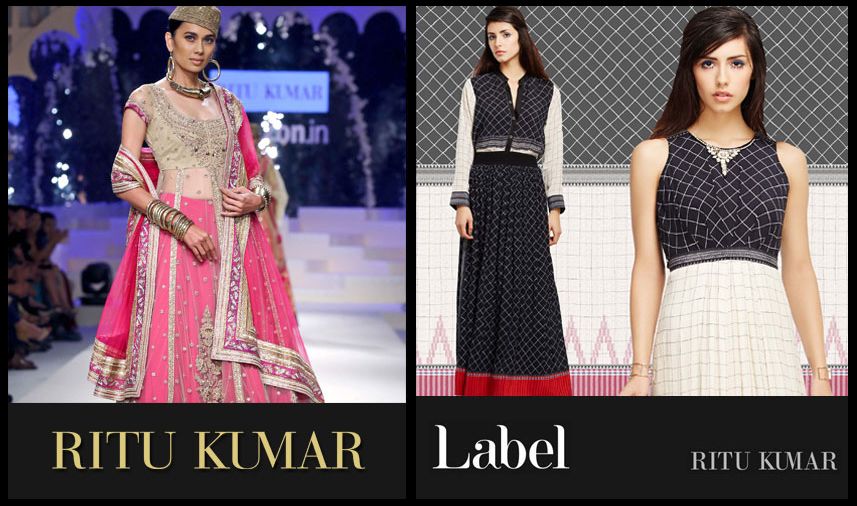
Get up close and personal with Ritu Kumar's summer 2015 collection

Source: Ritu Kumar website.

Indian luxury fashion brand Ritu Kumar has launched its Summer 2015 Collection, now available at the brand's flagship store in BurJuman Shopping Centre in Dubai. The collection includes both the Ritu Kumar as well as the Label Ritu Kumar lines.

Catering to the contemporary women of today, the Ritu Kumar Summer 2015 collection comprises of varied styles for day wear and evening, ranging from kurtis to skirts and suits. The fabrics used include jersey, crepe, cotton georgette, cotton voile.The blend of signature Ritu Kumar prints with subtle detailing provide comfortable yet chic designs with a contemporary edge. 

The Label Ritu Kumar Summer 2015 collection offers daywear to evening options for the contemporary woman. Button downs, maxis, shifts, long skirts, jumpsuits and chic tops form the core of the collection. Available in tomato reds, indigo blues, pastels and bright prints, the collection is crafted using seasonal fabrics such as jersey, crepe, chiffon, lace and georgette. The Label spring-summer (SS) '15 collection has a lot of vintage prints like paisleys and bold florals.

Interested?

Visit the Ritu Kumar store at Level 1 - 137B in BurJuman Shopping Centre. 

12 December 2014

JWT identifies 100 trends for 2015

Source: JWT website.

JWT, the well-known marketing communications brand, has  released The Future 100, featuring original analysis and insights on 100 key trends and cultural shifts to watch in the year ahead.

“It’s never been more important for brands to understand change, where it’s headed and what it means,” says Lucie Greene, Worldwide Director of JWTIntelligence. “The fast-paced digital world, instantly accessible information, globalisation and social media have accelerated the pace of trends exponentially. Meanwhile, the speed of innovation is requiring brands to take both a short-term and a long-term view, planning strategies not just for the next year but the next 20.”

The Future 100 connects the dots between the “what” and the “why,” spanning categories including culture, beauty, brands, food and drink, innovation, lifestyle, luxury, retail, sustainability and technology.

In culture, the report spotlights the rise of the Mipsters (Muslim + hipster) and the growing number of teetotal millennials. It also looks at experiential public spaces—the transformation of public spaces via creative immersive projects—and experiences going dark, the advent of unsettling experiences as entertainment.

Beauty trends include South Korean beauty: a look at how the axis of influence is changing in the beauty world as the global appetite for South Korean products grows. In brands, the report covers the rise of 1-for-1, or 'third way commerce': While charity and profitability have been viewed as mutually exclusive, a third way of business combines social good with sales and marketing, a popular approach with ethically minded Millennials.

The food and drink section includes cold-pressed everything as consumers increasingly fetishise cold-pressed and unprocessed foods; guilt-free to-go (healthy, ethical fast food will gain momentum as a raft of virtuous brands appropriate junk style for the Millennial generation) and haute vegan (a new wave of hip restaurant concepts departs from the hippie vibe associated with meat-free dining).

In innovation, the report notes the rise of the tactile Internet as innovators play with haptic technology, wrapping in digital connectivity with physical action, among other trends. And in lifestyle, the report examines the rise of new centres of influence as the crash in helicopter parenting.

The Future 100 also looks to the worlds of luxury and retail, where the sharing economy is increasingly aligning with business and luxury; Amazon is launching its first store, and retail experiences are channeling BuzzFeed surveys.

Find the full report on the “2015 and beyond” section of JWTIntelligence.com and on SlideShare.