30 October 2017

Haenyeo Singapore tells the story of Jeju's female divers with visual impact

Source: Epson. HAENYO SINGAPORE will be on show in Singaopre till 23 November.
Source: Epson Singapore. HAENYO SINGAPORE will be on show in Singaopre
till 23 November.
Singapore-based French professional photographer Jose Jeuland is showcasing his first-ever photography exhibition on haenyo (해녀), female divers from Jeju Island, South Korea at The Fullerton Hotel, Singapore. Epson Singapore, the official print sponsor, is supporting the exhibition with prints produced by one of its commercial and industrial photographic production printers.

HAENYEO SINGAPORE is a collection of portraits of haenyo printed using the Epson SureColor 64" SC-P20070 with UltraChrome PRO Pigment Ink, on Epson’s Signature Worthy Hot Press Bright paper, which is designed for fine art use.

Tan May Lin, GM, Sales, Marketing and Customer Service Division, Epson Singapore said, “Epson Singapore is proud to be the official print sponsor for Jose’s first ever photography exhibition in Singapore. Jose has captured wonderfully compelling stories that bring the raw emotions of the haenyo sea women to life. With Epson’s photo graphic production printers, we’re excited that our unique combination of Epson’s printhead technology and UltraChrome PRO archival ink technology can help deliver the very best representation of his artworks in final print format.”

As the official print sponsor for HAENYEO SINGAPORE, Epson's professional printing technology aims to enable visitors to experience haenyo portraits and their story of hardship in a visually stunning way.

Jeuland said, "I am thankful for Epson's support as I launch my first-ever photography exhibition here in Singapore. Epson's unique printing technology accentuates the key features of the haenyeo as seen from the photographs at the exhibition. This in turn portrays the raw emotions of these women of great fortitude. With Epson's support, I am happy to share the inspiring story of the Haenyeo women-divers from Jeju, Korea."

Details:

HAENYEO SINGAPORE
Till 23 November 2017
East Garden Foyer, The Fullerton Hotel Singapore
Admission is free 

Malaysia's 2018 Budget addresses all economic sectors

The Malaysia government has shared new goals going forward while forecasting annual growth between 5.2% and 5.7% in 2017, higher than the March estimates ranging between 4.3% and 4.8% in its 2018 Budget.

Delivered by YAB Dato' Sri Mohd Najib Tun Haji Abdul Razak, PM and Minister of Finance of Malaysia, Budget 2018 is themed Prospering An Inclusive Economy, Balancing Between Worldly And Hereafter, For The Wellbeing Of Rakyat, Towards TN50 Aspiration. Transformasi Nasional 2050 or TN50 is Malaysia's national transformation strategy between 2020 and 2050 to become one of the top 20 countries in the world, introduced in the Budget last year, and the rakyat refers to the ordinary people of Malaysia.

PM Najib shared that Malaysia aims to:

- Become a high-income advanced economy in 2020;

- Record RM2 trillion of economy and trade value by 2025;

- Benefit from its fourth industrial revolution initiative IR 4.0 by 2030;

- Have a more competitive workforce with nearly zero defects by 2040; and

- Rank among the top 20 advanced countries in the world

The government will continue to focus on infrastructure and socioeconomic development, especially for industries related to petroleum, logistics, aerospace, rail, robotics and automation, and export-oriented industries.

The 2018 Budget, which will be active over an election year, has something for everyone. Some of the projects announced include:

- Development in five economic corridors. RM1 billion has been allocated for developing the South Perak Region comprising Proton City, Educity and Youth City in Tanjung Malim as well as the Bukit Kayu Hitam Duty-Free Zone; construction of a port and industrial park in Tok Bali, Kelantan; and an access road to Baleh Dam, Sarawak. Last year the allocation was RM2.1 billion.

- To attract foreign investment, the Principal Hub tax incentive will be extended to 31 December 2020. The Government will allocate RM200 million to the fund under Malaysian Investment Development Authority (MIDA).

- RM170 million is set aside to upgrade ICT equipment for public safety purposes. This includes  upgrading the Royal Malaysia Police's (PDRM's) 1PDRMnet system. Another RM100 million will be used to upgrade its communication systems. 

Small and medium sized enterprises (SMEs)

For SMEs PM Najib noted that new measures will be taken towards the target of SMEs contributing 41% of GDP by 2020:

- RM7 billion is allocated under the Skim Jaminan Pembiayaan Perniagaan (SJPP), of which, RM5 billion is to go working capital and RM2 billion with 70% guaranteed by the Government for services sector, including IR 4.0;

- RM1 billion provided as loans to companies with 70% guaranteed by the government. These loans are provided under SJPP to enable SMEs to automate production processes and reduce employment of foreign workers;

- An additional RM1 billion is provided to the SME Financing Scheme, increasing the fund size to RM2.5 billion. A subsidy of 2% will be provided on profit earned to ease the costs of financing;

- A sum of RM200 million is allocated to SMEs for training programmes, grants, and soft loans under SME Corp; and

- About RM82 million is allocated for the development of halal industries and products under various agencies.

Boosting exports

The country's exports will be further accelerated by focusing on high-impact export sectors:

- RM150 million for Matrade, MIDA and SME Corp to implement promotional programmes and expand export markets;

- RM1 billion to come from Exim Bank for insurance coverage credit facilities and RM200 million for credit financing facilities to SME exporters; and

- RM100 million is provided as loan with 70% guaranteed by the government to automate production of local furniture for export.

Improving infrastructure

Infrastructure took up a significant portion of the budget. Projects include:

- Construction for the East Coast Rail Link (ECRL) Project which connects Port Klang to Pengkalan Kubor, Kelantan, cutting the journey to under four hours, will begin in January 2018. RM110 million has been allocated to provide an alternative road to Port Klang;

- A second subway line, MRT2 from Sungai Buloh – Serdang – Putrajaya Project, spanning 52 km and comprising 37 stations, with an estimated construction cost of RM32 billion. The government will also expedite the construction of MRT3 or the Circle Line to be completed by 2025, instead of 2027. Furthermore, the construction of a third light rail project, LRT3, will connect Bandar Utama to Johan Setia, Klang, by February 2021.

- The High Speed Rail Project connecting Kuala Lumpur and Singapore, covering 350 km in 90 minutes, is expected to go live by 2026;

- The West Coast Highway from Banting, Selangor to Taiping, Perak is under construction at an estimated cost of RM5 billion.

- RM230 million is allocated in 2018 to continue the construction work on the Central Spine Road, including sections in Kelantan and Pahang;

- Pulau Pangkor in Perak to be a Duty-Free Island. The duty-free status excludes products such as alcoholic beverages, tobacco and motor vehicles; and

- A Special Border Economic Zone to be created in Bukit Kayu Hitam in Kedah, at the Malaysia-Thailand border. "This development includes Free Industrial Zone (FIZ) which will be a new attraction for both domestic and foreign investors," PM Najib said.

- Further, RM3 billion has been allocated to the Transportation Development Fund to procure vessels as well as develop aerospace technology industry and rail. RM1 billion is also allocated to the Public Transportation Fund for working capital and procurement of assets such as buses and taxis;

- RM95 million is allocated to upgrade and construct jetties as well as dredge river estuaries;

- In response to a number of recent express bus accidents, RM45 million is to be used to develop a biometric control system to monitor the bus drivers; and

- RM55 million to subsidise train services in rural areas, from Tumpat, Kelantan to Gua Musang, also in Kelantan - a distance of about 197km.

Infrastructure in Sabah and Sarawak

- RM2 billion has been allocated for the Pan Borneo Highway. "For Sarawak, all the 11 construction packages have been tendered, while five out of 35 packages in the first phase in Sabah have been awarded and the remaining 12 is under tender process," PM Najib said;

- RM1 billion is allocated through Malaysia Communications and Multimedia Commission (MCMC) to develop communication infrastructures and broadband facilities in Sabah and Sarawak;

- RM934 million is allocated for the construction of rural roads, including almost RM500 million for Sabah and Sarawak.

 
Other infrastructure projects include:

- Upgrading Pulau Pinang International Airport and Langkawi International Airport;

- Building a new airport in Mukah in Sarawak as well as expanding the airports in Kota Bharu, Kelantan and Sandakan, Sabah;

- Studying the feasibility of a new airport in Pulau Tioman; and

- Exploring the construction of a bridge connecting Labuan with the mainland in Sabah,

Sustainable development


To maintain the environment, the government will:

- Provide RM5 billion under the Green Technology Financing Scheme to promote investment in green technology industry;

- Implement a Non-Revenue Water Programme worth RM1.4 billion to reduce the average loss of water;

- Construct off-river storage at a cost of RM1.3 billion as alternative water resources; and

- Provide RM517 million for flood mitigation programmes.

Micro financing

- Tabung Ekonomi Kumpulan Usaha Niaga (TEKUN) Nasional, a strategic entrepreneur development partner for businesses, receives half a billion ringgit to support micro entrepreneurs.

- In recognition that most of Amanah Ikhtiar Malaysia's (AIM) borrowers are women and good paymasters, RM200 million has been added to the fund. This brings the fund to RM2.7 billion, benefitting nearly 400,000 borrowers.

- RM80 million is allocated under the Rural Economic Financing Scheme (SPED) through Bank Rakyat, and SME Bank to provide financing facilities to rural bumiputera entrepreneurs.

When it comes to capital market measures, the Digital Investment Management Framework, introduced by the Securities Commission of Malaysia in May 2017, sets out licensing and conduct requirements for offering automated discretionary portfolio management services to investors (robo-advisor services). Requirements include:

  • Technology capabilities in place including identification of a competent person within the company who has sufficient understanding of the risks and rules of the algorithm applied;
  • A risk management framework that is sufficiently robust to manage risks associated with the offering of automated discretionary portfolio management services including cyber security resilience;
  • The outcomes produced by the algorithm are consistent with the digital investment manager’s strategy; and
  • Written policies are in place to monitor and regularly test the algorithm employed.
Islamic finance

Sustainable and responsible investment (SRI) is to be supported through:

- Income tax exemption for recipients of the special Green SRI Sukuk grant totalling RM6 million; and

- Income tax exemption on income from management fees to be expanded to approved conventional SRI fund managers from the years of assessment 2018 to 2020.

- The government will also promote a cashless society and economy through effective employment of foreign workers. The migration from signature-based payment cards to more secure PIN-based payments was enforced from 1 July 2017. Beginning 2018, Bank Negara Malaysia will monitor salary payment through local bank accounts for foreign workers, excluding domestic helpers.

Making TN50 a reality

- Local authorities will be required to ensure that childcare facilities are provided in all new office buildings, starting with Kuala Lumpur.

- Additional tax deductions will be extended to cover employers hiring workers affected by accidents or critical illnesses who have been certified by the Social Security Organisation's (SOCSO) Medical Board that they are still fit to work.

Women recognised in 2018

2018 is the Women Empowerment Year in Malaysia. The government has listed several initiatives for women, including:

- Require at least 30% participation of women as board of directors in government-linked companies (GLCs) and government-linked investment companies (GLICs) as well as statutory bodies by end-2018. GLICs include Minister of Finance, Permodalan Nasional, Khazanah Nasional, Kumpulan Wang Persaraan (KWAP), the Employees Provident Fund (EPF), Lembaga Tabung Haji and Lembaga Tabung Angkatan Tentera;

- Propose maternity leave for the private sector to be increased from 60 days to 90 days as implemented by the public sector;

- RM20 million is allocated to conduct training and entrepreneurship programmes, which including the PEAK Entrepreneur Programme under MyWin Academy for women; and

- Encourage women to return to the workforce. The government proposes that personal tax exemption be given to women who earn up to 12 months of consecutive salary if they have been on a career break for at least two years. The incentive is available for women who return to the workforce between the years of assessment 2018 to 2020.

- In the public sector, the government is to allow working women in their fifth month of pregnancy onwards to leave work an hour earlier, from 1 January 2018. To accompany them, husbands are also allowed to go home an hour earlier on condition that the couple are working within the same location;

- Increase total maternity leave from 300 to 360 days throughout service, subject to a maximum of 90 days a year, beginning 1 January 2018.

Skills acquisition for a future world

RM250 million is allocated for educational projects, including:

- A new science, technology, engineering and mathematics (STEM) centre to develop the latest learning methods to train STEM specialist teachers. The centre will leverage existing facilities at teachers training institutes in collaboration with the Academy of Science Malaysia;

- Enhanced computer science modules including a coding programme in primary and secondary school curriculums, which currently exist in form one to three, the lower secondary classes, where students are typically aged 13 to 15;

- Allocate a sum of RM190 million to upgrade 2,000 classes into 21st Century Smart Classrooms to enhance creative-based learning and innovative thinking;

Recognising the importance of technical and vocational education training (TVET) in raising the quality of the workforce, the government has merged TVET institutions under seven ministries into TVET Malaysia, under the purview of the Ministry of Human Resources. RM4.9 billion has been allocated to implement the TVET Malaysia Masterplan.

- To encourage TVET graduates to pursue their studies, the government will create 100 TVET Outstanding Student Scholarships with a RM4.5 million budget.

- Skilled workers in the rail sector will be particularly crucial given the transportation infrastructure projects in progress and in the pipeline. The government will establish the National Rail Centre of Excellence (NRCOE) to oversee and coordinate quality assurance as well as accreditation of national rail education and training. In addition, Malaysia Rail Link in collaboration with institutions of higher learning will train 3,000 professionals in this industry.

"Malaysians need to be ready, alert and swift through training and retraining in meeting the job market requirements," PM Najib said working individuals.

He said the SL1M Apprenticeship Programme has trained 138,000 graduates to date and will be expanded to take in an additional 5,000 graduates, for a total of 25,000 graduates next year. SL1M provides training and internship for fresh graduates through collaborations with GLCs and participating companies from the private sector and aims to increase the economic attractiveness of unemployed graduates.

- An open interview programme by the SL1M Unit in the Economic Planning Unit will be continued with an allocation of RM40 million.

- Private companies awarded with government contracts are now mandated to allocate 1% of their total project value to SL1M.

- The government will create a one-stop centre incorporating agencies such as JobsMalaysia, SL1M, SOCSO, the Human Resources Development Fund (HRDF) and Unit Peneraju Agenda Bumiputera (TERAJU) in a city-based location called an Urban Transformation Centre (UTC) to provide professional advisory services in seeking employment and training.

- Additionally, a 'talent file' will be created under Talent Corp to shortlist suitable candidates to fill critical and senior posts.

- Life-long learning is also to be encouraged among public servants through in-house Masters and PhD programmes.

Encouraging venture capital funding

The government supports venture capital activities:


- RM1 billion from major institutional investors for investment in venture capital in main selected sectors will be coordinated by the Securities Commission (SC);

- Income tax exemption will now include management and performance fees received by venture capital management companies, effective from year of assessment 2018 to 2022;

- A proposed cut in the minimum investment in venture companies from 70% to 50%, effective for the years of assessment 2018 to 2022;

- Companies or individuals investing in venture capital companies will enjoy tax deductions equivalent to the amount of the investment made in the venture companies, limited to a maximum of RM20 million annually; and

- Income tax exemption incentives are now extended to 31 December 2020 for angel investors, limited to the amount invested in venture companies.


National Blue Ocean Shift (NBOS)

PM Najib said NBOS will be implemented at a faster pace, at a low cost with high impact. The NBOS uses Blue Ocean Strategy techniques to accelerate change.


For 2018, RM300 million is earmarked to implement NBOS programmes, including construction of new UTCs, a Blue Ocean Entrepreneur Township, a mobile community transformation centre (CTC), entrepreneurship programmes, a Global Entrepreneurship Community as well as inclusive and vibrant social entrepreneurs. CTCs bring information and services as well as entrepreneurial opportunities to locals where no transformation centres currently exist.

Fourth industrial revolution

- The government will implement the Malaysia Digital Policy, under which matching grants worth RM245 million will be given under the Domestic Investment Strategic Fund to upgrade smart manufacturing facilities.

- There will also be a centre in Cyberjaya, Selangor to be revamped as a one-stop centre for corporate companies and universities to develop prototype products and elevate innovation.

More tax incentives are now available:

- An extended incentive period on the accelerated capital allowance of 200% on automation equipment from year of assessment 2018 to year of assessment 2020;

- An extended incentive period for the accelerated capital allowance of 200% for manufacturing and manufacturing-related services sectors; and

- A capital allowance for ICT equipment, which includes spending on computer software development, is claimable for the period of four years beginning year of assessment 2018 to 2020, including for SMEs. 

Digital Free Trade Zone
 

Malaysia will be the first in the world outside China to establish a Digital Free Trade Zone (DFTZ) that comprises an e-Fulfilment Hub, Satellite Services Hub and e-Service Platform to stimulate growth in electronic trade, PM Najib said. The DFTZ, announced 22 March 2017, will transform KLIA as the regional gateway, and encouraged development in the e-wallet market in Malaysia. Ant Financial Services Group, the operator of Alipay, has collaborated with Touch 'n Go to transform the payment landscape.

The first phase of the DFTZ aims for 1,500 SMEs to participate in the digital economy and is expected to attract RM700 million worth of investment and create 2,500 job opportunities. In conjunction with this move, the government will:

- Provide RM83.5 million to construct infrastructure for the first phase of DFTZ in Aeropolis, at the Kuala Lumpur International Airport (KLIA); and

- Increase the minimum value for imports from RM500 to RM800 to establish Malaysia as a regional e-commerce hub.

- To maintain an ecosystem
conducive to innovation the government will also expand the regulatory sandbox approach to facilitate companies to test new ideas and business models. 

Income-generating opportunities

- RM100 million to expand eRezeki, eUsahawan and the eLadang Programmes under the Malaysia Digital Economy Corporation (MDEC). The eRezeki initiative helps individuals become part of the online workforce; eUsahawan exposes Malaysian youth and micro entrepreneurs to digital entrepreneurship; while eLadang is a new programme around smart agriculture; and

- RM120 million will go towards loans to 1,000 1Malaysia Food Truck (FT1M) and 1Malaysia Mobile Food Kiosk entrepreneurs through Bank Rakyat and Bank Simpanan Nasional. The government will provide a subsidy of 4% on the interest rates;

- RM60 million to implement the 1AZAM Programme, including RM10 million for Sabah and RM10 million for Sarawak. 1AZAM is designed to lift low-income earners and the hardcore poor families out of poverty; and

- RM25 million for Three-Wheeled Motorcycle Programme under the Federal Agricultural Marketing Authority (FAMA), GiatMara mobilepreneur and MyAGROSIS programmes. Under the Three-Wheeled Motorcycle Programme, excess agricultural produce in villages can be collected by entrepreneurs riding the motorcycles and then delivered for sale at various outlets. 

Mobilepreneurs refer to those who can build a business around the use of a motorcycle or scooter, such as delivery services or services conducted in homes. MyAGROSIS is an organisation that aims to increase food production and keep food costs low.

- In line with IR 4.0, all registered taxi drivers who wish to shift to work for e-hailing companies can draw on a grant amounting to RM5,000 towards the purchase of a new car.

Increasing disposable income


BR1M, an initiative introduced by the government in 2012 targeted at helping households that earn RM4,000 and below or single individuals who earn RM2,000 and below a month, has proven to be effective, PM Najib said. "BR1M is an efficient form of cash transfer to assist the B40 households," he said. B40 refers to the bottom 40% of households, which typically have a monthly income of RM3,900 and below.

"In 2017, BR1M has benefited 7 million recipients with an allocation of RM6.8 billion. Likewise, in 2018, those recipients to continue to benefit from the BR1M cash transfer of up to RM1,200."

For the M40 group, otherwise known as mid-income range households with income of less than RM9,000, there will be individual income tax rate reductions:

- For people in the income tax band from RM20,001 to RM35,000, the rate is reduced from 5% to 3%;

- Those earning RM35,001 to RM50,000 in a year will see the rate reduced from 10% to 8%; and

- Reductions for the income tax band from RM50,001 to RM70,000 go down from 16% to 14%.

"This measure will increase the disposable income of the rakyat between RM300 to RM1,000. It is estimated that additional disposable income of RM1.5 billion can be spent by the rakyat. With this measure more that 261,000 individuals are no longer subjected to income tax," PM Najib said.

- Effective 1 January 2018, tolls will be abolished at Batu Tiga and Sungai Rasau, Selangor; Bukit Kayu Hitam, and the Eastern Dispersal Link, Johor.

- Public servants received a number of benefits, including new rulings on medical support, working hours, promotions, leave and retirement. RM1,500 will be paid out twice over the course of the fiscal year to public servants, and RM750 to government retirees over the same period.

1Malaysia Retirement Scheme

- The self-employed and those with variable income will receive government contributions of up to 15% subject to a maximum of RM250 annually under the 1Malaysia Retirement Scheme (SP1M) managed by EPF. The contribution begins from 2018 to 2022. SP1M helps to ensure that the self-employed and individuals without fixed monthly income have their own savings plan upon reaching the retirement age.

Goods and services tax (GST)

According to PM Najib, the GST "saved the economy this year" with RM41 billion collected. GST, imposed from July 2017, sees some new exemptions:

- Services provided by local authorities, effective 1 April 2018 or 1 October 2018, according to the choice of local authorities;

- Reading materials comprising all types of magazines and comics will be zero-rated, effective 1 January 2018;

- Cruise operators are given relief from paying GST on handling services provided by port operators in Malaysia. This relief will be effective from 1 January 2018 to 31 December 2020; and

- Construction of school buildings and houses of worship, funded through donations are given GST relief. This applies for construction contracts signed on or after 1 April 2017;

- Imports of oil and gas-related equipment under a lease agreement, supplied to customers in Malaysia by companies in designated areas, namely, Labuan, Langkawi and Tioman are given GST relief effective from 1 January 2018;

- Imports of big ticket items such as aircraft and ships by airline and shipping companies registered in Malaysia are given GST relief. GST relief are also given to companies in the oil and gas industry, importing oil rigs or floating structures, effective from 1 January 2018; and

- The management and maintenance services of stratified residential buildings supplied by the Joint Management Body (JMB) and management corporations are not subject to GST. This treatment is expanded to cover the management and maintenance services provided by housing developers, effective from 1 January 2018.

Datuk Yasmin Mahmood, CEO, MDEC commented in a blog post that the RM100 million allocation for the eRezeki and eUsahawan programmes will ensure that the digital economy continues to be inclusive for the well-being of the rakyat, and in particular the B40 and M40 groups.

"With both programmes going into their third year, we estimate that 150,000 rakyat would be trained in 2018; resulting in 341,745 rakyat participating in both programmes with an estimated total income and revenue of RM544 million according to calculations," she said in the MDEC blog.

"We are also pleased to note that digital inclusivity has also been extended to a new flagship initiative called eLadang to encourage farmers to leverage the latest smart farming technologies (such as IoT [the Internet of Things] and BDA [big data anaytics]) to improve yield and pendapatan (income)."

Datuk Yasmin also commented on the measures to encourage more venture capital activities. "This is a visionary stance by the Malaysian government as the startup ecosystem is the job creators of the future. We introduced two highly successful initiatives last year*, the first being the Malaysia Digital Hub initiative that supports startups and communities while creating greater opportunities for them to connect to the ASEAN and global digital ecosystem; and secondly, the Malaysia Tech Entrepreneur Programme (MTEP) – an initiative by the Malaysian Government that aims to attract global technopreneurs and help them to realise their fullest potential out of Malaysia and to scale their businesses regionally and globally," she said.

Malaysia Digital Hub supports tech and digital co-working spaces, their startups and communities with support from the government. Growing startups, global tech companies, accelerators as well as talent builders and investors are targeted with incentives such as coaching and mentorship, access to funding, and freedom of ownership for foreign companies.


The MTEP is focused on attracting gifted and ambitious individuals from all over the world, and helping them to kickstart their startups in Malaysia. Under the MTEP, both new and established entrepreneurs can apply to set up a startup in Malaysia, with the application process to take up to 21 days.

Datuk Yasmin also called the new digital free trade zone a game changer. "DFTZ is proving to be a massive game changer for Malaysia which will see Malaysia’s SMEs doubling exports, and establish Malaysia as a regional transshipment hub for e-commerce logistics while creating 60,000 jobs by 2025," she said.

"I am happy to say that the DFTZ will 'go live' on 3 November and 1,900 export-ready SMEs will be flagged off to begin their export journey. This is an encouraging number of SMEs as our previous target was 1,500 SMEs.

"For the first time, the world will see a physical and virtual zones with additional online and digital services to facilitate cross border e-commerce and invigorate internet based-innovation."

Explore:

Read the text of the 2018 Budget speech

Hashtags: #Bajet, #Bajet2018 

*Datuk Yasmin is referring to the fiscal rather than the calendar year. Both initiatives were introduced in April 2017, the previous fiscal year.

29 October 2017

Dubai CommerCity to promote Dubai as an e-commerce hub

Dubai CommerCity, an AED2.7 billion, 2.1-million sq ft joint venture between Dubai Airport Freezone Authority (DAFZA) and wasl Asset Management Group, has been launched. This is the first free zone dedicated to e-commerce in the MENA region, intended to promote Dubai’s position as a leading platform for international e-commerce and to support economic diversification and smart transformation strategies.

The project will accelerate the growth of the e-commerce market which is expected to reach US$20 billion in 2020 in the GCC countries. It will provide an environment that stimulates creativity and attracts more direct foreign investments in line with Dubai Plan 2021.

Source: Dubai CommerCity website. Artist's impression of Dubai CommerCity.

HH Sheikh Ahmed Bin Saeed Al Maktoum, DAFZA Chairman, said that free zones enjoy flexible and adaptable legislations and business systems – a unique feature that empowers economic clusters and accelerates their growth. He added that free zones also play strategic roles locally and regionally in enhancing global trade routes and supply chains. DAFZA, he noted, has all the elements and factors to achieve success, pointing out that for the last two decades its remarkable achievements have earned the confidence of the international business community and its leaders.

Dubai CommerCity is strategically located near the Dubai International Airport, and close to major local and national highways. It offers world-class cargo and logistics services and an integrated infrastructure with easy access to land and seaports, enabling swift and efficient distribution and delivery of services which are essential to competing in the world of e-commerce as well as minimising supply chain costs.

HE Dr Mohammed Al Zarooni, Director General of DAFZA, said: “Dubai CommerCity will enhance the role of e-commerce as a key driver of Dubai’s sustainable economy. DAFZA will apply its leading experiences and services based on comprehensive studies on the future of e-commerce in the MENA region. Dubai CommerCity complements the expansion plans and achievements led by DAFZA aimed at attracting foreign direct investments to Dubai, driven by its vision, The free zone that goes beyond, in cooperation with wasl Asset Management Group with which we have a successful partnership. Through Dubai CommerCity, we aim to play an organisational, operational and knowledge-based role that will contribute to the building of a new world-class free zone and the creation of a unified platform for government, administrative, customs and logistics services that meet the needs of the e-commerce sector, in response to the vision of the wise leadership of achieving sustainable development.”

HE Hesham Abdulla Al Qassim, CEO of wasl Asset Management Group, commented: “We look forward to partnering with DAFZA to translate the vision of our wise leadership to make Dubai one of the best investment destinations in the world. Our joint venture supports the national economic diversification strategy and the creation of a sustainable economy based on innovation and competitiveness. The new free zone is strategically located near to Dubai International Airport, one of the busiest airports in the world, offering attractive investment opportunities to reputed e-commerce companies that are seeking to establish a presence and expand in the MENA and South Asia regions.”

Dubai CommerCity takes up 427,000 sq m inclusive of office spaces and logistics units covering 207,000 sq m. There will be 4,000 parking slots for its customers. The free zone is divided into three clusters designed in to achieve environmental and investment sustainability.

The Business Cluster includes 13 office buildings with a total leasable area of 108,000 sq m and a total built-up area of 136,000 sq m. It features modern buildings and landscapes within the interior and exterior areas to encourage customers to adopt a healthy and active approach while doing business and to make work routines interesting. The cluster is Leadership in Energy and Environmental Design (LEED)-certified.

The Logistics Cluster consists of 84 logistic units with a total built-up area of 71,000 sq m and a leasable area of 68,000 sq m equipped with the latest technologies to meet the needs of logistics services providers and customers. The main feature of the cluster is its rooftop PVC solar panels for generating clean energy.

The Social Cluster is the heart of Dubai CommerCity, with its art galleries, a range of luxury restaurants and cafés, and facilities for e-commerce companies wishing to establish regional headquarters in Dubai.

The project will be an ideal opportunity for major regional and international manufacturers to store their goods, products and spare parts in state-of-the-art, fully-equipped, technology-enabled warehouses, to be shipped to the local markets in record time.

The new free zone will also drive private investment supporting the region’s startups. Over the next five years, the e-commerce sector is projected to account for 10% of the emirate of Dubai’s retail sales, which are in turn expected to reach AED200 billion by the end of 2017.

Dubai CommerCity is fully committed to supporting the goal of the wise leadership to reduce the UAE carbon footprint by 25% within 2030 in accordance with global standards for a sustainable environment and a green economy. It will reduce electricity consumption by using solar energy; lower water wastage by 40% through the treatment of polluted water and the collection and reuse of storm water. Strategies also include the reduction of pollution and implementation of global environmental standards related to the construction of light industrial units and buildings as well as the use of environmentally-friendly building materials and recycled resources.

The free zone is committed to modernising and updating the regional e-commerce legislative system. It will benefit from a memorandum of understanding (MoU) signed between DAFZA and the Arab Federation for e-Commerce, an organisation under the Arab League’s Council of Arab Economic Unity, stipulating cooperation with Arab governments in developing and harmonising legislation and laws designed to facilitate the practice of e-commerce and drive the growth of the digital economy.

28 October 2017

Muslim Millennials are shaping a US$100 billion travel market

Fazal Bahardeen.
Bahardeen.
The Mastercard-HalalTrip Muslim Millennial Travel Report 2017 (MMTR2017) has revealed the important role the next generation of Muslim travellers will play in the global tourism sector.

The research projects total expenditure from Muslim Millennial travellers alone to surpass US$100 billion by 2025, while the overall Muslim travel segment is estimated to reach US$300 billion by 2026.

Fazal Bahardeen, CEO of CrescentRating and HalalTrip said, "When you consider that the Muslim travel market is relatively young, these insights from this report give a clear indication where the tourism industry needs to focus their efforts.”

"The growth of the young Muslim market segment, which is increasingly affluent, signals a huge potential for the international market of Muslim-friendly travel-related products and services," he explained.

“Travel within this young generation of Muslims is booming as consumers with more disposable income seek more exotic experiences and far-flung destinations than their parents."

Bahardeen also pointed out that Muslim Millennials will grow rapidly as a highly lucrative segment in contemporary tourism as they will be entering their peak earning, spending and travelling life stage within the next five to 10 years.

"There is no doubt that all eyes from all parts of the tourism sector should be on this market which will drive spending on airfare, hotels and excursions,” he said.

Aisha Islam, VP, Core & Digital Products, Indonesia, Malaysia & Brunei Division, Mastercard said, “Millennial values are increasingly shifting away from the acquisition of goods toward a focus on experiences such as travel. For Muslim Millennials, travel is more than just a vacation, it is often viewed as an opportunity for personal growth and development, to seek new experiences and for bonding with family and friends.

“As the Muslim Millennial market continues to expand, there is no denying that they will be a key driver of growth for the travel industry. Service providers looking to tap into this segment need to understand their relationship with travel and what they value – such as authenticity, affordability and accessibility, as revealed in our research – while ensuring that they also cater to their faith-based needs and requirements.”

With approximately 1 billion Muslims under the age of 30 and representing 60% of the population in Muslim majority countries, the younger Muslim population is where the opportunity lies when it comes to travel. By 2030, Muslims are projected to make up 29% of the global population aged 15–29.

CrescentRating estimates that more than 30% of Muslim travellers in 2016 were Millennials with another 30% belonging to Gen Z, the demographic cohort after the Millennials. Of 121 million Muslim international visitors in 2016, over 72 million Muslim travellers were either Millennials or Gen Z.

According to the study, KSA, Malaysia and Turkey are the largest outbound travel markets (editor's note: outbound travel refers to the traveller's country of origin) for Muslim Millennials in Organization of Islamic Cooperation (OIC) countries. Germany, the Russian Federation and India rank as the top three outbound travel markets for Muslim Millennials in non-OIC countries.

The study also shed light on the travel motivations, habits, needs and preferences of the Muslim Millennial segment.

·         Among the Muslim Millennials surveyed, in addition to travelling for leisure and holiday purposes (93%), they travel to experience local cultures and heritage (63%) and to visit friends and relatives (43%).

·         The majority of Muslim Millennials are avid travellers – they travel between two to five times a year (46%) and for an average of four to six days per trip (41%).

·         Muslim Millennials are cost-conscious travellers with the majority spending on average between US$101 to US$500 per expenditure component (flights, accommodation, meals, shopping, and a miscellaneous category) for each trip.

·         Respondents surveyed showed a preference for free and independent travel (72%), as they value flexibility and control during their trips. Muslim Millennials are tech-savvy, confident and comfortable with planning their own trips using online resources. Only 5% opt for fully-packaged tours.

·         The majority of Muslim Millennials said they spend between one to six months to plan a trip (61%), researching extensively and reviewing a variety of traditional and online sources prior to travelling.

·         The top 10 most visited destinations among Muslim Millennials were Malaysia, Indonesia, Japan, Thailand, Australia, Singapore, the UAE, the UK, the US and India.

·         Cost of flight and accommodation, safety and terrorism concerns, and the availability of halal food were the top three influencing factors when Muslim Millennials plan their travels.

·         When it comes to food choices at a destination, Muslim Millennials rated affordability, authentic halal options of local specialties and authentic local specialties as the top three most important considerations.

Explore:

Read the Mastercard-HalalTrip Muslim Millennial Travel Report 2017 report

Hashtags: #MuslimMillennialTravel, #HalalinTravel

26 October 2017

Singapore is the first country in the world to launch the HUAWEI Mate 10 Pro

From left: Samuel Huang, Regional Marketing Director, Huawei South Pacific Region Consumer Business Group (CBG), Cheng Jiangfei, Country Head, Singapore, Huawei CBG and Clement Wong, Director, Product Marketing, Huawei CBG.
 From left: Samuel Huang, Regional Marketing Director, Huawei South Pacific Region Consumer Business Group (CBG), Cheng Jiangfei, Country Head, Singapore, Huawei CBG and Clement Wong, Director, Product Marketing, Huawei CBG.

The HUAWEI Mate 10 Series smartphones – the HUAWEI Mate 10, HUAWEI Mate 10 Pro and PORSCHE DESIGN HUAWEI Mate 10 – have been formally launched in Singapore.

The three feature breakthroughs in AI that open the door to a more intelligent and personalised mobile experience. Singapore is the first country in the world to launch the HUAWEI Mate 10 Pro and the first to retail it globally. Singapore is also a first-wave country for the HUAWEI Mate 10 series as a whole.

The Kirin 970 AI chipset has led to a 60% increase in system response speed and ensured smoother operations.

“We are dedicated to our Singapore customers, which is why they will be the first in the world to be able to purchase and experience the HUAWEI Mate 10 Pro smartphone,” said Cheng Jiangfei, Country Head of Huawei Singapore, Consumer Business Group. “With breakthroughs in AI, our customers will quickly realise why our new HUAWEI Mate 10 Series devices are the best smartphones of 2017.”

Cheng also disclosed that the Consumer Business Group established a marketing hub in Singapore last year. "We have the top talent to build the brand here," he said.

Guests at the launch had the opportunity to visit five experiential zones showcasing the HUAWEI Mate 10 Series’ capabilities:

Source: Huawei. The Huawei Intelligent Photography zone.

In this demonstration, a HUAWEI Mate 10 phone reproduces text well.

Intelligent photography
Expanding on Huawei’s partnership with Leica, the HUAWEI Mate 10 Series’ dual lens camera has been enhanced using AI through RealTime Scene and Object Recognition features. The camera is able to detect up to 13 different objects and scenes and intelligently optimises picture settings to deliver better image clarity.

Intelligent smartphone
Powered by Huawei’s Kirin 970 processor, the HUAWEI Mate 10 Series incorporates artificial intelligence (AI) enhancements that deliver a speedier, more user-friendly mobile experience. One example is real-time text translation across a wide range of languages, performed offline. Users can just take a picture of the text and watch the translation appear.

A HUAWEI Mate 10 Series smartphone, centre, powers content on the external display. The smartphone screen acts as a touchpad. Users can also connect the smartphone to the wireless keyboard.
A HUAWEI Mate 10 Series smartphone, centre, powers content on the external display. The smartphone screen acts as a touchpad. Users can also connect the smartphone to the wireless keyboard. 

Easy Projection feature*
The HUAWEI Mate 10 Series provides a plug-and-play virtual PC experience. Connect a display, keyboard and mouse to the Mate 10 Series smartphone using an optional USB-C-to-HDMI cable or adapter to recreate a seamless PC experience. Huawei suggests using this feature to make presentations, share videos and update spreadsheets.

During projection, personal notifications, calls and messages appear only on the smartphone display to prevent potential distractions.

Source: Huawei. The Huawei Power Play zone, featuring SuperCharge fast-charging.

SuperCharge
The HUAWEI Mate 10 Series has a 4,000mAh high-capacity battery and features a smart battery management system that understands user behaviour so that it can intelligently maximise battery life. HUAWEI SuperCharge technology, which has received TÜV Fast-Charge Safety Certification, ensures safe end-to-end charging.

Porsche Design Gallery
The PORSCHE DESIGN HUAWEI Mate 10 offers the ultimate in luxury and performance. The gallery showcased Porsche Design's legendary craftsmanship coupled with Huawei's mobile engineering expertise via an infinity display.

Wong said the usable screen area is higher for the HUAWEI Mate 10 and Mate 10 Pro compared to the iPhone X.

In a runthrough of the HUAWEI Smart Series 10 Clement Wong, Director, Product Marketing, Huawei Consumer Business Group, showed that the new phones outperform flagship phones from the competition. The new phones trump iPhones on usable screen area, for instance.

HUAWEI SuperCharge is 300% faster at charging a phone completely compared to the standard iPhone 8 Plus charging arrangement, and 50% faster than the iPhone 8 Plus fast charger.
HUAWEI SuperCharge is 300% faster at charging a phone completely compared to the standard iPhone 8 Plus charging arrangement, and 50% faster than the iPhone 8 Plus fast charger. 

The HUAWEI Mate 10 Series offers a one-tap unlock mechanism versus the three-step process to unlock an iPhone X.

Photo gallery at the launch.
Details:

HUAWEI Mate 10
HUAWEI Mate 10 Pro
PORSCHE DESIGN HUAWEI Mate 10
COLOURS
Mocha Brown,
Black
Mocha Brown,
Midnight Blue
Diamond Black
MEMORY
64GB ROM + 4GB RAM
128GB ROM +
6GB RAM
256GB ROM +
6GB RAM
PRICE
(w/GST)
S$888
S$1,098
S$2,298
AVAILABILITY
October 28, 2017
Mocha Brown:
November 11, 2017
Midnight Blue:
November 25, 2017
November 24, 2017
RETAIL VENUES
  • Huawei Concept Stores
  • Telcos: M1, Singtel and StarHub stores islandwide
  • E-commerce: Lazada.sg
  • All major consumer electronic stores (Best Denki, Courts, Harvey Norman and Sprint Cass) and selected Huawei Authorised Resellers
  • Selected Huawei Concept Stores
  • E-commerce: Lazada.sg
  • Sprint Cass Outlets within Changi Airport Transit Areas

Explore:

Chihuahua or muffin? Sometimes it's hard to tell, but not for the HUAWEI Mate 10.

Watch the Instavideo where Wong demonstrates a HUAWEI Mate 10 Series phone recognising a chihuahua and a muffin accurately.

Read the TechTrade Asia blog posts on:


Hashtag: #Mate10SG

*With optional USB-C adapter accessory. Keyboard, mouse and display sold separately.

Sony’s new full-frame α7R III interchangeable lens camera combines resolution and speed

 35mm full-frame 42.4 MP1 back-illuminated Exmor R CMOS image sensor with Evolved Image Processing

 Continuous shooting at up to 10 fps2 with either silent shooting or mechanical shutter and full auto focus (AF)/auto exposure (AE) tracking

 Three hundred and ninety-nine phase-detection AF points covering 68%3 of image area, 425 contrast AF points and approximately two times more effective Eye AF4

 Five-axis optical in-body image stabilisation with a 5.5 step5 shutter speed advantage

 4K6 movie shooting with full pixel readout and no pixel binning7

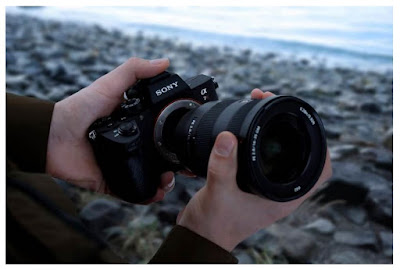
Source: Sony. The new α7R III camera.

Sony has added the α7R III (model ILCE-7RM3) to their full-frame mirrorless camera lineup. Thanks to an evolutionary leap in image processing power and efficiency, the new α7R III combines a high-resolution 42.4 MP1 back-illuminated Exmor R CMOS image sensor with shooting speeds at up to 10 fps2 with full AF/AE tracking, as well as beautiful image and 4K6 video quality, a 15-stop9 dynamic range, high sensitivity with noise reduction of almost a full stop4 and more.

New level of image quality
The 42.4MP high-resolution, back-illuminated Exmor R CMOS image sensor utilises a gapless on-chip lens design and anti-reflective (AR) coating on the surface of the sensor’s seal glass to dramatically improve light collection efficiency, resulting in high sensitivity with low-noise performance and a wide dynamic range.

Sony’s new α7R III also features a new front-end LSI that effectively doubles4 the readout speed of the image sensor, as well as an updated BIONZ X processing engine that boosts processing speed by approximately 1.8 times compared to the α7R II. These components work together to enable shooting at faster speeds while supporting an ISO range of 100 - 32,000 (expandable to ISO 50 – 102,400 for still images) and a 15-stop9 dynamic range at low sensitivity settings.

This new full-frame model was built without an optical low pass filter to maximise resolution, and can output in 14-bit RAW format even when shooting in silent or continuous mode. The camera is equipped with a five-axis optical image stabilisation system that has been finetuned to support its high-resolution shooting capacity, resulting in a 5.5 step5 shutter speed advantage, the world’s highest10 compensation performance for an image stabilisation system. A new low-vibration shutter reduces vibration and image blur in all modes, including at high-speed 10 fps shooting. Enhancements have also been made to increase accurate colour reproduction of skintones.

AF and AF/AE tracking at up to 10 fps2
The α7R III full-frame mirrorless camera is equipped with a refined image processing system that allows it to shoot full 42.4 megapixel images at up to 10 fps with continuous, accurate AF/AE tracking for up to 76 JPEG/RAW images or 28 uncompressed RAW images11. The 10 fps mode is available with either a mechanical shutter or a completely silent shooting12. The camera can also shoot continuously at up to 8 fps13 in live view mode with minimal lag observed through the viewfinder or LCD screens. These high speed options ensure that fast-moving subjects can be captured with extreme accuracy and incredible image detail.

For added convenience, many of the cameras key functions are operable even while large groups of burst images are being written to the memory card. These include access to the Function (Fn) and Menu buttons, image playback and several other menus and parameters14.

Additionally, if there is fluorescent or artificial lighting present in a shooting environment, users can activate the Anti-flicker15 function to allow the α7R III to automatically detect frequency of the lighting and time the shutter to minimise its effect on images being captured. This cuts down on any exposure or colour anomalies that can sometimes occur at the top and bottom of images shot at high shutter speeds.

The upgraded focusing system of the α7R III consists of 399 focal-plane phase-detection AF points that cover approximately 68% of the image area in both the horizontal and vertical directions. There are also 425 contrast AF points, an increase of 400 points compared to the α7R II. This advanced system delivers AF acquisition in about half the time as the α7R II in low-light conditions, with tracking that is approximately twice as accurate. The Eye AF feature is also approximately twice as effective, and is available when utilising Sony’s A-mount lenses with an adapter16.

Additional improvements in focusing flexibility include AF availability in Focus Magnifier mode, focal-plane phase-detection AF support when using A-mount lenses17, an AF On button, and a multi-selector or joystick for moving focusing points quickly.

4K video
The new α7R III is exceptionally capable as a video camera, offering 4K (3,840x2,160 pixels) video recording across the full width of the full-frame image sensor. When shooting in Super 35mm format, the camera uses full pixel readout without pixel binning to collect 5K18 of information, oversampling it to produce high quality 4K footage with exceptional detail and depth.

A new HLG (Hybrid Log-Gamma)19 is available on the α7R III that supports an Instant HDR workflow, allowing HDR (HLG)-compatible TVs to play back true-to-life 4K HDR imagery. Further, both S-Log2 and S-Log3 are available for increased colour grading flexibility. The camera can also record Full HD at 120 fps at up to 100 Mbps6, allowing footage to be reviewed and eventually edited into 4x or 5x slow motion20 video files in Full HD resolution with AF tracking.

Customisation for professionals
Sony’s newest full-frame camera is equipped for professional operation. It has dual media slots, with support in one slot for UHS-II type SD memory cards. Users have a variety of options for storing their content, including separate JPEG/RAW recording, separate still image/movie recording, relay recording and more. Battery life has been greatly extended as well, as the new camera utilises Sony’s Z series battery which has approximately 2.2 times the capacity of the W series battery that was paired with the α7R II.

The α7R III features an upgraded high-resolution, high-luminance Quad-VGA OLED TruFinder with approximately 3,686K dots for extremely accurate, true-to-life detail reproduction. The TruFinder, also found in the Sony α9 camera, utilises a ZEISS T* coating to greatly reduce reflections, and has a fluorine coating on the outer lens that repels dirt. It also has a customisable frame rate, with options of either 50 fps or 100 fps21 to best match the action.

 The LCD screen has been upgraded as well, with a resolution of 1.44M dots and WhiteMagic technology that improves viewing in bright, outdoor conditions. Standard or High display quality settings are also available for both the viewfinder and monitor. This setting takes advantage of the large amount of data read from the 42.4MP sensor to provide extra-fine viewfinder and monitor displays for a more natural view.

The new camera also offers a multi-selector joystick that provides a fast, efficient way to shift focus points, as well as an AF on button to activate autofocus when shooting stills or movies.

The new α7R III allows for convenient transfer of files to a smartphone, tablet, computer or FTP server via Wi-Fi, while also including a synch terminal, enabling external flash units and cables to be connected directly for convenient flash synch. A SuperSpeed USB (USB 3.1 Gen 1) USB Type-C Terminal is also available for increased flexibility in power supply or connected accessories, as well as a faster image transfer speed when connected to a PC.

New Imaging Edge Software Suite
Imaging Edge extends the creative capabilities of the entire shooting process – from pre-processing to post-processing. The suite includes three PC applications, Remote, Viewerand Edit. Available for free download, the applications support live-view PC remote shooting and RAW development.

Also making its debut on the α7R III is a new Pixel Shift Multi Shooting mode, which takes full advantage of the five-axis optical in-body stabilisation to create super-high resolution composite images. In this mode, the camera shifts the sensor in one-pixel increments to capture four separate pixel-shifted images containing approximately 169.6 MP22 of image data. These four images can be composited together and processed by Imaging Edge to produce a still image with overwhelming resolution and unprecedented colour accuracy.

Details:

The Sony α7R III Full-frame Interchangeable Lens Camera will be available at all Sony stores, Sony Centres and selected Sony authorised dealers in Singapore from end-November 2017.

1 Approximately, effective

2 Up to 10 fps in continuous “Hi+” mode, and up to 8 fps in continuous “Hi” mode. Maximum fps will depend on camera settings

3 Approximately 68% of the image area in both the horizontal and vertical directions

4 Compared to the α7R II, according to Sony testing

5 CIPA standards. Pitch/yaw shake only. Planar T* FE 50mm F1.4 ZA lens. Long exposure NR off

6 A Class 10 or higher SDHC/SDXC memory card is required for XAVC S format movie recording. UHS speed class 3 or higher is required for 100 Mbps recording

7 In Super 35mm mode

8 Approximately. Pixel binning is a technique used to reduce noise.

9 Sony test conditions for still images

10 Among digital cameras with a full-frame image sensor. As of October 2017 press release, based on Sony research 11 Hi+ continuous mode with UHS-II compatible SDXC memory card. Sony test conditions

12 Some distortion may occur with fast-moving subjects of if the camera is moved sideways rapidly

13 Hi mode. Maximum fps will depend on camera setting

14 Not all menu parameters can be edited while data is being written to the memory card

15 Only 100 Hz and 120 Hz flicker is detected. Continuous shooting speed may decrease. Flicker-free shooting is not available during silent shooting, BULB exposure, or movie shooting

16 With SSM or SAM lenses only. Eye AF not supported for movie recording. AF-C can only be used when the Phase detection AF system is selected, but focus is fixed at the first frame during continuous shooting in any mode other than Continuous: Lo (Hi+, Hi, Mid)

17 With SSM or SAM lenses only. With the LA-EA3 mount adapter. Focal plane phase-detection AF not supported for movie recording. AF-C can only be used when the Phase detection” AF system is selected, but focus is fixed at the first frame during continuous shooting in any mode other than Continuous: Lo (Hi+, Hi, Mid) 

18 Fifteen-megapixel 

19 Connect this product to an HDR (HLG)-compatible Sony TV via a USB cable when displaying HDR (HLG) movies

20 Sound not recorded. Class 10 or higher SDHC/SDXC memory card required 

21 In PAL. 60fps or 120fps in NTSC

22 Image size after compositing is approximately 42.4 million (7,952 x 5,304) pixels