Kaspersky Lab
is warning of activity from a threat actor targeting countries around
the South China Sea. The cybersecurity firm has seen increased activity
by an advanced persistent threat (APT) called Spring Dragon (or
LotusBlossom) since 2017 that involve new and evolved tools and
techniques.
Kaspersky Lab Global Research & Analysis Team (GReAT) Senior Security Researcher Noushin Shabab said, “We believe that
Spring Dragon is going to continue resurfacing regularly in the Asian
region and it's important to be familiar with its tools and techniques.
We encourage individuals and businesses to have good YARA rules* and
other detection mechanisms in place and strongly recommended they use –
and regularly audit – a multilayered approach to security.”
Spring
Dragon has been targeting high profile political, governmental and
educational organisations in Asia since 2012. Kaspersky Lab has been tracking the APT for the last few years.
In
early 2017, Kaspersky Lab identified renewed attacks in the threat
actor’s target region. According to Kaspersky Lab telemetry, Taiwan had
the largest number of attacks followed by Indonesia, Vietnam, the
Philippines, Macau, Malaysia, Hong Kong and Thailand. To help
organisations better understand and protect against the threat,
Kaspersky Lab’s researchers have undertaken a detailed review of 600
Spring Dragon malware samples.
Kaspersky Lab’s overview of Spring Dragon’s tools shows that:
-
The attackers’ toolset includes a unique customised set of links to
command and control servers for each malware: the malware samples
contained more than 200 unique IP addresses overall.
- This toolset was accompanied by customised installation data for each attack to make detection difficult.
-
The arsenal includes various backdoor modules with different
characteristics and functionalities – although they all have the
capability to download additional files to the victim’s machine, upload
files to its servers and execute any executable file or command on the
victim’s machine. This allows the attackers to undertake a number of
malicious activities on the victim’s machine – particularly
cyberespionage.
- The malware compilation timestamps suggest a time zone of GMT +8
– although the experts warn that does not represent a reliable
indicator of attribution. Countries which are in this time zone include
Brunei, China including Hong Kong, Singapore, Taiwan, the Philippines,
Western Australia as well as parts of Indonesia.
Kaspersky
Lab GM ANZ Anastasia Para Rae says, “Organisations and businesses need
to step up and manage risk on reputation and service guarantees. The
average loss from a single targeted attack is close to US$1,000,000
excluding reputational impact. In the event of cyberattack, a
considerable investment is made for urgent response to improve software
and infrastructure. The reverse needs to take place. We must not wait
for attacks to happen for us to take precaution.”
In order to protect your personal or business data from cyberattacks, Kaspersky Lab advises companies to:
- Implement an advanced, multilayered security solution that covers all networks, systems and endpoints.
-
Educate and train your personnel on social engineering as this method
is often used to make a victim open a malicious document or click on an
infected link.
- Conduct regular security assessments of the organisation's IT infrastructure.
*YARA is a tool for pattern matching that helps cybersecurity researchers detect and identify malware.
Showing posts with label South. Show all posts
Showing posts with label South. Show all posts
13 December 2016
South Asia has the potential to be the world's premier export region
With the right set of productivity-enhancing policies, South Asia could more than triple its share in global markets of electronics and motor vehicles and come close to doubling its already significant market share in apparel (excluding textiles and leather) by 2030. South Asia could become the fastest-growing exporting region of the world if authorities in Pakistan and its South Asian neighbors implement a set of policy actions aimed at improving the business environment, connecting to global value chains (GVC) and leveraging clusters, said a new World Bank report – South Asia’s Turn: Policies to Boost Competitiveness and Create the Next Export Powerhouse.
The report argues that increasing productivity of firms in Pakistan and the rest of South Asia is the only sustainable path to improving competitiveness. The report highlights well-known challenges in the region’s investment climate, but more importantly draws attention to less well-researched areas such as the role of cities and clusters, global value chains, and firms’ abilities to innovate and efficiently use resources, including technology.
The report argues that increasing productivity of firms in Pakistan and the rest of South Asia is the only sustainable path to improving competitiveness. The report highlights well-known challenges in the region’s investment climate, but more importantly draws attention to less well-researched areas such as the role of cities and clusters, global value chains, and firms’ abilities to innovate and efficiently use resources, including technology.
As acknowledged in the recent World Bank 2017 Doing Business report, the implementation of needed reforms is gaining momentum, and needs to be accelerated. Pakistan should also leverage the benefits of its city clusters by actively mitigating congestion forces and facilitating access to industrial land. Expanded participation in global value chains to markets through improvements in trade policies, logistics, and skills will also be beneficial. The report also calls for helping firms innovate, improve their managerial capabilities, and use technology to better connect with customers and suppliers for boosting competitiveness.
The region’s great potential to boost its competitiveness is evidenced through a number of examples in the report, ranging from the highly successful apparel industries in Bangladesh and Sri Lanka to Pakistan’s light manufacturing cluster in Sialkot which has achieved dominant global market shares in products such as soccer balls and surgical instruments.
The region’s great potential to boost its competitiveness is evidenced through a number of examples in the report, ranging from the highly successful apparel industries in Bangladesh and Sri Lanka to Pakistan’s light manufacturing cluster in Sialkot which has achieved dominant global market shares in products such as soccer balls and surgical instruments.
“Pakistan, in particular, has important strategic endowments and development potential,” says Illango Patchamuthu, World Bank’s Country Director for Pakistan. “Located at the crossroads of South Asia, Central Asia, China and the Middle East, Pakistan is at the heart of a regional market with a vast population, large and diverse resources, and untapped potential for trade.”
Pakistan leads many global competitors when it comes to wage competitiveness and proximity to key markets yet continues to experience weakening in exports competitiveness. Exports remain concentrated in the textiles and food sectors and investment in global value chain capabilities including physical capital, human capital, institutions and logistics remain limited.
“The region has a significant untapped potential in raising productivity through development of urban ecosystems providing thick markets for skilled labour, large tracts of industrial land, and world class logistics,” says Vincent Palmade, Lead Economist and one of the report’s co-authors. According to the report, firms realise significant productivity benefits from locating in areas with a wide diversity of workers, suppliers, and customers.
Pakistan leads many global competitors when it comes to wage competitiveness and proximity to key markets yet continues to experience weakening in exports competitiveness. Exports remain concentrated in the textiles and food sectors and investment in global value chain capabilities including physical capital, human capital, institutions and logistics remain limited.
“The region has a significant untapped potential in raising productivity through development of urban ecosystems providing thick markets for skilled labour, large tracts of industrial land, and world class logistics,” says Vincent Palmade, Lead Economist and one of the report’s co-authors. According to the report, firms realise significant productivity benefits from locating in areas with a wide diversity of workers, suppliers, and customers.

22 August 2015
2015 Namyangju Slow Life International Festival to delight visitors this October
 |
| Source: Slow Life Planet website. |
An international festival promoting the slow food movement as well as an all-round healthy lifestyle will take place in the South Korean city of Namyangju in October.
The fair is the second of its kind to be held in Namyangju city, after it launched the Asio Gusto festival in 2013. The city has since changed the name of the programme and decided to make it a regular event that is held every two years.
Individual tickets: 7,000 won
Group* tickets: 6,000 won
Early bird** tickets: 5,000 won
Buy tickets**
Under the theme Good Food, Good Life the Namyangju Slow Life International Festival (남양주슬로푸드국제대회) will run for 10 days from October 8 in the provincial city, located about 30 km east of Seoul.
The fair is the second of its kind to be held in Namyangju city, after it launched the Asio Gusto festival in 2013. The city has since changed the name of the programme and decided to make it a regular event that is held every two years.
Visitors can expect to enjoy concerts, tasting sessions and other hands-on activities. A food show starring some of the most popular chefs from South Korea will be held during the festival, and visitors will also be able to try traditional foods and beverages from a diverse mix of cultures.
Interested?
Individual tickets: 7,000 won
Group* tickets: 6,000 won
Early bird** tickets: 5,000 won
Buy tickets**
*A group should have at least 10 people.
**Early bird prices are available till October 7, 2015.
***Tickets at each tier cost 1,000 won less for teenagers and children.
13 November 2014
Accor opens first ibis budget hotel in South Korea
Accor, the largest international hotel operator in Asia Pacific and South Korea, has opened the ibis budget Ambassador Seoul Dongdaemun, the first ibis budget brand hotel in South Korea.
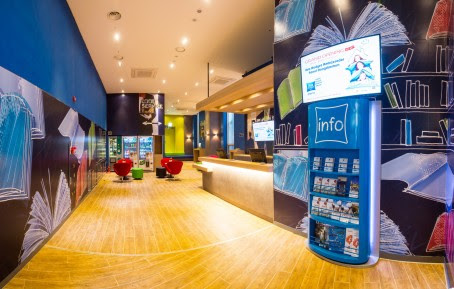 |
| Source: Accor. The Ibis budget Ambassador Seoul Dongdaemun. |
The newly-built hotel has 195 guestrooms and is located north of Seoul’s Han River in a commercial district renowned for its traditional markets and shopping centres. Ibis budget Ambassador Seoul Dongdaemun is a 10-minute drive to Dongdaemun Design Plaza and Myeong-dong District, Chunggyechen Stream and major shopping malls. The hotel is a stone’s throw away from the subway lines 2, 4, and 5, which connect it to the rest of Seoul.
Patrick Basset, Chief Operating Officer for Accor Thailand, Vietnam, South Korea, Cambodia, Laos, Myanmar and the Philippines said, “With the successful opening of our ibis hotels in Seoul and Busan, we are proud and excited to introduce the first ibis budget hotel in South Korea. Ibis budget is one of Accor’s leading economy brands where at a value for money room rate, guests will find cosy beds, spacious showers, soft duvets, and an all-you-can-eat breakfast buffet.
“We saw an increasing demand in Seoul for international-standard accommodations coupled with affordable pricing; we therefore believe this hotel will become a favourite amongst domestic and international travellers visiting this vibrant city.”
All rooms are equipped with a flat screen TV with multi-media hub, individual reading lights, Wi-Fi connection, work table, safe, mini-refrigerator, coffee maker, and a sizable en-suite bathroom with shower. The hotel also features a 24-hour business corner with free Internet access and printing services.
The hotel’s General Manager, Tchang Lee, said, “Ibis budget Ambassador Seoul Dongdaemun integrates the core values of the ibis family brands – ‘simplicity, modernity and well-being’ and promises guests a quality accommodation at an affordable price, with the highlight being the signature beddings - Sweet Beds by ibis budget - for a good night’s sleep.”
To book a room, please visit www.accorhotels.com/9114 or email H9114-RE@accor.com.
Patrick Basset, Chief Operating Officer for Accor Thailand, Vietnam, South Korea, Cambodia, Laos, Myanmar and the Philippines said, “With the successful opening of our ibis hotels in Seoul and Busan, we are proud and excited to introduce the first ibis budget hotel in South Korea. Ibis budget is one of Accor’s leading economy brands where at a value for money room rate, guests will find cosy beds, spacious showers, soft duvets, and an all-you-can-eat breakfast buffet.
“We saw an increasing demand in Seoul for international-standard accommodations coupled with affordable pricing; we therefore believe this hotel will become a favourite amongst domestic and international travellers visiting this vibrant city.”
All rooms are equipped with a flat screen TV with multi-media hub, individual reading lights, Wi-Fi connection, work table, safe, mini-refrigerator, coffee maker, and a sizable en-suite bathroom with shower. The hotel also features a 24-hour business corner with free Internet access and printing services.
The hotel’s General Manager, Tchang Lee, said, “Ibis budget Ambassador Seoul Dongdaemun integrates the core values of the ibis family brands – ‘simplicity, modernity and well-being’ and promises guests a quality accommodation at an affordable price, with the highlight being the signature beddings - Sweet Beds by ibis budget - for a good night’s sleep.”
To book a room, please visit www.accorhotels.com/9114 or email H9114-RE@accor.com.
Subscribe to:
Posts (Atom)