Showing posts with label cooking. Show all posts

14 April 2024

Thailand's first dining and sky observatory opens

Source: DARA Cuisine Phuket and Sky Observatory. A couple admire the most powerful telescope on Phuket island.
Source: Anantara Layan Phuket Resort. A couple admire the most powerful telescope on Phuket island.


From a grill-focused menu to guided astronomy sessions and hands-on Thai cooking classes, DARA Cuisine Phuket and Sky Observatory is poised to become the island's new go-to venue for modern Thai dining and stargazing.

DARA, meaning 'star' in Thai, celebrates the country's culinary heritage and Andaman seafarers who used stars for navigation. The new Sky Observatory is equipped with a custom-built dome and Phuket's most powerful state-of-the-art telescope, offering an intimate rooftop experience where Sky Storytellers guide guests through the wonders of the night sky.

During the day, an all-star team of Anantara chefs deliver masterclasses in Thai cooking in the show kitchen. In the evenings, diners have the opportunity to try local specialties from all corners of Thailand alongside Royal Thai cuisine.

The Southern region is represented by moohong Phuket, a slow-cooked meat dish seasoned with soy, star anise and cinnamon. From the North, khao soi curry noodle soup offers translucent river prawns served with homemade egg noodles and pickles, as well as the restaurant's signature tam ka noon mun wan – pounded young jackfruit served as a salad with sweet potato chips for added crunch. Central Thailand's complex flavours shine in miang kham khai hoy mhen, a popular snack of the Siamese court involving wild betel leaves, as well as green curry with Phuket lobster.

In the Northeastern dishes, such as the kob thod nam pla with crispy frog legs and the nam tok nuea ko kun featuring Korat wagyu beef, regional ingredients get a creative twist from Head Chef Supakarn "Hong" Lienpanich's family recipes and passion for fermentation. For those with sweet tooths, the goat cheese and honey ice cream paired with Krabi cashew praline will delight.

With an on-site fermentation kitchen, barrel-aged fish sauce cellar, and a verdant herb garden, DARA is a living ecosystem that nurtures every ingredient to its fullest potential. “DARA's culinary philosophy is simple: honour the natural taste of quality local produce and let the ingredients shine,” said Chef Hong. 

“In addition to growing our own herbs, we've partnered with ecoconscious local farms and fisheries, which allows us to adapt to the rhythm of the seasons – from serving crisp harvest in the dry months to showcasing Thailand's natural abundance when the monsoon comes.”

Details

DARA Cuisine Phuket is in Anantara Layan Phuket Resort. It is open daily for cooking classes from noon till 3 pm, for dinner from 6 pm to 10 pm.

The Sky Observatory offers drinks and stargazing from 6 pm till midnight.

Hashtags: #phuket, #stargazing, #thailand, #foodies, #Anantara, #minorhotels, #restaurant, #bucketlist, #travel

27 October 2016

Singapore wins Culinary Olympics 2016

Source: the Singapore National Culinary Team. The Singapore National Culinary Team beat over 30 countries around the world to win the Culinary Olympics 2016 championship title. The team won gold for both the Cold Display and Hot Cooking segments. It is the first time Singapore has won the Culinary Olympics. From left: Teo Yeow Siang, team captain, from Lavish Catering; Triston Fang, team member, from Ocean Restaurant by Cat Cora, Resorts World Sentosa; Alan Wong, team member, from Lavish Catering; team manager Louis Tay from Swissotel Merchant Court; Roy Lim, team member, from Unilever FoodSolutions; and Alex Chong, team member, from The Regent Singapore.

It's not only Michelin star chefs that Singapore can boast of now. The Singapore National Culinary Team has won the Culinary Olympics 2016, scoring golds for in the Cold Display and Hot Cooking categories, showing that the country's chefs are world-class too.

The Culinary Olympics is one of the most prestigious international culinary competitions in the world. Held in Erfurt, Germany every four years, this year’s edition took place from 21 to 26 October 2016, with 30 of the world’s top national teams participating.

The Singapore National Culinary Team has a stellar reputation in international culinary competitions. It had been training for a year for the competition. The team is led by Chef Louis Tay, Executive Chef, Swissotel Merchant Court, who has a long list of competition accolades. He was also Team Manager when the Singapore National Culinary Team clinched the championship title for the third time at the Culinary World Cup in Luxembourg.

The team for Culinary Olympics 2016 was handpicked based on experience, commitment and potential. Team Captain Teo Yeow Siang is from Lavish Catering as is team member Alan Wong. The other team members include Triston Fang from Ocean Restaurant by Cat Cora, Resorts World Sentosa; Roy Lim of Unilever FoodSolutions and Pastry Chef Alex Chong who is from Regent Hotel.

For the Culinary Olympics, the team has to deliver a Cold Display, setting up an exhibition table comprising four different kinds of finger foods for six people; a cold festive/buffet platter for eight; three different starters for one; an lacto-ovo vegetarian three-course lunch menu for one; and a festive menu for one. A separate pastry setup must also be displayed, including a show item, four different individual plated desserts for one, plus a display of sweet biscuits, chocolates, petits-fours or friandises (Editor's note: the plate of sweets or pastries served at the very end of a meal).

The second part of the competition is the hot cooking segment. The team has to prepare 110 portions of a three-course meal – an appetiser (with seafood/fish as main ingredient or a combination of both), a main course using butcher’s meat, poultry or game, or a combination thereof; and dessert featuring contrasting textures and temperatures.

Tay said a culinary competition of this level is both emotionally and physically intense. "The team has sacrificed a lot of time and sleep. There are so many people we need to thank. Firstly, the Singapore Chefs’ Association for backing us up and the sponsors who made all this possible. We are very grateful to our mentors, who have also spent a lot of time walking this journey with us, refining our dishes so we can reach perfection. And lastly, the team members and their families for committing so many months of their life to this mission. We are proud (of) our performance, and for representing Singapore the best way possible,” he said.

Interested?

Read the WorkSmart Asia blog post about Lavish Catering's launch of premium catering services

5 November 2015

CULINARYON opens Singapore cooking studio for classes, parties

A workstation prepped with eggs and two types of flour for making tagliatelle from scratch.

CULINARYON - Europe’s largest edutainment culinary studio, founded in Moscow in 2012, has landed in Singapore. The 7,000 sq ft studio at One Raffles Place, opened only in October 2015 and the company's second, is the largest cooking studio in Asia, the company said.

The CULINARYON Studio accommodates up to 200 people, and can be divided into a conference room and four event areas, each with its own cooking stations, chef table, and a bar, ideal for events, master classes, and teambuilding activities.

At the evening event I attended, courtesy of data protection vendor Acronis, participants were given aprons and then guided by a professional chef to prepare vegetables, fruit and shrimp, make handmade tagliatelle, cook a pasta dish, and then plate it. The event went very smoothly, with participants given the choice to be hands-on or to watch as they wished, and staff helping the process along with helpful advice. The recipes are emailed to participants after the event, and everyone gets to eat their creations.

While my CULINARYON experience involved tagliatelle with shrimp and rucola followed by a dessert of fruit salad and ice cream, the company offers a wide range of cuisines for the master classes, and can provide a buffet of snacks if required.

Interested?

Call CULINARYON at +65 3108 0385 or visit the website
Take the 3D tour of the Singapore cooking studio

Hashtag: #culinaryon_sg

29 August 2015

Sofitel SO Bangkok confirms chef lineup for So Amazing Chefs 2015

Source: Sofitel SO Bangkok. 

Sofitel SO Bangkok has confirmed that 12 celebrity chefs from around the world will be in Thailand for the 4th So Amazing Chefs 2015 taking place from 6 to 11 October 2015.

"This year's gastronomic festival is the most high profile event we've ever put together, with the constellation of amazing chefs representing a combined seven Michelin stars. The gathering highlights Bangkok as a foodie city, and promotes the exchange of epicurean ideas and inspirations," said Yves Mudry, General Manager of Sofitel SO Bangkok.

The So Amazing Chefs programme is packed with dinners and cooking classes, with the event highlight – the Culinary Showdown competition and gala dinner– taking place on 9 October with proceeds going towards the CCF Foundation under The Royal Patronage of HRH Princess Maha Chakri Sirindhorn. New additions this year include the introduction of special weekend brunches and an after-party which will feature guest DJ Chef Ferry van Houten on the decks.

Familiar faces from last year include Stephane Bonnat (Voiron, France), Laurent Peugeot (Burgundy, France), Didier Corlou (Hanoi, Vietnam), Alain Caron (Amsterdam, Netherlands), Ferry van Houten (Amsterdam, Netherlands), and Sofitel SO Bangkok's very own Executive Chef Paul Smart. Making a comeback from the inaugural So Amazing Chefs 2012 is Chris Salans (Bali, Indonesia):

  • Bonnat is Maitre-Choclatier at Bonnat, the longest operating chocolaterie in the world. He received two gold awards at the International Chocolate Awards 2015.
  • Caron, a Masterchef judge and author, also hosts his own cooking show. 
  • Corlou won Masterchef in France and is the chef owner of La Verticale and Madam Hien in Hanoi, Vietnam. 
  • Peugeot owns six establishments around the world, including SushiKai (Beaune, France), LP+Tetsu (Singapore), and LP Receptions (Pernand-Vergelesses, France). He is also chef owner of Le Charlemagne (one Michelin star) in Burgundy. 
  • Smart was Winning Challenger Chef of Ironchef Thailand in 2012 and 2013.
  • Van Houten is chef owner of Het Bosch in Amsterdam, Netherlands. 


Exciting new additions to the 2015 chef roster include Amsterdam-based Menno Post of two-Michelin starred restaurant The Bokkedoorns; Herve Rodriguez, chef owner of MaSa (one Michelin star, Paris), Jacques Pourcel, one-half of Le Jardin des Sens' Pourcel brothers (one Michelin Star); Frenchman Loic Villemin of Toya (one Michelin star, Faulquemont); and Thierry Renou of Le Patio Thierry Renou (one Michelin star, Arcachon).

Interested?

For more information and reservations, call +66 (0) 26 240 000 or email h6835-fb3 at sofitel.com.

28 May 2015

Isan Explorer introduces new food tour

Source: Isan Explorer website.
Isan Explorer, a tour company focused on Northeast Thailand, has created a food tour showcasing the cuisine of the country's seldom-visited Isan region.

The full-day tour begins in a large fresh market to buy most of the food that guests will be eating for lunch and the ingredients they will use to cook dinner. It then moves out of the city to a small village. 

The menu is designed for sampling: in total there are 20 main dishes – including bamboo shoot curry, sour fish, grilled chicken, steamed mushrooms, green bean som tam, and eggplant dipping sauce – plus many sides, snacks, and drinks. Before helping their village host prepare dinner, guests will walk around the village to collect some additional ingredients, such as leaves, flowers, fruits, insects, and crabs, depending on the season.

"Isan food has some similarities with Thai food, but overall it's a very different cuisine," explains Tim Bewer, Isan Explorer's founder. "And some popular foods that people think of as Thai, such as spicy papaya salad (som tam), are actually Isan foods adopted by the rest of the country."

Interested?

1 March 2015

Are we ingesting too much aluminium?

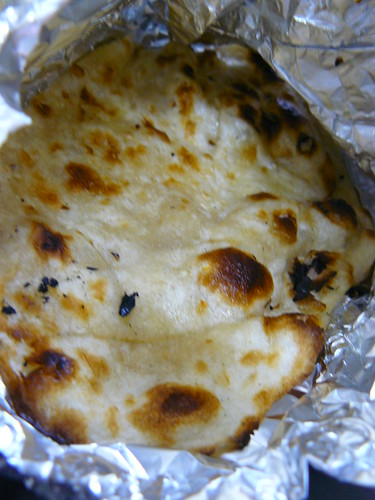
Takeaway bread
Naan wrapped in aluminium foil.

Aluminium in the diet has become an increasing concern ever since the metal was implicated in causing Alzheimer's disease in the mid 1960s. The metal can come from a variety of sources, including foods cooked or stored in aluminium or clay crockery and aluminium packaging; foods that naturally contain aluminium, like tea, and foods that are made with aluminium-based additives, such as baked goods.

Yes, you can get your daily dose of aluminium from cakes and tea. One study found that aluminium levels are generally low in unprocessed foods, typically under 1 ppm and rarely exceeding 10 ppm*, but the story is different for tea leaves. The same study noted that the richest natural sources of aluminium for Chinese food in Harbin are tea leaves, Chinese prickly ash (Sichuan pepper) and mustard*. Another study which focused on teas in Sichuan noted that brick teas, which are chiefly composed of old leaves, have the highest aluminium concentrations of all types of tea.

Drinking tea itself may be a negligible source of dietary aluminium however. Studies have found that there is little increase in the level of aluminium found in blood plasma or in urine after drinking black or green tea, with milk or lemon juice.

What about aluminium leaching from aluminium pots and pans, dishes or packaging, then? A 1992 study from Food Additives and Contaminants studied just that and found that very small or undetectable levels of aluminium actually leached out of aluminium containers into food, but, as always, 'it depends'. 


1993 study, done in Harbin and published in the Chinese Journal of Preventive Medicine (Zhonghua Yu Fang Yi Xue Za Zhi), concluded that Chinese people in Harbin consume an average of 4 to 15 mg, and rarely up to 20 mg of aluminium in the daily diet.  According to the study, tea leaves can contain between 300 to 1,800 ppm of aluminium, and 16 to 20% of this aluminium can be extracted from the leaves. Foods can contain 10 to 30 ppm of aluminium after processing and handling, the researchers added.

Foods made with aluminium-containing food additives contain extremely high level of aluminium, however. Such additives** may include E523, aluminium ammonium sulphate, used in industrial baking powder, or E541, sodium aluminium phosphates (acidic and basic) which may be used in the production of baked goods, cheese products, confectionery, frozen fish, minced meat, and stews. Other additives include and are not limited to E554, which is sodium aluminosilicate, E556, calcium aluminium silicate, and E559, aluminium silicate. According to the Chinese researchers, people can consume more than 100 mg of aluminium daily from their diet due to intake of foods made with aluminium-containing food additives.


The Science of the Total Environment also contains a 1997 study from India which agrees with the Chinese study. It noted that baking powder is a rich source of aluminium. A kg of cake prepared with one to three teaspoons of baking powder may contain 2 to 12.7 mg of aluminium in a 25g serving, the Indian researchers said.

The question is how much is too much. The Agency for Toxic Substances and Disease Registry, which is part of the US Department of Health and Human Services, has a toxicological profile for aluminium that lists minimum risk levels for exposure to the metal. Oral exposure should be no more than1 mg of aluminium per kg of body weight per day. Through staying away from baked goods and possibly medications that contain aluminium, we are all probably within safe levels. To be on the safer side, we can also minimise aluminium intake based on what we know so far.
A 2003 study in Environmental Geochemistry and Health conducted in Hong Kong has some advice on minimising aluminium from tea consumption:

  • Go for younger tea leaves
  • Indian tea varietals grown in the same place as Chinese tea varietals have less aluminium 
  • Green tea has less aluminium content than black tea
  • Steep the tea in the pot - more aluminium is released with the repeated tea infusion method (emptying the teapot once the tea is brewed and then adding fresh boiling water to make another pot of tea) compared to the continuous infusion method (leaving the tea to steep in the pot).
What about cooking?
  • Don't worry about boiling neutral porridge. Boiling neutral (non-alkali and non-acidic) porridge in aluminium pans causes no migration of aluminium out of the pan into the porridge***
  • Relatively small amounts of aluminium come through with milk. Milk causes leaching of 0.2 to 0.8 mg/kg***
  • Don't boil tap water in aluminium pans for too long. 
    • Bringing water to boil causes leaching of 0.54 to 4.3 mg/l. This increased with increasing boiling time, to 6.3-17 mg/l, perhaps explaining why adding more boiling water to tea also raises aluminium levels***
    • A different study was more precise: boiling water in aluminium pans caused aluminium concentrations to rise to 2.6 mg/l after 15 minutes****
  • Beware of cooking acidic foods in aluminium pans
    • Aluminium dissolved in foods based on acidic fruit juice registered at 2.9 to 35 mg/kg when the foods were boiled in aluminium pans*** 
    • The highest aluminium concentration of 170 mg/kg was measured in rhubarb juice prepared in the steaming vessel***
    • Tomato sauce made from mashed tomatoes cooked in non-coated aluminium pans contained 10-15 mg/kg of aluminium after an hour of cooking****

And what about storing foods and liquids in aluminium containers? Some studies throw light on this:
  • Coffee seems safe. Coffee, strangely enough, had lower levels of aluminium than in the tap water that was used in its preparation****.
  • Relatively little aluminium is poured out with Coca-Cola that has been stored in internally lacquered aluminium cans (levels of below 0.25 mg/l)****
  • Stay away from acidic liquids stored in aluminium containers. Lime blossom tea acidified with lemon juice stored in non-coated aluminium camping bottles for five days (up to 7 mg/l)****

Editor's note: Aluminium content is reported directly from the research reports. Some are in parts per million, others in mg per litre (l), while yet others are in mg per kg. It is not possible to compare these measurements directly. With water however the mg/l and mg/kg figures would be the same as 1 g of water has a volume of 1 ml. 

*These figures come from a 1993 study done in Harbin and published in the Chinese Journal of Preventive Medicine (Zhonghua Yu Fang Yi Xue Za Zhi).

**Some of these additives are banned in different countries.

***These figures come from a 1992 study from Food Additives and Contaminants.

****These figures come from a 1993 study published in Zeitschrift für Lebensmittel-Untersuchung und -Forschung.