Showing posts with label tea. Show all posts

11 September 2018

Twinkle in the Moonlight at afternoon tea in Hong Kong this September

Source: The Langham, Hong Kong. The Twinkle in the Moonlight Afternoon Tea set.
Source: The Langham, Hong Kong. The Twinkle in the Moonlight Afternoon Tea set.

The Langham, Hong Kong celebrates the Mid-Autumn season with an oriental-inspired afternoon tea.

Available for the month of September at Palm Court, the menu crafted by Executive Pastry Chef David Puig includes The Moon, made of galaxy-glazed* lychee and raspberry mousse cake with rose essence, Sacher sponge cake and topped with a golden crescent moon. The aromatic Sesame is composed of sesame praline financier with a milk chocolate coating and whipped praline cream.

Try the Osmanthus Mooncake, which is chocolate coated with osmanthus tea ganache and a William pears Pâte de Fruit filling, or the Pamplemousse: pomelo mousse and confit atop an almond frangipane cream tartlet, delivered with a hint of citrus. The Jade Rabbit, the traditional resident of the moon according to Chinese legend, is portrayed alongside the French macaron with a spiced pumpkin filling and almond sable.

Savouries include the soy-braised mushrooms and chestnuts mini brioche; steamed Crab and cucumber salad with vinegar and ginger; and the roasted duck with Hoisin sauce green tea roll.

All tea sets come with warm plain and raisin scones fresh from Palm Court’s own bakery served with Devonshire clotted cream, strawberry jam and rose preserve.

The Langham, Hong Kong features 498 guest rooms and suites finished with the finest fabrics, hardwood floors, and handwoven carpets. It is equipped with Blissful Beds, iHome docking stations and wireless broadband Internet connectivity. 

Details:

The Twinkle in the Moonlight Afternoon Tea is available at Palm Court till 30 September on weekdays from 3 – 5:30 pm, and on weekends and public holidays in two sittings, from 2:15 – 4:15 pm and 4:30 – 6:30 pm. The classic tea set is priced at HK$348 for one person and HK$598 for two persons, while the deluxe set is priced at HK$528 for one person and HK$888 for two persons. All prices are subject to a 10% service charge.

Call +852 2132 7898 for reservations

*Galaxy food is decorated to look like a photo of space.

10 March 2018

Teardrop Hotels adds three tea plantation experiences in Sri Lanka this year

Three former tea planters’ houses from Teardrop Hotels are opening in 2018.

Following the launch of Camellia Hills in July 2017, the portfolio expands with Goatfell, Nine Skies and Pekoe House, all fully-renovated vintage managers’ bungalows along the tea country route.

The opening of these bungalows will see Teardrop Hotels transform the hill country’s boutique hotel scene, bringing a modern vibe to traditional tea plantations and offering contemporary aesthetics and modern Asian-British dining.

Opening in April 2018, Goatfell is a former superintendent’s residence located on a working tea estate and at one of the highest elevation points above Nuwara Eliya. Goatfell consists of four ensuite bedrooms in the main house and two standalone chalets, with living and dining rooms and a swimming pool.

Meanwhile, Nine Skies is also set to launch in April 2018 and will be located near Ella. It is built on a grander scale as befits a director’s bungalow. The six-bedroom luxury hotel is set within several acres of private gardens, with a croquet lawn, swimming pool and sun deck, and panoramic views across the valley to the working tea factory and famous Demodera loop.

The final tea estate, due to open late 2018, is Pekoe House, located in the Kandy area. Within reach (and view) of the Knuckles Mountain Range, Pekoe House will have six double bedrooms, a swimming pool, croquet lawn, and living/dining space, as well as excellent food. Activities will include tea factory tours and treks up Hunas mountain.

Details:

Rates start from US$495 per room per night based on double occupancy and on an all-inclusive basis.

12 September 2016

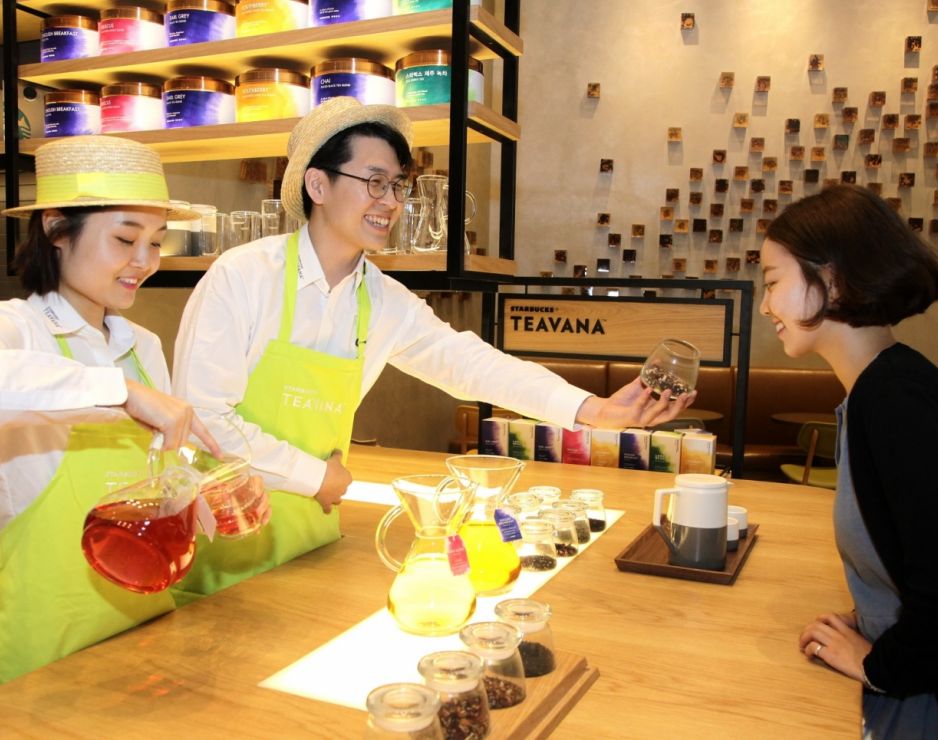
Starbucks Teavana now available in Asia Pacific

  • Iced and hot tea beverages with layered flavours now handcrafted at Starbucks stores
  • With the launch across Asia, Teavana beverages and teas are now available in Starbucks locations around the world
Source: Starbucks. Starbucks Teavana comes to Asia Pacific outlets.

Starbucks Coffee Company has introduced Starbucks Teavana as a core offering in more than 6,200 stores across its 16 markets in the China and Asia Pacific region. A new brand for Starbucks in Asia, Starbucks Teavana handcrafted beverages and full leaf tea sachets offer unique iced and hot tea beverages with layered flavours, handcrafted by Starbucks.

“The launch of Starbucks Teavana in China and Asia Pacific brings an entirely new and modern tea experience specifically developed for our customers, who increasingly want new and different tastes and experiences,” said John Culver, Group President, Starbucks Global Retail. "This is a tremendous opportunity to leverage the company’s expertise in creating best-in-class retail experiences, handcrafting customised beverages, and sourcing the finest ingredients, to become a leader in a new category for us. Just as we’ve done for coffee, this is tea reimagined at Starbucks.”

Tea is a US$125 billion global category and is the second most consumed beverage in the world, second only to water. The launch of Starbucks Teavana is the first time Starbucks has launched a brand on this scale since 2008 with the launch of Starbucks VIA Ready Brew.

With Starbucks Teavana, Starbucks also draws on its long heritage of commitment to using only the most premium, high-quality ingredients. Leveraging deep relationships with tea growers, Teavana sources the world’s highest-quality teas and botanicals. Starbucks sourcing and blending experts cup (taste) hundreds of teas daily to select only the finest teas for Starbucks Teavana.

Starbucks Teavana will be available in stores across all its markets in the China and Asia Pacific region: Australia, Brunei, Cambodia, mainland China, Hong Kong, India, Indonesia, Japan, Korea, Malaysia, New Zealand, the Philippines, Singapore, Taiwan, Thailand and Vietnam.

Starbucks Teavana beverages include matcha & espresso fusion, black tea with ruby grapefruit and honey, iced shaken green tea with aloe and prickly pear and iced shaken hibiscus tea with pomegranate pearls, whose availability will vary by market. The beverages have been specifically developed for Asian customers.

Source: Starbucks. Matcha & espresso fusion.
Source: Starbucks.
Matcha & espresso fusion.
Matcha & espresso fusion
Matcha powder layered with milk and Starbucks signature espresso roast creates a layered beverage that combines coffee and tea, to be enjoyed hot or iced.

Black tea with ruby grapefruit and honey
Traditional Western black tea combined with tart star ruby red grapefruit, perfectly portioned in honey for a touch of added sweetness.

Iced shaken green tea with aloe and prickly pear
Familiar green tea paired with refreshing diced aloe and syrup of prickly pear – a cactus plant native to the American Southwest.

Iced shaken hibiscus tea with pomegranate pearls
Starbucks Teavana hibiscus tea and bursting pearls of real pomegranate juice.

Starbucks Teavana full leaf tea sachets

Nine new Starbucks Teavana hot teas will be offered. Availability and range of beverages may vary by market. They include:

Black teas

English breakfast – A handcrafted blend of Indian Assam, Sri Lankan Ceylon and Chinese black tea.

Earl Grey – A blend of black teas, bergamot essence and lavender.

Chai – A tea blend with ginger and black pepper, cardamom and sweet cinnamon notes.

White teas

Youthberry – Inspired by super fruits, acai fruit is blended with tropical pineapple and mango flavours with high quality white tea, balanced by rosehips and green apple.

Green teas

Emperor’s clouds and mist – Exclusively harvested during the month of April and grown on the steep, windy slopes of Huangshan Mountain at 3,500 ft above sea level, this tea has a rich body and is naturally sweet.

Mint citrus – This refreshing blend combines green tea, lemon verbena, tropical lemongrass, and US Pacific Northwest sourced spearmint for a citrus green tea experience. Chun Mee (珍眉, precious eyebrows) is the green tea base for this blend.

Herbal teas

Hibiscus – Juicy papaya and mango combined with citrusy lemongrass for a naturally caffeine-free blend. Hibiscus flowers lend the tea a slight tartness and a deep fuchsia colour.

Mint blend – This tea’s spearmint base is rounded out with peppermint notes and undertones of lemon verbena. The mint leaves come from the highly sought after Pacific Northwest mint, known for its high amount of mint oil.

Chamomile – The chamomile used for this soft, soothing floral blend is from Croatia.

16 June 2016

Hurting your throat causes cancer, not coffee

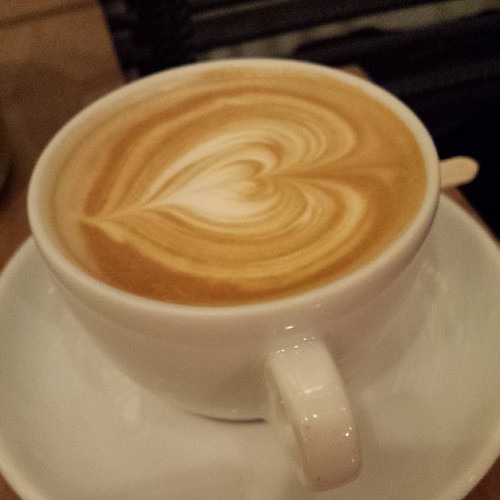
Chye Seng Huat Hardware latte 3.5
Coffee from Chye Seng Huat Hardware Store, Singapore.

IARC Monographs have come to some conclusions on the dangers of drinking coffee, maté, and very hot beverages. An international working group of 23 scientists convened by the International Agency for Research on Cancer (IARC), the cancer agency of the World Health Organization (WHO), has evaluated the carcinogenicity of drinking coffee, maté* and very hot beverages. The IARC aims to coordinate and conduct research on the causes of human cancer and the mechanisms of carcinogenesis, and to develop scientific strategies for cancer control.

A summary of the final evaluations is published in The Lancet Oncology, and the detailed assessments will be published as Volume 116 of the IARC Monographs. The working group found no conclusive evidence for a carcinogenic effect of drinking coffee. However, the experts did find that drinking very hot** beverages probably causes cancer of the oesophagus in humans. No conclusive evidence was found for drinking maté at temperatures that are not very hot.

“These results suggest that drinking very hot beverages is one probable cause of oesophageal cancer and that it is the temperature, rather than the drinks themselves, that appears to be responsible, ” says Dr Christopher Wild, IARC Director.

Very hot beverages

Drinking very hot beverages was classified as probably carcinogenic to humans. This was based on limited evidence from epidemiological studies that showed positive associations between cancer of the oesophagus and drinking very hot beverages. Studies in places such as China, Iran, Turkey, and South America, where tea or maté is traditionally drunk very hot (at about 70°C) , found that the risk of oesophageal cancer increased with the temperature at which the beverage was drunk.

In experiments involving animals, there was also limited evidence for the carcinogenicity of very hot water, the working group found.

“Smoking and alcohol drinking are major causes of oesophageal cancer, particularly in many high- income countries,” stresses Dr Wild. “However, the majority of oesophageal cancers occur in parts of Asia, South America, and East Africa, where regularly drinking very hot beverages is common and where the reasons for the high incidence of this cancer are not as well understood.”

Oesophageal cancer is the eighth most common cause of cancer worldwide and one of the main causes of cancer death, with approximately 400,000 deaths recorded in 2012 (5% of all cancer deaths), says the WHO. The proportion of oesophageal cancer cases that may be linked to drinking very hot beverages is not known.
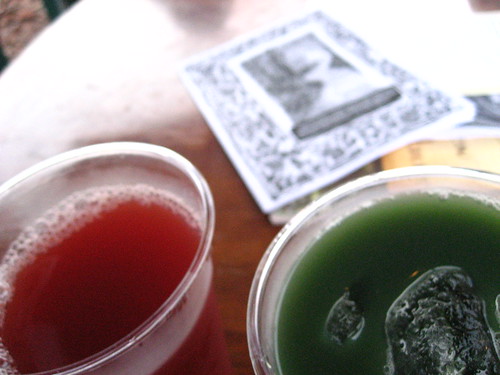

Yerba mate based drinks
Hibiscus maté on the left, guarana ginseng on the right - drinks at the Woodford Folk Festival in Queensland, Australia, 2006.
Maté

Cold maté did not have carcinogenic effects in experiments on animals or in epidemiological studies. Therefore, drinking maté at temperatures that are not very hot was not classifiable as to its carcinogenicity to humans. This was based on inadequate evidence in humans for the carcinogenicity of drinking cold or warm maté and inadequate evidence in experimental animals for the carcinogenicity of cold maté as a drinking liquid*.

Coffee

Drinking coffee was not classifiable as to its carcinogenicity to humans. The large body of evidence currently available led to the reevaluation of the carcinogenicity of coffee drinking, previously classified as possibly carcinogenic to humans by IARC in 1991. After thoroughly reviewing more than 1,000 studies in humans and animals, the working group found that there was inadequate evidence for the carcinogenicity of coffee drinking overall. Many epidemiological studies showed that coffee drinking had no carcinogenic effects for cancers of the pancreas, female breast, and prostate, and reduced risks were seen for cancers of the liver and uterine endometrium. For more than 20 other cancers, the evidence was inconclusive.

A scan of research online showed pretty much the same conclusions. In one 2009 study in Iran, researchers found that compared with drinking lukewarm or warm tea, drinking hot tea or very hot tea was associated with an increased risk of oesophageal cancer. For this study, temperatures of warm, hot and very hot tea were defined as being under 60°C, between 61 and 64°C, and 65°C and above respectively. Various confounders such as ethnicity, daily vegetable intake, alcohol consumption, tobacco or opium use, duration of residence in rural areas, and socioeconomic status were ruled out as likely causes. The total amount of tea consumed did not have an effect, either.

A 1995 study on maté in Paraguay linked very hot maté to oesophageal cancer. The authors of the research pointed out however that alcohol consumption, smoking, and eating of beef were also linked to the same cancer. The association between very hot maté and cancer was also found in a 2000 study, which also noted that the more maté is consumed, the higher the risk of oesophageal cancer. Women were found to have a higher risk of the cancer on all counts. The good news is that eating fruit, vegetables, cereals and drinking tea has a protective effect, but meat, animal fats and salt led to an increased cancer risk.

In 2011, a study in Southern China linked not only the drinking of very hot beverages to cancer, but also the eating of high-temperature foods - those which had been fried or barbecued. Eating fast was also correlated with cancer.

The IARC Monographs Programme seeks to classify cancer hazards, meaning the potential of any substance to cause cancer based on current knowledge. The classification does not indicate what level of risk exists to people’s health associated with exposure to a classified hazard. For example, IARC has classified tobacco smoking as carcinogenic to humans, but that classification does not indicate the increase in risk for each cigarette smoked. This working group evaluation is in line with the WHO Technical Report Series 916 on diet, nutrition and the prevention of chronic diseases, which states that people should not consume drinks when they are at a very hot (scalding hot) temperature.

A 2015 study postulates that the stem cell division model of cancer can explain why very hot foods and beverages cause cancer. Swallowing something too hot will damage cells in the oesophagus. Stem cell division is activated to repair the cells, and the more often stem cells divide over a period of time, the higher the risk of DNA damage, and in turn cancer. The author, Miguel López-Lázaro, further speculates that controlling stem cell divisions, such as through taking a daily low dose aspirin, could reduce cancer rates and reduce the likelihood of dying from cancer.

Interested?

Read the IARC Monographs Q&A on classifications (PDF)

Read the IARC Monographs Q&A on the evaluation of drinking coffee, maté, and very hot beverages (PDF)

*Maté, also called yerba maté, is an infusion made from dried leaves of ilex paraguariensis. It is consumed mainly in South America and to a lesser extent in the Middle East, Europe, and North America. It is also available as a health supplement in Singapore. Maté is traditionally drunk very hot (at about 70°C), but it may also be consumed warm or cold. 

**“Very hot” refers to any beverages consumed at a temperature above 65°C. See the Q&A for more details.

14 September 2015

Tea Forté Singapore offers three mooncake collections under Autumn in Abundance family

Source: Tea Forté.

Tea Forté Singapore has launched the Autumn in Abundance family of mooncakes, which includes low-sugar traditional baked mooncakes, the Creative Infused collection as well as an exclusive Luxury family.

The company, a tea specialist, recommends that the traditional mooncakes be paired with its organic white ginger pear tea, and the Creative Infused collection accompanied by the organic green mango peach tea. The Luxurious family is best enjoyed with its orchid vanilla tea, Tea Forté said.

The traditional baked mooncakes come in White Lotus Paste with Melon Seed, as well as lotus paste and melon seed fillings with single or double yolks. The Golden Jade Paste with Melon Seed mooncake is pandan flavoured, while the Seed of Harmony (assorted nuts) version is a best seller.

The Creative Infused collection has a Green Tea with Melon Seed flavour, as well as Mango with Melon Seed, Durian with Melon Seed and Tiramisu with Melon Seed.

The Luxurious collection is more unusual, with charcoal skinned Precious Delight (pandan with single yolk), Grand Ruby, which has a red yeast skin and a filling made of white lotus paste and black sesame, and Seed of Prosperity - golden jade skin with pandan paste, custard and a single yolk. Golden Pearl makes up a fourth - mandarin orange skin, with infused paste, milk and butter.

Tea Forté has also designed the mooncake boxes as collectibles. Each box can be repurposed as a table lamp.

Interested?

Look for the mooncakes, paired with recommended teas, at Takashimaya Square, Tangs at Tang Plaza, Tangs at Vivocity and Tangs at Nex Atrium till 27 September. Call +65 6742 0635 / 36 with questions.

Enquire about corporate gifts

Read the WorkSmart Asia blog posts about mooncakes from the Marina Mandarin SingaporeMandarin Orchard Singapore and Grand Mercure Singapore Roxy

posted from Bloggeroid

25 May 2015

Taking afternoon tea at the Jumeirah Beach Hotel

Source: Jumeirah Beach Hotel e-newsletter.

The Jumeirah Beach Hotel offers an ideal place for a quiet meeting over afternoon tea in the recently refurbished Palm Court Lobby Lounge. The Traditional Afternoon Tea menu embodies English traditions, with handcrafted bites presented on a bird cage stand and a wide tea selection, from Jing choices to Earl Grey classics.

Afternoon tea is served daily from 1pm to 7pm, at AED200 with a choice of tea or coffee. 

For booking or for more information visit jumeirah.com/Palmcourt.

12 May 2015

Toyo Koda to elevate menus at Le Passage Mohkan Shan

Source: Le Passage Mohkan Shan website.

Le Passage Mohkan Shan (莫干山法国山居), the French country house hotel and restaurant in its own private tea plantation on the foothills of the bamboo-covered Moganshan* mountain in China, has appointed Toyo Koda as its new head chef. The hire is its latest move to establish the 40-room Le Passage Mohkan Shan as a culinary destination in Asia.

Chef Toyo, voted in 2013 as one of the Top 35 chefs in Asia by the San Pellegrino Restaurant Awards for his work as Head Chef at the French restaurant Franck in Shanghai, is expected to revolutionise menus with his experience from Japan, France and China. 

“Toyo is not a hotel chef, he’s a restaurant chef - that really fits our luxury country house profile,” says Christophe Peres, owner of Le Passage Mohkan Shan. “He is all about the creation, the product and ingredients. And what Moganshan has is an amazing wealth of seasonal and organic products that Toyo has free reign to explore.”

It is in the organic meat that Chef Toyo is really making his mark in the restaurant. "Guests can see a range of food items that have been crafted on the mountain from products locally-sourced and from across organic farms in China,” says Chef Toyo.

Prior to working in China from 2007, Chef Toyo spent 13 years honing his craft. He began at L’Ecole Culinaire Tsuji in Osaka, Japan and Lyon, France, then went on to work at Hotel Okura Tokyo-Fukuoka, Japan, Domaine de clairefontaine, Chonas l'amballa, Relais Loui XIII, Les Saveurs de Flora, Le Sens and Hotel Plaza athénée in Paris, France.

“Toyo has worked in some of France’s finest restaurants and has been on our radar for quite a number of years,” said Peres. "Chef Toyo has a very distinct way of creating French cuisine that is more modern and light – and that is his Japanese background shining through. He keeps the traditions of French cuisine but brings them to the 21st century. With his knowledge of working in China and his work with local produce, Chef Toyo’s food is an amazing blend of the best of three cultures.”

*Mount Mogan (莫干山) is in Zhejiang Province, China, 60 km from Hangzhou, capital of Zhejiang province.

1 March 2015

Are we ingesting too much aluminium?

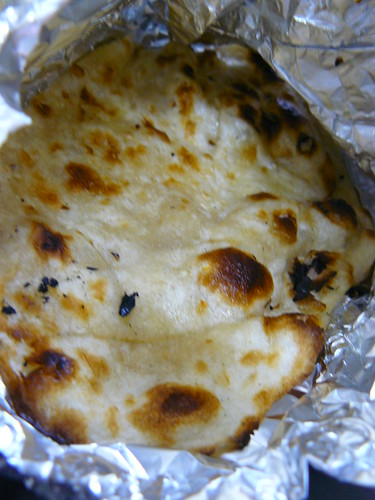
Takeaway bread
Naan wrapped in aluminium foil.

Aluminium in the diet has become an increasing concern ever since the metal was implicated in causing Alzheimer's disease in the mid 1960s. The metal can come from a variety of sources, including foods cooked or stored in aluminium or clay crockery and aluminium packaging; foods that naturally contain aluminium, like tea, and foods that are made with aluminium-based additives, such as baked goods.

Yes, you can get your daily dose of aluminium from cakes and tea. One study found that aluminium levels are generally low in unprocessed foods, typically under 1 ppm and rarely exceeding 10 ppm*, but the story is different for tea leaves. The same study noted that the richest natural sources of aluminium for Chinese food in Harbin are tea leaves, Chinese prickly ash (Sichuan pepper) and mustard*. Another study which focused on teas in Sichuan noted that brick teas, which are chiefly composed of old leaves, have the highest aluminium concentrations of all types of tea.

Drinking tea itself may be a negligible source of dietary aluminium however. Studies have found that there is little increase in the level of aluminium found in blood plasma or in urine after drinking black or green tea, with milk or lemon juice.

What about aluminium leaching from aluminium pots and pans, dishes or packaging, then? A 1992 study from Food Additives and Contaminants studied just that and found that very small or undetectable levels of aluminium actually leached out of aluminium containers into food, but, as always, 'it depends'. 


1993 study, done in Harbin and published in the Chinese Journal of Preventive Medicine (Zhonghua Yu Fang Yi Xue Za Zhi), concluded that Chinese people in Harbin consume an average of 4 to 15 mg, and rarely up to 20 mg of aluminium in the daily diet.  According to the study, tea leaves can contain between 300 to 1,800 ppm of aluminium, and 16 to 20% of this aluminium can be extracted from the leaves. Foods can contain 10 to 30 ppm of aluminium after processing and handling, the researchers added.

Foods made with aluminium-containing food additives contain extremely high level of aluminium, however. Such additives** may include E523, aluminium ammonium sulphate, used in industrial baking powder, or E541, sodium aluminium phosphates (acidic and basic) which may be used in the production of baked goods, cheese products, confectionery, frozen fish, minced meat, and stews. Other additives include and are not limited to E554, which is sodium aluminosilicate, E556, calcium aluminium silicate, and E559, aluminium silicate. According to the Chinese researchers, people can consume more than 100 mg of aluminium daily from their diet due to intake of foods made with aluminium-containing food additives.


The Science of the Total Environment also contains a 1997 study from India which agrees with the Chinese study. It noted that baking powder is a rich source of aluminium. A kg of cake prepared with one to three teaspoons of baking powder may contain 2 to 12.7 mg of aluminium in a 25g serving, the Indian researchers said.

The question is how much is too much. The Agency for Toxic Substances and Disease Registry, which is part of the US Department of Health and Human Services, has a toxicological profile for aluminium that lists minimum risk levels for exposure to the metal. Oral exposure should be no more than1 mg of aluminium per kg of body weight per day. Through staying away from baked goods and possibly medications that contain aluminium, we are all probably within safe levels. To be on the safer side, we can also minimise aluminium intake based on what we know so far.
A 2003 study in Environmental Geochemistry and Health conducted in Hong Kong has some advice on minimising aluminium from tea consumption:

  • Go for younger tea leaves
  • Indian tea varietals grown in the same place as Chinese tea varietals have less aluminium 
  • Green tea has less aluminium content than black tea
  • Steep the tea in the pot - more aluminium is released with the repeated tea infusion method (emptying the teapot once the tea is brewed and then adding fresh boiling water to make another pot of tea) compared to the continuous infusion method (leaving the tea to steep in the pot).
What about cooking?
  • Don't worry about boiling neutral porridge. Boiling neutral (non-alkali and non-acidic) porridge in aluminium pans causes no migration of aluminium out of the pan into the porridge***
  • Relatively small amounts of aluminium come through with milk. Milk causes leaching of 0.2 to 0.8 mg/kg***
  • Don't boil tap water in aluminium pans for too long. 
    • Bringing water to boil causes leaching of 0.54 to 4.3 mg/l. This increased with increasing boiling time, to 6.3-17 mg/l, perhaps explaining why adding more boiling water to tea also raises aluminium levels***
    • A different study was more precise: boiling water in aluminium pans caused aluminium concentrations to rise to 2.6 mg/l after 15 minutes****
  • Beware of cooking acidic foods in aluminium pans
    • Aluminium dissolved in foods based on acidic fruit juice registered at 2.9 to 35 mg/kg when the foods were boiled in aluminium pans*** 
    • The highest aluminium concentration of 170 mg/kg was measured in rhubarb juice prepared in the steaming vessel***
    • Tomato sauce made from mashed tomatoes cooked in non-coated aluminium pans contained 10-15 mg/kg of aluminium after an hour of cooking****

And what about storing foods and liquids in aluminium containers? Some studies throw light on this:
  • Coffee seems safe. Coffee, strangely enough, had lower levels of aluminium than in the tap water that was used in its preparation****.
  • Relatively little aluminium is poured out with Coca-Cola that has been stored in internally lacquered aluminium cans (levels of below 0.25 mg/l)****
  • Stay away from acidic liquids stored in aluminium containers. Lime blossom tea acidified with lemon juice stored in non-coated aluminium camping bottles for five days (up to 7 mg/l)****

Editor's note: Aluminium content is reported directly from the research reports. Some are in parts per million, others in mg per litre (l), while yet others are in mg per kg. It is not possible to compare these measurements directly. With water however the mg/l and mg/kg figures would be the same as 1 g of water has a volume of 1 ml. 

*These figures come from a 1993 study done in Harbin and published in the Chinese Journal of Preventive Medicine (Zhonghua Yu Fang Yi Xue Za Zhi).

**Some of these additives are banned in different countries.

***These figures come from a 1992 study from Food Additives and Contaminants.

****These figures come from a 1993 study published in Zeitschrift für Lebensmittel-Untersuchung und -Forschung.

2 October 2014

Brewing the perfect office cuppa

Teabox, which offers premium teas from India online, says that different types of tea have to be treated differently. 

"Tea is mostly water, so the quality of water you use makes all the difference. Overboiling the water may cause loss of oxygen and as a result, the flavours don't infuse that well. Oversteeping can also result in loss of flavours and make your tea very bitter," said Kaushal Dugar, CEO, Teabox.

The company has a handy guide to brewing the perfect cup of tea:

Source: Teabox.

Dugar said fans of tea and consider investing in two accessories that help them brew better tea, a tea steeper and a tea timer. Teabox does not stock these items, but they can be found online such as at Amazon.

"Making a cup of tea with loose leaves becomes immensely easier with a tea steeper," Dugar explained. "It lets your tea steep in and filters the leaves as you pour yourself a cup. Cusinart's steepers are pretty good."

Tea timers are essential to ensure that tea is steeped right, he continued. "Kuchenprofi's sand timers are elegant and practical," he added.

Read the Teabox story here.
Teabox talks about choosing the right cup of tea for the office here.

25 September 2014

Choosing the right tea for the office pantry

Everyone has tea in their office pantries, often the three-in-one premixed powdered sachets, or plain teabags. While these are convenient to store and easy to use, with much variety available at the supermarket, Teabox, a startup that sells premium teas from India online, says that there can be a downside to powdered teas or those in teabags.


Source: Teabox website.

"Tea dust is the remnants after the production of tea. It is the lowest quality of tea, lacks all the rich flavours, tastes and aroma of the tea. This is what goes into tea bags," explains Kaushal Dugar, CEO of Teabox.

He added that such teas would have negligible nutrition quotient. Asked what teas he would recommend from Teabox, he suggested considering Teabox's Afternoon Collection or Lunchtime Collection. 


"These have moderate caffeine levels, just right to push through the slow afternoons. They also go well with food," he said. 

The Afternoon Collection consists of 22 tea samples, including 

Avongrove (Summer) Darjeeling Organic Black Tea, 2014 Gopaldhara Wonder (Spring) Darjeeling White Tea, and 2014 Upper Namring Exotic (Spring) Darjeeling Green Tea. The Lunchtime Collection consists of nine samples, including Darjeeling Special (Autumn) Blend Green Tea, 2014 Okayti Marvel Organic (Spring) Darjeeling Black Tea and 2014 Darjeeling Imperial Blend (Spring) Oolong Tea.


The way tea is stored can matter, too. Dugar shared that tea can lose its essential flavours and aroma if stored improperly. "Storage for teabags does not really matter, since the tea dust doesn't produce such a flavourful cup anyway. But loose leaf tea needs to be properly stored, since exposure to air is the biggest threat to freshness. The tea needs to be in an airtight container, in a dark, cool and dry place," Dugar said. 

Read the Teabox story here.

11 September 2014

Teabox cuts tea supply chain to bring fresher teas to market

Kaushal Dugar's family has been in the tea industry for over 70 years. The CEO of Teabox, which was started in 2012, says the company was started to change things. 
Source: Teabox. Dugar.

"Entrepreneurship has always been my passion," he said. "Tea is a US$90 billion industry and despite India being the second-largest producer of tea, it isn't as popular as (tea from) Japan and China. This industry has been stuck with practices introduced 200 years ago."

Dugar explained that tea is traditionally sold in auctions after harvesting and processing. "From there, it takes almost five months and changes many hands before it reaches the customer. By this time, the tea loses all its freshness and flavour," he said. 

"I saw opportunity to give fresh tea to tea-lovers, straight from the source. And that is what I do with Teabox. One half of our team lives in Siliguri, Darjeeling, the heart of the tea gardens. We acquire the tea within 48 hours of production and ship it to our customers within a week. Fresh teas, from planter to customer – simple and hassle-free."

The startup has already attracted the attention of Accel Partners, one of the biggest investors in Silicon Valley, and a backer for Dropbox and Facebook. Teabox secured funding of US$1 million, and has not looked back since. 

Teabox currently stocks over 100 single-estate teas, the largest collection available. The company has shipped over 6 million cups of tea to date, and has a customer base that spans 74 countries.

"Aroma and tasting notes of the tea are described as akin to a fine wine or scotch. The year of picking, year of packing and various certifications such as 'USDA organic' and 'Fair Trade' are displayed so the users can make educated choices," Dugar said.

A visit to the Teabox website shows the level of detail that Teabox invests in each description. The 2014 Dooteriah China Special (Summer) Darjeeling black tea, S$9.81 for 100g, is said to be "A long and firm finishing tea... The dry leaves give off a woody scent with a hint of spice. Contrastingly, once brewed, the aroma is sweet, reminiscent of peaches and caramel. This character is followed through in the taste of the liquor, whose body is medium and possess just the right strength."


Steeping instructions are precise: the water should be at 90 to 100 degrees Celsius, and this tea should be steeped for four to five minutes.


Teabox also runs a monthly subscription programme called Fresh Beginnings, through which subscribers receive five new teas every month along with stories, anecdotes and information regarding tea.

"Tea without the cream and sugar is a very healthy beverage," Dugar noted. "Tea is high in antioxidants, which bind with free radicals in our body and eliminate them. When accumulated over time, free radicals are believed to cause cell damage and aging. Green tea and white tea are also rich in catechins, which have been shown to decrease the adverse effects of stroke, Parkinson's and Alzheimer's diseases."

Teabox specialises in tea from India, which is known for black teas, unlike Japan whose matcha (powdered green tea) sets the standards for green teas, and China, which Dugar said "produces the last word in white teas". "Indian teas are brisk," he said. "Their flavours are explosive and pronounced, unlike their other Asian counterparts which are considered mild and delicate."
Dugar shared that there are three major tea-producing regions in India:

Teas from Darjeeling are considered the 'champagne' of teas. "With their light, delicate flavours and refreshing taste, they are a favourite among tea connoisseurs and novices alike," Dugar said.

The state of Assam produces the largest volume of teas from the country. "Assam teas are known for their brisk body and malty taste, making a great stand-alone breakfast tea. The Assam CTC* is also a favourite for making tea blends," Dugar added.

The Nilgiri district in South India produces lesser-known but excellent teas. "The black teas from this region are described as 'intensely aromatic', with a smooth finish," Dugar commented.

*'Crush, tear, curl' is a method of tea production.