Showing posts with label development. Show all posts

29 June 2016

Singapore Workforce Development Agency, SCALA offer logistics reskilling initiative

The Logistics Professional Conversion Programme (PCP) was launched today by the Singapore Workforce Development Agency (WDA) and Supply Chain and Logistics Academy (SCALA) to reskill professionals, managers, executives and technicians (PMETs) who are keen to join the industry.

The Logistics PCP presents opportunities for both new entrants and existing logistics professionals to widen and deepen their skills for career growth in the industry. It offers 150 vacancies for PMETs for job roles as Logistics Officers and Logistics Executives over the next two years. The PCP will commence in July and is a key component of the Adapt and Grow initiative.

With better integrated systems and improved technology, the nature of jobs in the logistics industry has evolved and more high-tech skills are required as PMETs will need to manage multiple tracking systems that can be located regionally or even globally. With the launch of the Logistics PCP these PMETs will be equipped with skillsets in supply chain operations management, preparing them for new roles in areas such as freight forwarding, fleet operations management, supply chain operations, warehouse and storage supply chain. SCALA is the appointed programme partner for the Logistics PCP.

Chief Executive of WDA Ng Cher Pong said, “The logistics industry is constantly innovating to become more efficient and responsive to industry needs. As the industry evolves, new processes will be developed, and correspondingly, job roles will become more sophisticated and challenging. WDA will work with SCALA to ensure that relevant programmes are developed in tandem with industry growth and expectations. Reskilling is key to ensure that PMETs who are keen to join the industry are equipped to take on these new job roles.”

The PCP will comprise facilitated classroom sessions, customised structured on-the-job-training (OJT) and a mentorship programme.

For the OJT, SCALA will provide practical hands-on training complemented by a real-time operation environment where decisions and solutions are implemented based on real-life workplace issues. For the mentorship, SCALA will roll out the Train-the-Mentor programme which will equip experienced employees within the company with mentoring skills and knowledge to effectively coach the PCP trainees.

The SCALA Board of Advisors, appointed today, are industry practitioners who will provide leadership guidance and support on the development of training programmes and activities for the logistics and supply chain professionals.

“SCALA will play a key role in developing and empowering talents within Singapore's rapidly developing supply chain and logistics industries, ultimately enhancing the country’s position as a leading global supply chain hub. It will create a platform for the mastery of key skills through a practitioner based training methodology, offer practical and forward looking learning and skills acquisition opportunities, and provide the opportunity for those who enter the industry to excel in their career and personal development. YCH has committed to support SCALA by providing mentors in an advanced training environment, as well as hire 20% of trainees," said Dr Robert Yap, Founding Chairman of the Board for SCALA, and Chairman, YCH Group.

Ten companies have already come on board the programme and these companies will offer over 60 of the 150 vacancies for PMETs.

posted from Bloggeroid

12 January 2016

QIB signs up for Al-Dhameen SME funding programme

Source: QIB. Abdulaziz Bin Nasser Al-Khalifa, CEO of Qatar Development Bank (QDB), and Bassel Gamal, Qatar Islamic Bank (QIB) Group Chief Executive Officer, signed the Al-Dhameen agreement. The ceremony was attended by QDB officials Khalid Abdulla Al Mana, Executive Director of Business Finance and Jawaher Al Noaimi, Al Dhameen Programme Manager. QIB was represented by Tarek Fawzi, General Manager, Wholesale Banking Group, Mazen Al Thalathini, Assistant General Manager-Corporate Banking, and Basem Shahrouri, Head of Business Banking Division.
Source: QIB. Abdulaziz Bin Nasser Al-Khalifa, CEO of Qatar Development Bank (QDB), and Bassel Gamal, Qatar Islamic Bank (QIB) Group Chief Executive Officer, signed the Al-Dhameen agreement. The ceremony was attended by QDB officials Khalid Abdulla Al Mana, Executive Director of Business Finance and Jawaher Al Noaimi, Al Dhameen Programme Manager. QIB was represented by Tarek Fawzi, General Manager, Wholesale Banking Group, Mazen Al Thalathini, Assistant General Manager-Corporate Banking, and Basem Shahrouri, Head of Business Banking Division. 

Qatar Development Bank (QDB) has signed a new Al-Dhameen Programme Portfolio Agreement with Qatar Islamic Bank (QIB) for small and medium enterprise (SME) financing in Qatar.

Al-Dhameen, which is sponsored by QDB, helps startups and existing companies with lack of collateral to obtain funds for growing their businesses. All main sector business activities are eligible for support under Al-Dhameen except the agriculture, fishing and livestock; non-oil mining and quarrying; wholesale and retail trade; financial and insurance, and real estate industries.

The programme does not provide direct finance to SMEs, instead offering the business owner access to the required finance from a partner bank in the form of guarantees in favour of the bank. Al-Dhameen guarantees 85% of the finance value not exceeding QR15 million). 

The Al-Dhameen programme was enhanced after feedback from partner banks and related parties, primarily to expand the base of beneficiaries, allow partner banks to determine which SMEs receive financing, and to fund them more flexibly. A record QR846 million in guarantees have been disbursed to over 348 SMEs since the beginning of the programme in 2010. 

The new QR100 million Al Dhameen portfolio aims to speed up approvals to guarantee the value of the funding provided by the partner bank to small and medium enterprises lacking sufficient guarantees. QDB has prepared a special portfolio guide that describes the terms, conditions, and international standards, due diligence, credit monitoring, applications and guidelines development, to help QIB to take the necessary decisions without referring to QDB.

Abdulaziz Bin Nasser Al-Khalifa, CEO of QDB said: "The Al Dhameen programme primarily facilitates financing to some of the most important sectors of industry, such as education, healthcare, and value-added services. The programme targets mainly companies and startups. We are delighted with this partnership with QIB, which (reinforces the priority) that all banks operating in Qatar have to support and develop the SME sector, diversifying the private sector and building a knowledge-based economy.” 

Bassel Gamal, QIB Group Chief Executive Officer said: “This agreement underscores QIB’s commitment towards supporting the country’s economy, by enhancing the role of the private sector and contributing to a suitable economic diversification as part of the Qatar National Vision 2030. It enables our existing and potential customers to get what they need swiftly and seamlessly, thus supporting the establishment of new SMEs and helping operating companies with their business expansion plans.

“We are proud of our strong ties with QDB, and we are committed to further enhance the mutual cooperation to achieve the agreement’s objectives which will contribute significantly in speeding up the process to provide financing solutions for SMEs. Supporting the SME sector is one of our top priorities, and for that reason, we have a dedicated programme, Aamaly, designed to cater for all the financial needs of SMEs in Qatar.”

Commercial Bank and Doha Bank are also partner banks for Al-Dhameen, having signed agreements with QDB in July 2015.

Interested?

SMEs can enquire about applications at the nearest QIB branch.

4 December 2015

Eight MDBs to accelerate transport emission mitigation efforts

Eight multilateral development banks (MDBs) today issued a joint statement committing to accelerate their efforts to mitigate transport emissions and recognising the need for more action on the resilience of transport to climate change. The sector accounts for about 60% of global oil consumption, 27% of all energy use, and 23% of world energy-related CO2 emissions.

In their statement, the African Development Bank, Asian Development Bank (ADB), CAF-Development Bank of Latin America, European Bank for Reconstruction and Development, European Investment Bank, Inter-American Development Bank, Islamic Development Bank (ISDB), and the World Bank (WB) pledged to speed up action on:

- MDBs have recently committed to substantially increase financing for climate change mitigation and adaptation over the next few years. Transport is expected to play a key role in that commitment.

- The MDBs will increase their focus on low-carbon transport solutions and will continue to harmonise tools and metrics to assess transport-related greenhouse gas (GHG) emissions.

- Adaptation: The MDBs will jointly develop a systematic approach to mainstream climate resilience in transport policies, plans and investments.

“We, the multilateral development banks, believe that climate change is a defining challenge of our time. Actions to reduce greenhouse gas emissions and stabilise warming at two degrees Celsius will fall short if they do not include the transport sector. We commit to support countries in the implementation of sustainable transport solutions by providing critically needed financial and technical support to assist them in responding to rising aspirations for greater mobility and connectivity, in a sustainable and resilient way,” said Luis Alberto Moreno, President of the Inter-American Development Bank.

Moreno presented the statement on behalf of the eight MDBs during the Transport segment of the Lima Paris Action Agenda. Among the Intended Nationally Determined Contributions submitted as of November 12, 2015, about three quarters explicitly identify the transport sector as a mitigation source, and more than two thirds propose transport sector-specific mitigation measures. In 2012, the MDBs pledged US$175 billion by 2022 in financial resources for more sustainable transport.

“Asia’s burgeoning cities and remote communities alike need low-carbon, climate-resilient transport systems to thrive. ADB will prioritise bus and metro systems in cities, pedestrian and cycle pathways, and long distance railways to reduce emissions and congestion while providing safe and efficient transport in Asia,” said Bambang Susantono, ADB Vice-President for Knowledge Management and Sustainable Development.

"Supporting our member countries to develop efficient transport systems that are climate smart and resilient is a major goal for us. We will work together with other MDBs to ensure that we come up with innovative solutions that will help reduce carbon emissions,” said Dr Ahmad Mohamed Ali, President of IsDB.

"Transport must be a significant piece of the climate solution. We have the opportunity to transform transportation services so they are low-carbon and resilient to climate impacts. Now is the time to turn our commitments into action and we stand ready to work with countries as they develop low carbon and climate-resilient transport activities,” said Laura Tuck, World Bank Vice President for Sustainable Development.

posted from Bloggeroid

2 December 2015

Japan and Australia to be real estate investment magnets in 2016

Real estate activity in Asia next year will continue trends seen in 2015 - an abundance of capital flowing to core spaces, as well as a flight to safe havens in the region's most developed and liquid markets, according to Emerging Trends in Real Estate Asia Pacific 2016, a real estate forecast jointly published by the Urban Land Institute (ULI) and PwC

Japan and Australia remain the favourite countries for investment and development, with Tokyo, Sydney, Melbourne and Osaka taking four of the top five spots for promising markets in the Asia Pacific region. Ho Chi Minh City, rated fifth, rounds out the list of most favoured markets.

"Asia's real estate markets are the product of almost eight years of easy money from the world's central banks. Although easing in the US may be ending, both Japan and the European Union continue to provide liquidity, while interest rates in many Asian countries are lower than one year ago," said ULI North Asia Chairman Raymond Chow, Executive Director, Hongkong Land in Hong Kong. "This, combined with an allocation of capital from both local and global institutional investors, is resulting in more and more money chasing fewer and fewer real estate assets. This is pushing up prices across most markets and sectors, even as the current industry cycle appears to be winding down. We can expect this to continue throughout 2016, with the most attention being paid to markets perceived as offering certainty in terms of low risk and satisfactory returns."

"As the bull market in Asian real estate enters its seventh year, the positive atmosphere is encouraging investors to sell assets purchased years ago in the wake of the global financial crisis. Our report finds that investors are increasingly opting to take profits and exit from deals made in recent years. Opportunistic returns lie in Japan, where cheap debt and high leverage provide outsized profits, and in China, where developers are in need of capital and liquidity is in short supply. Meanwhile, investors with an eye on a possible peak in the cycle are attracted to the safety of core assets in gateway cities," said KK So, Asia Pacific Real Estate Tax Leader, PwC. 

"In terms of capital flows, investors continue to see increases in capital movements from Asia to real estate markets elsewhere in the world. The main contributor to this trend is China, where institutional, corporate, and private capital is buying mainly in Australia, Japan and the US."

Emerging Trends provides an outlook on Asia Pacific real estate investment and development trends, real estate finance and capital markets, and trends by property sector and metropolitan area. It is based on the opinions of 343 real estate professionals, including investors, developers, property company representatives, lenders, brokers and consultants.

The top five investment markets for 2016 are: 

Tokyo, ranked first for investment and development, ticks all the boxes for investors given its status as Asia's top gateway city, and the market with the greatest depth and liquidity. Despite the continuous heavy activity fuelled by easy credit and low interest rates, some are wary that the market is slowing. While the short-term outlook is favourable, a slowdown, accompanied by price stagnation or declines, could prove problematic for those needing to refinance high loan-to-value loans in the future, the report cautions.
Sydney, ranked second for both investment and development, is a draw for institutional investors seeking core office properties. The shortage of those assets and an influx of new investors competing for the properties, coupled with a depreciated local currency, is resulting in strong property yields. Real estate in Sydney is also benefiting from the transformation of Australia's economy from a commodities-driven to a service sector-driven model. A significant number of office-to-residential conversions and redevelopment projects have drawn investor interest. 

Melbourne, third for investment and development, is perceived as offering a similar environment to Sydney. However, even with double-digit price increases in 2015, properties in the city remain more affordable than those in Sydney, mainly because more land is available for an expansion of the central business district (CBD). 

Osaka, fourth for investment but fifth for development continues to benefit Tokyo's spillover demand. The market's growth "marks the end of a long period of oversupply that plagued the city for years," notes the report.
Ho Chi Minh City - fifth for investment and fourth for development - was in 19th place in 2014. The report attributes its surge in popularity to successful efforts by the government to stabilise the local currency and keep inflation in check, coupled with a revival of real estate lending by banks. In addition, improved market access for foreigners is drawing outside investors, who could significantly boost purchases of both residential and commercial properties.

Across the Asia-Pacific region, the industrial/logistics sector continues to be the most popular property type for investment prospects. "Shortages of modern distribution facilities across almost all markets ensures that demand will continue to grow, especially in China," says the report. It notes that demand is being driven by the need for rapid delivery resulting from the e-commerce boom, buildout in the cold-food chain, and structural changes in regional manufacturing as operations move to emerging markets such as Vietnam. 

22 November 2015

ASEAN publishes strategic action plan for SME development

Source: ASEAN Secretariat.
The ASEAN Strategic Action Plan for SME Development (SAPSMED) 2016-2025 has been developed in recognition of the significant contribution of micro, small and medium-enterprises (MSMEs) to economic growth, employment generation and gender empowerment in ASEAN. The plan aims to strengthen MSME engagement in an increasingly competitive economic environment and to support their growth and development.

The plan includes an implementation roadmap using country champions, maximising resources including those from ASEAN Dialogue Partners, and with periodic monitoring and evaluation built-in. Overall MSME achievement will be tracked through 10 key policy indicators, and other operational indicators to be developed.

The plan was launched at the sidelines of the 27th ASEAN Summit on 21 November 2015. It was developed by the ASEAN SME Working Group in consultation with the private sector and prepared with the cooperation of the AEM-METI Economic and Industrial Cooperation Committee and with the assistance of the USAID ASEAN Connectivity through Trade and Investment Project for the Roadmap.

Interested?

24 February 2015

Singapore's Budget 2015 supports businesses

Source: Ministry of Finance, Singapore. Infrastructure investments were also announced as part of Budget 2015.


The measures announced in yesterday's Singapore Budget 2015 by Deputy Prime Minister and Minister for Finance, Tharman Shanmugaratnam for businesses included more training help, tapering off aid for business restructuring, freezing of foreign worker levies other than for manufacturing and construction, as well as boosting innovation and expansion.

Training and development 

"We will invest continually in Singaporeans, throughout their careers," said Shanmugaratnam. With SkillsFuture, the government will help Singaporeans learn at every age and develop mastery and flair in every field. The SkillsFuture measures specific to businesses are:

· SkillsFuture Earn and Learn Programme. Fresh polytechnic and ITE graduates will be placed in jobs and receive a salary while undergoing institution-based and structured on-the-job training that leads to an industry-recognised qualification. Both trainees and employers will receive substantial support from the government.


· Targeted support for career progression. According to Shanmugaratnam, these will support individuals who wish to develop the specialist skills required for future growth clusters. 

"For example, they may include software developers, satellite engineers or master craftsmen. The awards can also support those who already have deep specialist skills and wish to develop other competencies such as business and cross-cultural  skills," he said. 

According to the Minister, the growth clusters Singapore will focus on are:


  • Advanced manufacturing, including advanced robotics and additive manufacturing (3D printing); 
  • Applied health sciences, such as developing new medical devices and better nutrition, and transforming healthcare delivery; Smart, sustainable urban solutions, from water and waste management to transport and urban planning; 
  • Logistics and aerospace, capitalising on air and seaport infrastructure and investing in new technological platforms; and 
  • Asian and global financial services. 

SkillsFuture Study Awards will be introduced in phases, starting this year, and will be awarded to about 2,000 recipients per year eventually. SkillsFuture Fellowships will also be introduced from 2016, to develop Singaporeans to achieve mastery in their respective fields. About 100 fellowships will be awarded each year.

· Under the SkillsFuture Leadership Development Initiative, collaborations with strategic companies will be stepped up, to develop a pipeline of Singaporeans to take on corporate leadership roles and responsibilities.

· Industry collaboration. To uplift the broad base of companies, and to help Singaporeans develop their careers, the government will work with employers, unions, and education and training providers to develop and implement Sectoral Manpower Plans (SMPs) in all key sectors by 2020.

To help SMEs overcome the constraints they face in developing capabilities and capacity, the government will also work with industry partners to develop a shared pool of SkillsFuture Mentors with specialised, industry-relevant skills which SMEs can tap on.

More details on these initiatives will be provided subsequently.

Restructuring support


Shanmugaratnam noted that Singapore's productivity level is 13% higher today than the start of the national restructuring journey in 2010. "This is an average growth rate of 2.5% per year. All of this gain was achieved in 2010 (11.6%) and 2011 (2.3%) as we recovered from the recession, and growth has been negligible in the three years since then," he said.

More productivity is possible, especially when globalising companies are compared against those firms which only compete locally, he added. "There is a stark difference between productivity growth in industries where our businesses compete internationally, and in those where businesses compete mainly in the domestic market, such as construction, retail and F&B. 

"Over the past five years, our outward-oriented sectors saw productivity growth of over 5% per year on average, compared to less than 1% for our domestic-oriented sectors. Further, employment growth has been mainly in the domestic-oriented sectors. This is essentially why our overall productivity growth has lagged," he said.

"Every sector can achieve a lift in productivity, but it is especially important for our domestic sectors. It will only happen as firms rethink business strategies, seek to break the mould by finding new ways of growing their revenues, and take full advantage of government incentives for upgrading. Our tight labour market itself will motivate businesses to do so. We know that this major upgrading is possible in our domestic industries where productivity has lagged, because there are leaders internationally who have done it."

As businesses may need more time to adjust to rising costs as they restructure, the Transition Support Package will be extended by two years but provided at reduced support levels.

· The Wage Credit Scheme will be extended to 2017, to give employers more time to adjust to the tight labour market. Gross monthly wage increases of at least S$50 in the qualifying year (2016 to 2017), up to a gross monthly wage level of $4,000, will qualify for 20% co-funding.

In addition, gross monthly wage increases of at least S$50 given in 2015 and sustained in 2016/2017, and wage increases given in 2016 and sustained in 2017, will continue to be co-funded at 20%.

· The 30% Corporate Income Tax (CIT) Rebate will be extended for Year of Assessment (YA) 2016 and YA2017, with a reduced cap of S$20,000 per company per YA. The reduced cap will ensure that more support is focused on SMEs.

· The Productivity and Innovation Credit (PIC) Bonus will be phased out after YA2015 as it was intended as a transitional measure and has been successful in spreading the culture of productivity amongst SMEs. Businesses will continue to benefit from the PIC scheme which has been extended till YA2018, and the PIC+ scheme introduced in Budget 2014.

Foreign worker levies 

As the net inflow of foreign workers (excluding construction) has slowed significantly, the Government will defer this year’s round of announced levy increases for S Pass and Work Permit Holders, with the exception of Work Permit Holder levies in the Manufacturing and Construction sectors. 

Shanmugaratnam stressed that the government is not changing its stance on reliance on foreign talent. "..to avoid any misunderstanding, let me affirm unequivocally that while we are adjusting the pace of our foreign worker measures, we are not changing direction. It remains crucial for Singapore that we restructure towards reducing our reliance on manpower, and find new and more innovative ways to do business," he said.

"Our basic approach remains unchanged. We have to stay the course in reducing reliance on labour and especially unskilled foreign workers. However, we will continue to calibrate our foreign worker policies as informed by evidence on the pace of inflows, the quality of workers being employed, and the progress being made in raising productivity, sector by sector."

Strengthening support for innovation


Shanmugaratnam noted that Singapore's public investments have catalysed S$8.6 billion of industry R&D since 2011. He lauded local electronics manufacturer Dou Yee International as an innovation success story. "From a small trading business, it has transformed itself into a dominant player in the electrostatic materials industry with an annual turnover of S$300 million. It did this through R&D and a longstanding partnership with A*STAR. Most recently, Dou Yee has worked with A*STAR to develop smart plastic packaging that extends the freshness and shelf-life of food," he said.

"In our next Research, Innovation and Enterprise five-year plan, we will step up efforts to help companies develop, test and commercialise new products and solutions. More details will be provided later in the year."

· To support SME innovation, the Capability Development Grant (CDG) will be made more accessible to companies via a simplified application process for projects below S$30,000. The CDG’s enhanced funding support level of up to 70% of qualifying costs will also be extended for three more years, to 31 March 2018.

· To promote industry collaborations, SPRING’s Collaborative Industry Projects will be extended to all industry sectors to develop productive and innovative solutions. The Partnerships for Capability Transformation (PACT) scheme will also be enhanced to foster collaboration between large companies and SMEs in their supply chain.

· The National Research Fund will be topped up by S$1 billion this year, with greater efforts to help companies develop and commercialise new products.

· To ensure that promising companies have access to capital that they need to grow, the government will:

  • Top up the Business Angel Scheme (BAS) by S$75 million and increase the co-investment cap to S$2 million per company for BAS and SPRING’s Startup Enterprise Development Scheme (SEEDS) to reduce early-stage funding gaps for startups. 
  • Pilot a venture debt risk-sharing programme to provide 50% risk-sharing to selected financial institutions for such loans, over an initial period of two years. The aim is to catalyse about 100 venture debt loans, totalling approximately S$500 million. 
Expanding overseas

To support internationalisation, the government will:

· Raise the support level for SMEs for all activities under IE Singapore’s grant schemes from 50% to 70% for three years, to 31 March 2018*.

· Enhance the Double Tax Deduction for Internationalisation scheme to cover qualifying manpower expenses incurred for Singaporeans posted to new overseas entities.

· Introduce a new International Growth Scheme to provide qualifying companies a 10% concessionary tax rate on their incremental income from qualifying internationalisation activities. The scheme will expire on 31 March 2020.

Encouraging mergers & acquisitions

To help companies acquire scale through mergers & acquisitions (M&A), the government will:

· Increase the tax allowance for acquisition costs from the current 5% to 25% of the value of acquisition, with the cap on the allowance remaining at S$5 million per YA. In addition, companies will be able to claim M&A benefits for acquisitions that result in at least 20% shareholding in the target company, down from the current threshold of 50% shareholding. Also, the M&A tax allowance scheme will be extended till 31 March 2020.

· Extend the scope of IE Singapore’s Internationalisation Finance Scheme to cover overseas M&A financing.

More details will be announced at the Ministry of Trade and Industry’s Committee of Supply.

Read more about the Budget for 2015 here.

*These are the Global Company Partnership (GCP), and the Market Readiness Assistance (MRA) grants. The current support level for both these schemes is up to 50%, except for four activities: design, branding, intellectual property, and M&A, which are supported at 70% from 1 Apr 2012 to 31 Mar 2015.

14 January 2015

Mercer and Saville Consulting to provide global leadership solutions

Consulting companies Mercer and Saville Consulting will work together to provide sophisticated leadership assessment and development tools to corporate clients operating in increasingly complex, cross-border markets.
The two companies have signed a formal agreement in response to growing demand from corporates in emerging markets for tools that help them accurately predict the future effectiveness of their senior leaders in a rapidly changing, global context.

For the first time, companies will be able to conduct standardised, global leadership assessment in multiple languages that specifically address the needs of today’s business environment.

Together, Mercer and Saville Consulting will deliver a suite of leadership solutions. In particular, they will launch a Global Leadership Profile Tool, which brings together Saville’s psychometric testing with Mercer’s insight into how companies can develop global leadership capabilities among senior executives.

Mercer predicts that developing a truly global leadership capability will continue to become even more critical in sustaining economic success and competitive advantage across growth markets.

“Mercer’s research and experience with large corporate companies around the world demonstrates an ever-increasing need for leaders with a global mindset and an understanding of cultural and geographical sensitivities. This is now a must have for modern businesses. Traditional leadership competencies are no longer enough,” said Kate Bravery, Partner and Leadership & Organisational Performance Practice Leader, Growth Markets for Mercer.

26 August 2014

Aptugo creates the web software you want, no training needed

Aptugo, a software tool which helps people with no programming experience to create their own websites, is now in beta* and will be available from 2015, say its developers, also called Aptugo.

"Aptugo will reduce the gap between large and small companies. It doesn't require knowledge of programming at all," emphasised Gaston Gorosterrazu, Head of Aptugo. "At the same time, having some knowledge allows the user to extend what they can do with Aptugo, as it is designed with the idea to empower the user and take him a few levels beyond." 

The Aptugo software is targeted at small business owners and can help them to tailor-make web software such as an online video library. Traditional software development is expensive, may not deliver exactly as conceptualised, and takes months. In contrast, the Aptugo tool guides users into developing their own software, completing it in minutes, the company said. 

Source: Aptugo. The Aptugo software.

Other advantages include:
  • Support for different programming languages 
  • Ability to reuse the basic structure in future projects
  • Optimised for speed: Websites built by Aptugo respond in 40ms to 150ms without expensive hosting infrastructure. The Aptugo website is built on Aptugo, and a reflection of the response times which are possible.

Gorosterrazu said the software should deliver more value than its cost. "It will be 100% free for non-profit organisations of any size," he said.
View a video of how Aptugo works here. In the beta stage, Aptugo is limited to producing web applications in PHP. The ultimate goal is to support the creation of applications for any platform and operating system, Gorosterrazu said.

Existing registered users from Asia Pacific include those from the Philippines, India, Indonesia, and then Australia, Gorosterrazu added.

*Beta software is not fully final, so some features may not yet work as advertised.

16 June 2014

The Bridge Phnom Penh offers Cambodia's first SOHO properties

Singapore property developer Oxley Holdings has introduced a small-office-home-office (SOHO) property concept in Phnom Penh at the official launch of The Bridge in Cambodia. This is the company’s maiden project in Cambodia through a joint venture with local property developer Worldbridge Land Cambodia.

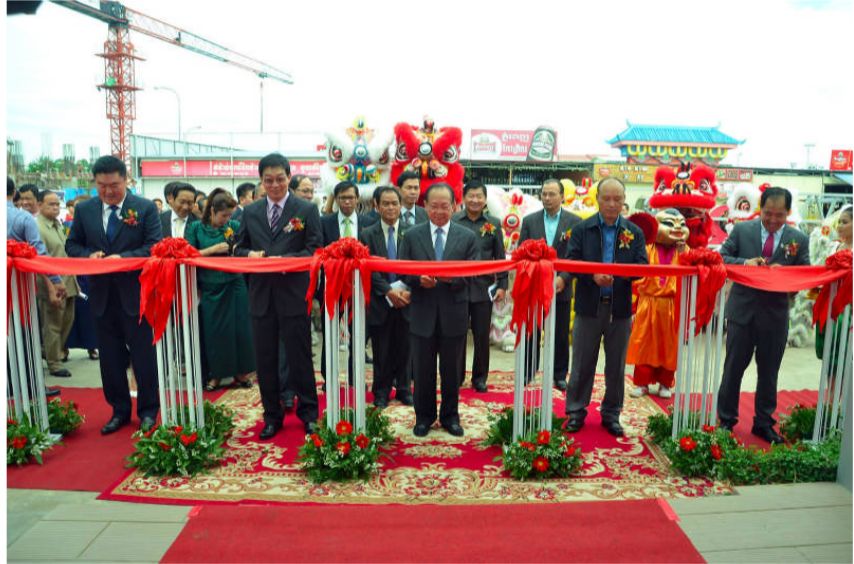
Source: Oxley. Oxley Holdings’ CEO Ching Chiat Kwong (first from left) at the ribbon-cutting ceremony for the showroom for The Bridge in Phnom Penh with Tan Teck Kee, Executive Director, Worldbridge Land, Guest of Honour H.E. Im Chhunlim, Senior Minister, Ministry of Land Management, Urban and Construction, H.E. General Sao Sokha, Deputy Commander in Chief of Royal Cambodian Armed Forces and Commander of Royal Gendarmary of Cambodia, and Oknha Sear Rithy, Chairman, Worldbridge Land.


The Bridge will comprise residential apartments, retail units and 963 SOHO units, spanning 46 sq m to 78 sq m, with starting prices of US$100,000. When completed in 2018, The Bridge will be the largest and tallest mixed development in Cambodia at 45 storeys and a land area of 10,090 sq m.
In conjunction with the official launch of the development, the Company opened a showroom in Phnom Penh featuring the possible configurations of both residential and SOHO apartments. More than 100 SOHO units have been taken up since the company began accepting bookings in June. This figure had doubled by the day of the launch.

A sales gallery for The Bridge opened on 14 June in Singapore, at 390 Orchard Road, #16-01, Palais Renaissance. It is open from 12 to 6pm daily.