Showing posts with label test. Show all posts

12 December 2022

ESET test shows how much of a visionary thinker you are

ESET, a global cybersecurity provider, has launched the Progress Personas psychometric test. Developed in partnership with The Myers-Briggs Company, a pioneer in personality and professional development assessments, the test is designed for the curious and inquisitive, with the questionnaire allowing individuals to identify where they fit on the scale of visionary thinkers.

The Progress Personas test is designed to understand what makes people tick, innovate, and push society forward. After responding to a series of short questions, individuals will be provided with a bespoke report outlining the likely strengths and weaknesses of their forward-thinking personalities. The reports detail the specific innovative persona type they fall into, including The Changemaker, Flex Fury, Authentic Dynamo, Power Pro, Firestarter, Captain Conventional, Doctor Constant, The Chameleon, or The Inventor.

“We live in a changing world where we need to adapt and be resilient in order to progress. ESET believes that any inquiring mind has a role to play in contributing to progress that keeps the world turning,” said Ignacio Sbampato, Chief Business Officer at ESET. 

“Everyone has different ways of being progress-minded. This psychometric test will highlight an individual’s forward-thinking persona and provide hints and tips to help reach their full potential. We’re excited to be partnering with a respected institution like The Myers-Briggs Company, to bring something insightful and fun to our global audience.”

The Myers-Briggs Company publishes the Myers-Briggs Type Indicator (MBTI) assessment that reveals the differing psychological preferences in how people perceive the world and make decisions. The MBTI assessment indicates a person’s preference in four separate categories: extraversion or introversion, sensing or intuition, thinking or feeling, and judging or perceiving. The framework was developed in the 1940s by Katharine Cook Briggs and her daughter, Isabel Briggs Myers, who were inspired by Swiss psychiatrist Carl Jung’s book Psychological Types.

“The Progress Personas assessment has been developed to be a reliable measure of innovation style and resilience,” said John Hackston, head of Thought Leadership at The Myers-Briggs Company. 

“By combining the scores of these two dimensions, the report gives people a unique insight into their individual style of achieving progress — their progress persona.”

The Progress Personas test follows ESET’s Heroes of Progress Awards which were announced in September, designed to shine a light on the visionary thinkers helping to make our planet a better place.

Explore

Take the free psychometric test

17 February 2022

BUZUD, Fosun Trade Medical Devices launches two-in-one blood glucose and uric acid tester

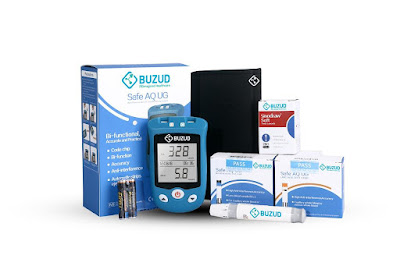
Source: BUZUD, Fosun Trade Medical Devices. The Safe AQ UG Blood Glucose and Uric Acid Monitoring System featuring the meter, test strips, and test solutions.
Source: BUZUD, Fosun Trade Medical Devices. The Safe AQ UG Blood Glucose and Uric Acid Monitoring System enables uric acid levels as well as blood glucose levels to be tested at home.

BUZUD, Fosun Trade Medical Devices, a manufacturer of medical appliances, has made available BUZUD’s Safe AQ UG Blood Glucose and Uric Acid Monitoring System. This dual function test system enables users to measure blood sugar and uric acid levels conveniently and accurately.*

While testing blood glucose levels can commonly be done at home, the conventional way to test uric acid levels is to send a urine or blood sample for testing to a laboratory. This process is costly and it can take up to three days to receive the results.

Certified by government health ministries in many countries, including Singapore’s Health Sciences Authority (HSA), the BUZUD Safe AQ UG Blood Glucose and Uric Acid Monitoring System uses FAD-GDH (flavin adenine dinucleotide-dependent glucose dehydrogenase) technology, coupled with an anti-interference enzyme layer design. This enables more accurate blood glucose tests based on electrochemical glucose measurements without interference from oxygen, blood, ascorbic acid, and other internal and external interference sources in the blood sample.

“People with high levels of blood sugar and/or uric acid often find it challenging to regularly monitor their blood sugar and uric acid levels as it can be a hassle to test quickly and simply,” said Frankie Fan, founder, CEO and CTO of BUZUD, Fosun Trade Medical Devices.

“BUZUD’s Safe AQ UG Blood Glucose and Uric Acid meter is a new generation of bifunctional monitoring system that offers the convenience of testing both blood glucose and uric acid on a single meter, with results detected within 30 seconds.”

According to the World Health Organization, 422 million people worldwide have diabetes and it is one of the leading causes of death in the world. Effectively managing diabetes would depend on patients acting on the results of their blood glucose tests.

And when the kidneys are unable to eliminate uric acid efficiently, causing high uric acid levels, gout as well as permanent bone, joint and tissue damage, kidney disease, and heart disease can occur. Regularly monitoring of uric acid levels is key to effective uric acid management, said the company. When it comes to gout, some 41.2 million people are estimated to have the illness.

The BUZUD Safe AQ UG Blood Glucose and Uric Acid Monitoring System requires a small blood sample to return results at up to 95% accuracy. A lancet is used to prick a finger and a small sample of blood is applied to the relevant test strips. The blood glucose and/or uric acid test strips are then inserted into the Safe AQ UG blood glucose and uric acid meter, after which blood glucose test results will be shown within 5 seconds and uric acid test results within 25 seconds. The test strips are then ejected safely with a one-click system.

The system stores 200 of the most recent results (100 blood glucose and 100 uric acid test results) with date and time stamps for easy long-term monitoring.

The Monitoring System includes the following:

• Safe AQ UG blood glucose and uric acid meter

• Safe AQ UG blood glucose test strips

• Safe AQ UG uric acid test strips

• Blood glucose control solution

• Uric acid control solution

Details:

The BUZUD Safe AQ UG Blood Glucose and Uric Acid Monitoring System is now available for purchase in Singapore, Australia, China, Europe, and Malaysia.

In Singapore the new system is available online for S$243.96 at the Buzud.Roffe Lazada Store, or physically at the BUZUD retail store at:

585 North Bridge Road #01-02,

Raffles Hospital,

Singapore 188770

+65 6518 9959

www.buzud.com

*The BUZUD Safe AQ UG Blood Glucose and Uric Acid Monitoring System should not be used for the diagnosis of or screening of diabetes and hyperuricemia (HUA).

30 November 2020

Singapore company offers portable COVID-19 test

Cell ID, a Singapore-incorporated medtech company, is selling a palm-sized portable genetic test kit that uses laptop software to detect if a person has COVID-19. Called the Quiz PCR Biochip, the test uses biotechnology to perform testing outside of the laboratory at the rate of two tests at a time.

Positive results can be confirmed as quickly as in five minutes while negative results are returned within an hour. A QR code on the biochip allows healthcare providers to quickly identify and electronically deliver the test results to the person being tested.

Quiz PCR Biochips are affordable, single-use genetic tests that can detect COVID-19, anywhere at any time,” said the inventor, Xander Sim, CTO and co-founder of Cell ID.

“Currently, we can manufacture 8.5 million biochips in a month, which is 17 million tests.”

Source: Cell ID. Quiz PCR Biochip test kits next to a laptop.
Source: Cell ID. The Quiz PCR Biochip is a portable genetic test kit for detecting COVID-19.

The test requires a tiny amount (10 µl) of a nasal swab or saliva specimen to be applied to the biochip, which when plugged into a laptop, runs a real-time RT-LAMP assay for the qualitative detection of SARS-CoV-2 RNA. Two genetic tests are able to run concurrently using the same or different protocols - PCR tests or RT-LAMP assay. The biochips are hot-swappable, meaning that one biochip can be removed and replaced with another without requiring the entire system to shut down first. To operate the test, under two hours of training is required.

“We designed the Quiz PCR Biochip to be free of the cold-chain limitations of conventional tabletop PCR tests found in laboratories,” added Sim. 

“The Quiz PCR Biochip is capable of thermocycling for PCR tests, as well as single temperature operation for RT-LAMP assay. Our RT-LAMP assay fully meets the 95% CI accuracy standard.” CI stands for confidence interval, a way of measuring accuracy, while thermocycling refers to the cycles of heating and cooling required as part of the PCR test process.

The effectiveness of the biochips has been tested in Singapore in collaboration with Singapore healthcare agencies at two quarantine facilities (EXPO and a foreign workers' dormitory) between July and October 2020. A third-party laboratory independently validated the test’s efficacy in Switzerland in November 2020.

PCR stands for polymerase chain reaction, while RT-LAMP refers to reverse transcription loop-mediated isothermal amplification. RT-LAMP tests are generally cheaper and faster than PCR tests. PCR testing also requires operators to undergo more training.

Sales are subject to regulatory approval.

Explore:

Read an INSEAD blog post about the nuances of COVID-19 testing

1 November 2016

Allergy tests for Asians now available through Angsana

Angsana Molecular & Diagnostics Laboratory today announced that it will provide tests for allergen sensitisation specific for the Asian population using technology from Thermo Fisher Scientific. The tests will be based on Thermo Fisher's ImmunoCAP (CAP) technology and performed by Phadia Laboratory Systems.

While many allergens are common across populations, there has been increased recognition that there are differences among different ethnic groups and across different geographic regions. Factors such as genetics, environmental exposure, diet and social behaviour appear to contribute to this.

Angsana is seeking to define and validate specific tests for allergen sensitisation that are suited to local needs. ImmunoCAP technology is well known for its high specificity and sensitivity, quantitative results, high quality and a comprehensive menu of allergens and allergen components.

"Angsana is committed to deliver high-performance and affordable molecular diagnostic services to meet the health demand of Asian population. We are excited to work with Thermo Fisher and its technology to help us expand our service capabilities to better address this major public health concern," said Dr Chris Tan, CEO, Angsana.

"With the rising incidence of atopic* diseases, particularly among younger children, it is important to better understand the regional and ethnic differences in Asian countries," said Dr Richard Choy, Angsana's Chief Scientific Officer and MD, Angsana Hong Kong laboratory. "Through collaboration with local medical experts and healthcare providers, Angsana aims to provide a testing solution for Asia, in order to help improve the diagnosis efficiency and aid better allergy management."

"We're pleased that Angsana recognises our quality and expertise and we are pleased that our technology can be used to support their efforts," said Stefan Wolf, President, ImmunoDiagnostics, Thermo Fisher. "Providing tests for allergen sensitisation for the Asian population will help to enable healthcare professionals to have a better understanding of the symptoms of their patients."

Angsana has recently acquired Allergy Laboratory, a Singapore-based private laboratory with over 10-year experience serving in the allergy testing business. "The acquisition enables us to combine the existing tests and dedicated expertise from Allergy Laboratory with the range of premium molecular assays from Angsana, providing an expanded, high-quality diagnostic services under the CAP-accredited environment," said Dr Tan.

*Atopic diseases refer to situations where an allergy-causing substance touching one part of the body affect a completely different part of the body.

5 May 2015

Malaria may soon be detected with a simple breath test

Source: CSIRO. Tests such
as this one, which captures
exhaled breath for chemical
analysis, may soon be used to
detect malaria.
Australian scientists at CSIRO, QIMR Berghofer Medical Research Institute and the Australian National University have made a significant discovery that could lead to a simple and quick "breath test" for malaria. Current malaria diagnosis techniques focus on using microscopes to look for parasites in blood, using a method discovered in 1880. 

The researchers looked at the breath of volunteers who had been given a controlled malaria infection as part of existing studies to develop new treatments, and found that the levels of some normally almost undetectable chemicals increased markedly in the breath of the volunteers during the malaria infection.

"What is exciting is that the increase in these chemicals were present at very early stages of infection, when many other methods would have been unable to detect the parasite in the body of people infected with malaria," Dr Stephen Trowell, Research Group Leader at CSIRO said.

"In addition to its potentially better sensitivity, human breath offers an attractive alternative to blood tests for diagnosing malaria."

The study, published in the Journal of Infectious Diseases, was conducted in two independent studies where experimental drug treatments were being tested in volunteers who had been given a very small dose of infection.

Using a sophisticated analytical instrument, the researchers identified four sulphur-containing compounds whose levels varied across the time course of the malaria infection.

"The sulphur-containing chemicals had not previously been associated with any disease and their concentrations changed in a consistent pattern over the course of the malaria infection," Professor James McCarthy, Senior Scientist in Clinical Tropical Medicine at QIMR Berghofer said. "Their levels were correlated with the severity of the infection and effectively disappeared after they were cured."

"Now we are collaborating with researchers in regions where malaria is endemic, to test whether the same chemicals can be found in the breath of patients," Dr Trowell said.

"We are also working with colleagues to develop very specific, sensitive and cheap 'biosensors' that could be used in the clinic and the field to test breath for malaria."

In 2013, according to the WHO, there were almost 200 million cases and over half a million deaths due to this disease.

14 August 2014

Hong Kong, Tokyo and Dubai in top 10 for hotel Wi-Fi speeds

Hotelwifitest.com has released rankings for cities by the percentage of hotels with poor Wi-Fi performance. Stockholm was rated highest on satisfaction with hotel Wi-Fi, followed by Hong Kong, and then Amsterdam.

Source: Hotelwifitest.com
The company advises travellers to check the Wi-Fi quality before booking a hotel. The Hotelwifitest website features hotels which have already been tested and also allows visitors to test their upload, download and latency speeds. 

The top three hotels in Singapore, ranked no. 12 for Wi-Fi speeds globally, are the Marina Bay Sands, which offers free Wi-Fi and expected download speeds of 61.5 Mbps, Traders Hotel, which also has free Wi-Fi but at a download speed of 25 Mbps, and V Hotel Lavender, which requires payment for Wi-Fi but offers download speeds of 24.7 Mbps.

Hong Kong, given its no. 2 spot globally, offers faster speeds overall. The top three hotels are the Ovolo with download speeds at 50.5 Mbps, the Pottinger with 34.9 Mbps downloads, and the Ovolo 2 with 30.4 Mbps downloads. All three hotels offer free Wi-Fi.

Rank City           Country              Hotels with poor WiFi (%)
    1    Stockholm      Sweden               4
    2    Hong Kong      Hong Kong            8
    3    Amsterdam      Netherlands          17
    4    Tokyo          Japan                19
    5    Rome           Italy                27
    6    Dubai          United Arab Emirates 29
    7    London         United Kingdom       30
    8    Berlin         Germany              31
    9    San Diego      United States        33
    10   Barcelona      Spain                35
    11   Washington     United States        37
    12   Singapore      Singapore            38
    13   Chicago        United States        38
    14   Vienna         United States        40
    15   Bangkok        Thailand             41
    16   New York       United States        41
    17   Orlando        United States        44
    18   San Francisco  United States        48
    19   Paris          France               53
    20   Las Vegas      United States        57

*A hotel is judged as providing adequate Wi-Fi if it provides an expected download speed of at least 2Mbps. Upload testing, latency testing, and stability feedback have been added to the testing process, and in future all hotels rated as providing adequate Wi-Fi must also feature an upload speed of 1Mbps, latency not exceeding 500ms, and an average stability rating of at least 3 out of 5. The tests did not differentiate between paid and free WiFi.