Showing posts with label environment. Show all posts

4 August 2022

Visa Eco Benefits bring sustainability to every transaction

Visa, the digital payments provider, has launched Visa Eco Benefits in Asia Pacific. Eco Benefits is a suite of sustainability-focused solutions that will help Visa cardholders across the region better understand the environmental impact of their day-to-day payments. They can calculate the carbon footprint generated by their Visa transactions, and access options for carbon offsetting or charitable donations from their bank’s website or app.

Banks in Asia Pacific that sign up for Eco Benefits will be able to offer these solutions to their Visa cardholders and meet a growing demand for sustainable financial services. According to a new Visa/YouGov survey*, 66% of consumers in Asia Pacific expect their bank to offer ecofriendly payment solutions. Over half (52%) would switch banks in order to access a product or service that helps them understand the carbon footprint of their spending.

“The majority (78%) of people in Asia Pacific said they are more likely to make more environmentally friendly purchases if they’re able to see their carbon footprint and take steps to change their spending habits,” said Kunal Chatterjee, Country Manager for Singapore and Brunei.

“Our bank and fintech partners across the region can now add these sustainability features to existing Visa cards. Eco Benefits is another way that Visa is expanding our network beyond payment transactions to deliver more insights to our partners and their customers.”

The following solutions are included in Visa Eco Benefits:

Carbon footprint calculator: insights powered by Verrency for cardholders to understand the estimated carbon footprint generated by their purchases

Carbon offsets: cardholders can elect to offset their carbon footprint from a range of specially curated projects in areas such as forestry and clean energy

Charitable contributions: donations to environmental organisations can be triggered when Visa cards are used

Card materials: physical payment cards made from sustainable materials

Personalised education: cardholders can access personalised tips and education on sustainable consumption

“Consumer household expenditure - the products and services we purchase every day - is a major contributor of global greenhouse gas emissions**,” said Jeroen van Son, global CEO of Verrency. “That gives us as consumers a phenomenal opportunity to address climate change by offsetting the carbon footprint of our day-to-day behaviour and start to live a carbon neutral life. Up until now, customers did not have any convenient tools to take decisive action to offset their carbon footprint. Verrency’s Carbon Action Index changes that. From now on, consumers can choose to live a carbon neutral life, just by using their Visa card as they do today.”

Visa Eco Benefits is a continuation of Visa’s global aspiration to be a climate positive company, using its products, services, data, network and brand to drive sustainable commerce and support the transition to a low-carbon economy. In 2021, Visa announced a pledge to reach net-zero emissions by 2040, 10 years ahead of the Paris Climate Agreement goal.

*All figures, unless otherwise stated, are from YouGov Singapore. Total sample size was 14,356 adults across 14 markets. Fieldwork was undertaken between 23 June – 5 July 2022. The survey was carried out online. The figures have been weighted and are representative of all adults (aged 18+) nationally in each of the respective markets. The figures have been weighted and are representative of all adults (aged 18+) nationally in each of the respective markets. The survey was conducted in the following markets: Vietnam, Thailand, Singapore, Philippines, Malaysia, New Zealand, Australia, mainland China, Indonesia, Hong Kong, India, Korea, Japan and Taiwan. 

**Columbia Climate School, How Buying Stuff Drives Climate Change, December 2020.

27 June 2022

Commonwealth adopts Living Lands Charter, launches Blue Charter project incubator

Commonwealth leaders have officially adopted the Living Lands Charter: A Commonwealth Call to action on Living Lands (CALL), which commits all 54 member countries to safeguarding global land resources while taking coordinated action on climate change, biodiversity loss and sustainable land management.

The non-binding agreement was announced today at the conclusion of the 2022 Commonwealth Heads of Government Meeting in Kigali, Rwanda, along with the final communiqué. It is the culmination of nearly two years of intense consultation, engagement and negotiation with member countries, United Nations Rio Conventions, and other relevant stakeholders.

Applauding the initiative, the Commonwealth Secretary-General, the Rt Hon Patricia Scotland QC, said: “The Living Lands Charter is a testament to our commitment to the people of the Commonwealth, and to the Commonwealth principles of transparency, consensus, and common action.

"It helps to encapsulate our combined effort to hold the global average temperature increase to 1.5°C. It seeks to catalyse the global political momentum for enhancing climate action, building resilience, reducing biodiversity loss, and arresting land degradation.

“Our Call to Action on Living Lands seeks to propel sustainable land management by supporting the 54 Commonwealth member countries to prevent biodiversity loss and desertification while reducing emissions, enhancing resilience and promoting sustainable development.”

The Living Lands Charter recognises that the vulnerabilities of our ecosystems to land degradation, biodiversity loss and climate change are closely interrelated and need to be considered collectively. It seeks to strengthen synergies and coordinated action at national, regional and global levels, of relevant actions under the three Rio Conventions — namely, the United Nations Convention on Biological Diversity (UNCBD); the United Nations Convention to Combat Desertification (UNCCD), and the United Nations Framework Convention on Climate Change (UNFCCC). The Secretariats for the three Rio Conventions have expressed their full support for the charter.

Heads recognised the need of taking a principled approach to the Living Lands Charter and active cooperation with a range of partners to share knowledge, expertise, success stories, and good practices in sustainable land management, while incentivising investment flows and technological innovation.

They also underlined the critical guardianship provided by indigenous peoples and local communities in protecting land and vital ecosystem services, and recognised the land and resource rights of these communities, in accordance with national law and international instruments.

All countries agreed to voluntarily dedicate a ‘Living Land’ in their respective country to the future generations, in line with the Strategy set for the UN Decade on Ecosystem Restoration.

An implementation plan for the charter will be developed and presented to members.

Source: CHOGM. Commonwealth adopts historic Living Lands Charter.

A separate initiative was launched the same day (June 25) to support Commonwealth ocean states in cultivating and scaling up projects that protect the marine environment while also tackling climate change.

With 47 out of 54 Commonwealth countries bordering the sea - including 25 small island developing states or ‘large ocean states’ - the Commonwealth Blue Charter Project Incubator will assist governments in developing pilot projects that accelerate their transition to sustainable and inclusive maritime development and conservation, while mitigating and adapting to climate change.

The initiative is supported by an initial contribution from the Commonwealth Fund for Technical Cooperation, with matching commitments from various partners – currently amounting to £400,000, with more expected in the coming year. Focusing on proof-of-concept and small-scale projects in particular, the incubator will be managed by the Commonwealth Secretariat, in close cooperation with member countries and Commonwealth Blue Charter Action Groups.

The project aims to address the dearth of financial support for ocean action worldwide, with Sustainable Development Goal 14 (Life under water) receiving the least funding globally among all the SDGs. Small island and coastal states are particularly affected, with even fewer funding options for typically marginalised groups, including women, youth, indigenous peoples and local communities.

Deputy Secretary-General of the Commonwealth, Dr Arjoon Suddhoo, said: “Commonwealth member nations are stewards of more than one third of the global ocean within national jurisdictions. Our island states have many times more ocean area than land… The pandemic over the past year has underlined how mutually reliant we all are upon one another. We now know that decisive joined-up, cooperative, multilateral actions are the only way to tackle global ocean challenges. There is no doubt that we need to redouble our efforts.”

Head of Oceans and Natural Resources at the Commonwealth Secretariat, Dr Nicholas Hardman-Mountford added: “The ocean sustains the lives and livelihoods of billions on this planet but its core life-support functions are critically threatened by climate change, pollution and unsustainable exploitation. Yet, the ocean continues to be eclipsed in climate financing discussions. SDG 14 is the least funded of any of the sustainable development goals. For ocean investments to be sustainable Governments need to be supported to lead on the projects they know are most needed in their context. The Blue Charter Project Incubator will uniquely enable governments to develop a pipeline of bankable projects to mobilise ocean financing where it is needed the most.”

Ocean Governance Adviser and Blue Charter programme lead, Dr Jeff Ardron noted: “There are many very good ocean incubators out there already, but none address the needs of governments. The Blue Charter Project Incubator fills that critical gap.”

All Commonwealth member countries will have access to the project incubator. Among the many services it offers, the incubator will provide mentoring and technical support to governments on the development of ocean-related pilot projects that build social, ecological and climate resilience, while also facilitating project partnerships with non-governmental entities. It will review proposals, leverage seed funding for projects and encourage planning for sustainability and scaling up initiatives, including at the regional level. Support will also be provided through unique customised tools, including machine learning.

Project ideas that ‘dare to be different’, offering innovative and cooperative solutions, while also engaging women, youth, indigenous peoples and local communities, will receive particular attention.

This new initiative continues the significant track record of practical solutions delivered by the Commonwealth Secretariat under the Commonwealth Blue Charter – an agreement by all 54 countries made in 2018 to work collaboratively to address global ocean challenges. It is implemented by 10 action groups, led by 16 champion countries.

Over the past four years, more than 450 officials from 40 countries have been trained in 10 topic areas. Members have benefited from 13 online learning courses and 15 resource toolkits on various themes, such as mangrove restoration and blue carbon, or carbon sequestered by ocean and coastal systems.

In addition, more than 60 case studies illustrating good and best practices have been published by the Secretariat and shared to Commonwealth member states. An online database of more than 200 online training opportunities, and another database of more than 100 marine funding opportunities have been launched.

The long-term goal of the Commonwealth Blue Charter is to build on its track record of supporting countries through capacity-building, towards small-scale project development and eventually mainstream impact, with enhanced financial support via a potential dedicated ‘action fund’.

The Living Lands Charter was released alongside a final wide-ranging communiqué by leaders, including on specific items on climate change.

In the communiqué, heads underscored that the “urgent threat of climate change” exacerbates existing vulnerabilities and presents a significant threat to COVID-19 recovery efforts. Developing countries, least developed countries and small island developing states were particularly at risk of their development gains being reversed.

Heads renewed their commitment under the Paris Agreement to keep the rise in global average temperature to well below 2 degrees Celsius above pre-industrial levels and to pursue efforts to limit the temperature increase to 1.5 degrees Celsius, also reflecting the Glasgow Climate Pact.

Leaders recognised that this requires “rapid, deep and sustained reductions in global greenhouse gas emissions”, including reducing global carbon dioxide emissions by 45% by 2030 relative to the 2010 level and to net-zero around mid-century, as well as deep reductions in other greenhouse gasses. They further recognised that enhanced support for developing country parties will allow for higher ambition in their actions.

Leaders deeply regretted that the goal of developed country parties to jointly mobilise US$100 billion per year by 2020 had not yet been met. They called on developed countries to fully deliver on the US$100 billion goal urgently and through to 2025 and emphasised the importance of transparency in the implementation of their pledges. They welcomed the increased pledges made to date, including through the Climate Finance Delivery Plan: Meeting the US$100 Billion Goal.

Heads recognised the role of the Commonwealth Climate Finance Access Hub in assisting developing country members with human and institutional capacity to mobilise climate finance for enhanced climate action, including through the development of bankable projects and robust climate policies, amongst other support.

25 June 2021

Mandarin Oriental Hotel Group sees nearly 70% cut in annual plastic footprint

The Mandarin Oriental Hotel Group (MOHG) pledge to eliminate all single-use plastic (SUP) across its portfolio of luxury hotels by end-March 2021 has encountered a delay due to slower-than-expected utilisation of existing SUP supplies due to low business levels. The group said the pandemic has led to temporary hotel closures and low occupancies, thereby slowing the depletion of existing stocks of plastic products by up to 12 months in some markets.

Source: MOHG. A We Care package for guests with a city skyline in the background.
Source: MOHG. We Care packages for guests feature reusable fabric masks that are plastic-free.

By the end of Q121, the group has achieved a nearly 70% reduction in its annual plastic footprint. Based on estimated plastic stock depletion timelines and supplier delivery commitments, it is expected that all hotels will eliminate SUP by the end of Q122, avoiding 930 tonnes of plastic waste each year.

SUP is being eliminated across all areas of the hotels, including rooms, spa, transport, restaurants and bars as well as in back-of-house areas not seen by guests, such as offices, colleague areas and kitchens. To help colleagues work through their efforts to eliminate SUP, the most common SUP items were identified across the three main operational departments: F&B, spas and rooms. Of these, six high-impact items accounted for 81% of the annual SUP waste generated:

- Garbage bags (294 tonnes per year)

- Water bottles (7.7 million bottles per year)

- Slippers (816,000 pairs per year)

- Vacuum bags for food (88 tonnes per year)

- Cling film (80 tonnes per year)

- Amenities - shampoo, conditioner and shower gel (4.9 million bottles per year)

The Group continues to focus on eliminating SUP where feasible. For example, We Care packages for guests include reusable fabric facemasks that are plastic-free, but made exceptions for toothbrush bristles and hygiene seals for F&B items such as beverages or candy jars. MOHG is also working with suppliers to reach its goals.

“Although our ambitious timeline to eliminate all single-use plastic from our premises by the end of March 2021 has been deferred by one year, largely as a consequence of the pandemic, we have made massive progress, with a majority of our hotels expected to reach the elimination goal by the end of July this year,” said James Riley, Group Chief Executive.

The Group will issue another progress update in Q421.

23 June 2021

Grab a ride, grab a carbon offset

Grab users will soon be able to reduce their carbon footprint when travelling with Grab through a carbon offset feature integrated within the Grab app.

Source: Grab. Screen on a mobile app explaining the carbon offset feature.
Source: Grab.
Explaining the carbon
offset feature.
In a survey, 82% of Grab users across six Southeast Asian countries said they were concerned about climate change and were taking some actions to reduce their carbon footprint1. Among those who were concerned about climate change but did not take action, 44% said they did not know how, and 31% felt it was too difficult to take action.

Grab’s new carbon offset feature, to be launched in Indonesia, Malaysia and Thailand in July before rolling out to the rest of the region, will let consumers purchase carbon offsets at less than US$0.10 per ride. The amount will go towards reforestation and conservation projects managed by local non-governmental organisations.

In Indonesia, Thailand, and Malaysia, Grab has partnered with EcoMatcher to work with a list of vetted foundations and NGOs to plant trees. Users in these countries will receive a dedicated tree when they have completed a designated number of carbon-neutral rides. The trees will be planted in GrabForGood Forests, dedicated spaces for Grab’s tree-planting initiative under the carbon offset programme.

Through EcoMatcher, Grab users will be able to virtually travel to their trees, name their trees, view photos of their newly-planted trees, and learn more about the farmers who planted their trees. In addition, Grab users in Indonesia, Singapore, Malaysia and Vietnam and the Philippines can also plant a tree through EcoMatcher using their GrabRewards points from the end of June.

“Over the years, we have taken steps to reduce our environmental footprint, such as investing over US$200 million to build up the number of electric vehicles and hybrids in our car rental fleet inSingapore, as well as saving close to 380 million sets of single-use plastic cutlery from being used in 2020. 

"However, there is still a lot of work to be done to get us to a net-zero carbon future. Our new carbon offset feature is another important step in reducing our carbon footprint, while contributing towards environmental conservation projects that uplift local communities,” said Cheryl Goh, Group Head of Marketing and Sustainability, Grab.

The initiative is outlined in Grab's first annual Environment, Social and Governance (ESG) report, which outlines the company’s commitment to create socioeconomic empowerment and safeguard the environment while delivering strong financial performance.

“The health of our business is intrinsically linked to the welfare of our communities and the protection of our environment. In order for our business to grow and succeed in the long run, we must work towards building thriving communities where our partners have sustainable income opportunities, while protecting our environment for generations to come. 

"Our first ESG Report reflects our commitment to build a business with a double bottom line, while ensuring transparency and accountability to our stakeholders,” said Anthony Tan, Group CEO and Co-Founder of Grab.

1 According to a regional survey of 8,910 Grab users conducted in March 2021, across Indonesia, Singapore, Malaysia, Thailand, the Philippines and Vietnam.

21 May 2020

Worldwild China slated to open in 2022

Source: BENSLEY. Concept images for Worldwild China.

Bill Bensley is currently designing his most ambitious and innovative wildlife conservation concept to date – Worldwild China or more affectionately, The (Luxury) Human Zoo. Worldwild will touch on everything that Bensley is deeply passionate about; sustainability, conservation, wildlife protection, education and unique design.

The concept, scheduled to open in 2022, will prioritise animal welfare while developing a conservation-conscious learning experience for guests and visitors. For the animals, it will be a place for Respect, Refuge and Rehabilitation while for humans, it is being created for Education, Excitement and Experiences.

Bensley's organisation BENSLEY was approached by their client Dinglong in China to design the zoo. Bensley was intrigued - but not being a fan of zoos and after visiting many zoos in China, he turned the concept on its head and proposed a wildlife sanctuary and reserve which dedicated 95% of the land for animals to run free and 5% of the land for people to observe and learn about the animals, but stay confined in luxury hotels. The expected number of guests and visitors each year is up to 10 million.

“It is my dream that the mistreated animals of overpopulated zoos in China could run free there. Of the 60,000 vertebrates worldwide, we are reassigning non-predator animals from less fortunate Chinese roadside zoos to create an ecosystem where they can all thrive. I am planning a wildlife reserve without cages or predators, as that simplifies the equations significantly. Instead of fences, we will use natural barriers to separate species which might not get along: barriers such as rivers, mountains, forests or hahas”, he said. A haha is a recessed landscape design element that creates a vertical barrier while preserving an uninterrupted view of the landscape beyond. The design includes a turfed incline that slopes downward to a sharply vertical face.

Three continents

Set in 2,000 acres in southern China's Guangdong province, the wildlife sanctuary and reserve will have seven luxury hotels with a total of 2,000 rooms. The hotels will be spread across three zones representing the continents of Asia, Africa and Australia.

Asia's hotels will be called Dzong (228,854 sq m, 734 rooms) and Dragon's Nest (38, 893 sq m, 97 rooms) which will be operated by Hyatt. Africa's hotels will be called The Colony Lodge Hilton (211,272 sq m, 850 rooms) and Stone Town Conrad (54,783 sq m, 109 rooms).

Australia will have three hotels: the Waldorf Astoria World Wild (101,044 sq m, 220 rooms) and the Fish River Settlement by Waldorf Astoria (9,570 sq m, 46 rooms). Last but not least is Australia's tented camp, Kamp Koala (10,451 sq m, 28 rooms) which will be a Shinta Mani Bensley Collection Hotel.

Spas and wellness

Each hotel will have a luxury spa and while some of the details are still in the works, they will follow the outlines set in Bill's white paper Sensible Sustainable Solutions and will not be importing products from all over the world, but rather using local techniques and ingredients, infused with the character of each hotel.


Transport

Worldwild will have four trains which visit all three continents in the reserve. The three luxury sleeper trains are named the Tasmanian Tiger for Australia, Oriental Expresso for Asia and the African Queen for Africa. Following the head conductor wagon, each train will have five cabin wagons with suites that can accommodate up to 40 guests, a restaurant wagon and an observation wagon.

The fourth train, the Iron Horse, with six wagons, will conduct day tours in all three continents and will wind around the park and take people to eight different whistle-stops. At each stop people will experience an activity, such as a Broadway show, educating them on different aspects of wildlife, environmental protection and sustainability.

“I want to set an example that gives animals the respect they deserve,” said Bensley.

Storytelling

Bensley is known for his storytelling designs and WorldWild will be no exception.  While no two will be alike in terms of architecture or experience, all of them will focus on the animals which surround the hotels, continuing the idea of a human 'zoo'.

Each of the hotels will have a different story – a DNA BENSLEY follows when designing – based on history. The Asian hotels are inspired by Bhutan, Ladakh, Nepal and Tibet, which is reflected in the architecture. In Africa the two hotels are inspired by termite colonies and the cliff homes of the Dogon and Telem people.

The Australian hotels are inspired by the Australia Gold Rush and the many types of people who flocked to the area in the search – from Waldorf himself setting up his second hotel to welcome visitors, to the Fish River settlement (home to convicts and settlers alike, searching for gold) and Kamp Koala, where a naturalist set up camp and welcomed visitors, whom he taught to treat fauna and flora with respect.

Drilling down: Dzong is a monastic fortress inspired by Bhutan, Tibet, Ladakh and Nepal. It tells the story of a lama who found a small cave there hundreds of years ago, and who meditated for 3 years before emerging and gathering a following of monks and then built a monastic fortress and welcomed rescued animals, following the lama's main teaching: to care for the earth and its creatures.

Dragon's Nest is based on a legend about seven Bhutanese gods who were all brothers and rode the skies atop dragons. They chose this peak to settle in and founded Dragon's Nest, with each brother founding either a palace or monastery. The brothers then returned to the skies to watch over their people, speaking to them through the kings and lamas, their embodiments on Earth.

The Colony Lodge Hilton was inspired by termite colonies, and tells the story of an American explorer who found drawings of a termite village for humans – and set about building this extraordinary structure, to the bewilderment of locals. The architecture remains reminiscent of termite colonies, while the interiors tell the story of early explorers to Africa.

Stone Town Stone is inspired by the cliff homes of the Dogon and Telem tribes, who built their homes along cliffs, seeking a safe height to escape flash floods. Stone Town is imagined as an epicentre of the spice trade with merchants and explorers from China, India, Arabia and many parts of Africa making it their home.

The Waldorf Astoria World Wild was opened by Astor ten years after the New York counterpart, following the burgeoning wealth of the gold mines in the British colony. At its peak, it was the grandest dame Down Under, visited by people from far and wide. The war years lay ruin to the main buildings until a renovation in 1968.

Fish River Settlement tells the tale of the most remarkable gold mine in Australia, where the first speck of gold was found in 1823. The local colonial government tried to squash the discovery but failed: settlers, convicts and immigrants flooded to the area to search for gold, creating a village which shared a variety of skills and professions and challenged the authorities to make something of themselves.

Kamp Koala was once the exploration base for Naturalist and Explorer William Bensley, who documented the wilds of Fish River. He worked with the earliest Fish River settlers to teach alternatives to hunting, and preserve the local flora and fauna. His camp grew to 28 tents, all working together to treat the wildlife with the utmost respect, and unlearn the bad habits taught for centuries.

Call for submissions: the Zayed Sustainability Prize

Zayed Sustainability Prize, UAE's pioneering global award for sustainability, invites innovators from around the world to submit entries for the 13th edition of the award. Winners of each category will receive US$600,000 to further implement their sustainability solutions to transform lives around the world.

HE Dr Sultan Ahmed Al Jaber, UAE Minister of State and Director General of the Zayed Sustainability Prize says: “With a 12-year record of recognising and rewarding excellent solutions, we are confident the Prize will continue to attract more of the world’s most dedicated innovators to submit their entries, in support of resolving the world’s most pressing sustainability challenges.”

“Inspired by Sheikh Zayed’s legacy of commitment to global sustainability and humanitarianism, the Prize also aligns with the emphasis our leadership has given this year to planning, preparing and finding solutions for the next 50 years,” he added.

Accepting entries until 11 June 2020 via its online portal, the Prize received a record 2,373 entries from 129 countries last year. There are five categories – Health, Food, Energy, Water and Global High Schools, with innovative solutions in sustainable and humanitarian development recognised across these sectors.

The Prize’s US$3 million annual fund rewards winners US$600,000 in each category. While the scope of the submissions vary, core elements of each entry lie in the innovative ways in which technology, applications and solutions are driving positive transformations of people’s lives.

For the Health, Food, Energy and Water categories, organisations should demonstrate that they are improving access to essential products or services and have a long-term vision for improved living and working conditions. Only small and medium enterprises (SMEs) or non-profit organisations (NPOs) are eligible to take part in these categories.

The Prize has named 86 winners in its history. One of them is water management company, ECOSOFTT, which became the first organisation from Singapore to receive the award when it won the Water category in 2019. ECOSOFTT’s technologies enable water sustainability through total management of the water cycle for living communities, including townships, homes, commercial buildings and villages.

Prior to winning, over 50 projects in five countries gave more than 500,000 people access to clean water. The prize money has allowed the company to reach even more communities. Marcus Lim, Co-Founder and MD at ECOSOFTT, said, “The Zayed Sustainability Prize has gained a reputation for recognising leading sustainability solutions globally. Winning the Prize was an important recognition of our unique and innovative approach to address the challenges communities face on account of water shortage, scarcity and quality.

"It has also helped us to connect with a global network of influencers and innovators that are working towards the Sustainable Development Goals."

This year, the Zayed Sustainability Prize also opens up nominations for potential candidates with its #FindThePioneer campaign – to recognise pioneers who are changing lives in any of the five competition categories. Nominations can be made by tagging the organisation or school in a social media post with the campaign hashtag #FindThePioneer, or emailing the nomination to press@affluencepr.media.
Winners of the Zayed Sustainability Prize 2021 will be announced at the annual awards ceremony held during Abu Dhabi Sustainability Week in January 2021.

14 May 2020

Submissions are open for the 2020 Global Corporate Sustainability Awards

Source: GCSA organisers. GCSA winners for 2019 at the GCSF in 2019.

Companies with an outstanding commitment to sustainable development are invited to enter the 2020 Global Corporate Sustainability Awards (GCSA).

2020 GCSA is hosted by the Alliance for Sustainable Development Goals (A•SDGs), co-organised by Taiwan Academy of Corporate Sustainability (TACS), Taiwan Institute for Sustainable Energy (TAISE), and Center for Corporate Sustainability (CCS). The awards embrace the United Nations’ Sustainable Development Goals (SDGs) outlined in the UN’s 2030 agenda.

GCSA has four key objectives:

- Promoting corporate sustainability principles and SDG practices.

- Recognising corporate efforts toward sustainable development.

 - Honouring companies that provide complete disclosure of economic, environmental, social and governmental performance and clearly communicate sustainability performance and impacts through sustainability reporting.
 
- Encouraging individuals who contribute to positive impacts and accomplish outstanding successes in sustainability.

GCSA offers awards and recognition in three major categories: Outstanding Professional, Sustainability Reporting, and Best Practice.

GCSA-Outstanding Professional highlights exemplary individuals who have made outstanding contributions to sustainable development within their respective organisations. Individuals can be nominated for this award by government agencies, corporations, or academic organisations.

GCSA-Sustainability Reporting rewards those corporations that disclose information in their corporate social responsibility reports that is complete, reliable, and transparent.

GCSA-Best Practice recognises outstanding performance in sustainable development business practices and projects.


Past winners have included Hewlett Packard Enterprise (HPE) from the US, Siemens from Germany, ASUSTeK from Taiwan, GSB from Thailand, Vale Indonesia and JANAJAL from India.

Details:

Registration is currently open and closes on 10 August 2020. The results will be announced on 4 October 2020. The awards ceremony is planned for 18 November 2020 during the 3rd Global Corporate Sustainability Forum (GCSF) in Taipei, Taiwan.

1 August 2019

IHG to do away with toiletry miniatures as bathroom amenities

Source: IHG. A shower with sink showing miniatures as amenities.


IHG (InterContinental Hotels Group) is moving from miniature toiletries to bulk-sized bathroom amenities for its entire hotel estate of almost 843,000 guest rooms, with the transition to be completed during 2021. Building on its efforts to reduce plastic waste as part of a broader sustainability agenda, this pledge makes IHG the first global hotel company to commit all brands to removing bathroom miniatures in favour of bulk-size amenities.

Keith Barr, CEO, IHG, commented: “It’s more important than ever that companies challenge themselves to operate responsibly – we know it’s what our guests, owners, colleagues, investors and suppliers rightly expect. Switching to larger-size amenities across more than 5,600 hotels around the world is a big step in the right direction and will allow us to significantly reduce our waste footprint and environmental impact as we make the change.

“We’ve already made great strides in this area, with almost a third of our estate already adopting the change and we’re proud to lead our industry by making this a brand standard for every single IHG hotel. We’re passionate about sustainability and we’ll continue to explore ways to make a positive difference to the environment and our local communities.”

IHG currently has an average of 200 million bathroom miniatures in use across its entire hotel estate every year. As the new brand standard is adopted between now and 2021, the company expects to see a significant reduction in plastic waste. This commitment builds on a number of waste reduction initiatives already in place.


Switching to bulk-size amenities is a tried and tested approach at IHG. Whether for business or leisure, hotel guests increasingly want their stays to be more sustainable without any impact on the quality of their experience. Several IHG brands are already achieving this today, receiving positive guest feedback on the quality of product and the larger volume on offer:

- Six Senses Hotels Resorts Spas offers bathroom products in refillable ceramic dispensers across its entire luxury estate.

- Kimpton Hotels & Restaurants is already moving to larger-size amenities.

- IHG’s voco Hotels, EVEN Hotels and avid hotels brands have all offered bulk-size amenities since launch, working closely with suppliers to offer dispensers and products that retain a quality feel. Created with sustainability in mind, IHG’s voco Hotels brand works with suppliers to provide duvets and pillows that are filled with 100% recycled materials. This equates to 150 plastic bottles per guest room diverted from landfill. There are voco hotels in Australia and the UAE.


In October 2018, IHG announced the removal of single-use plastic straws from its hotels globally by the end of 2019. The new brand standard represents an average of 50 million straws removed from IHG’s hotel estate each year.

Several IHG hotels have partnered with technology company Winnow to automatically track, measure and reduce food waste for more sustainable and efficient restaurant and bar operations. Winnow’s artificial intelligence-enabled technology will help IHG hotels achieve a 30% reduction in food waste.

When the partnership was announced in June 2019, IHG shared that the InterContinental®Fujairah Resort, UAE had been able to reduce food waste by more than 50% in six months. IHG is currently exploring rollout to the Greater China region.

21 June 2019

KPMG index measures 140 countries' ability to respond to change

Asia Pacific countries and jurisdictions are generally improving in handling climate change, according to the 2019 KPMG Change Readiness Index (CRI). Singapore climbed two levels to be ranked No. 2, while Taiwan is up 18 places.

The CRI, now in its fourth year of biannual publication, ranks 140 countries* on how effectively they prepare for, and respond to, major change events. This edition of the report focuses on the capabilities countries need to successfully address climate change and mitigate associated risks.

Timothy Stiles, Global Chair of KPMG's International Development Assistance Services, commented: "Climate change is among the most pressing issues we face as a global society. Those countries failing to recognise the impact of climate change are likely to be unprepared for its growing costs, which will be levied on citizens, businesses and economies around the world. Our 2019 report aims to demonstrate that there isn't a one-size-fits-all approach to responding to major change.

"Our research highlights that too many nations can be reliant on either business, government or civil society to shoulder the responsibility for change readiness, but in our experience this doesn't yield the best long term results. True preparedness is when each segment of society - enterprise, government, and people and civil society - works in harmony toward a shared outcome."

The CRI top 20 countries and jurisdictions (with the change in ranking from 2017)

Switzerland

Singapore (+2)

Denmark (+2)

Sweden (-2)

UAE (-2)

Norway (+5)

Germany (+2)

UK (+2)

New Zealand (-3)

Netherlands (-3)

Qatar is now in 12th place (+7); Australia is 14th (no change in ranking) while Hong Kong fell two places to 15th. Taiwan is 17th (+18), and Japan (+3) is 18th.

The CRI measured each country across three key pillars of capability: enterprise sustainability, government as well as people and civil society. Enterprise sustainability, which looks at the private sector's role in rising to the challenge of national preparedness and response to climate change and environmental degradation. Measures for enterprise sustainability include CO2 emissions per unit of GDP, and the share of renewable energy in use by a country.

The 2019 index revealed that countries most susceptible to climate risks are mostly low-income and lower-middle income countries. Less mature economies like Afghanistan are the worst-performing in climate resilience, as are countries in Sub-Saharan Africa and South Asia. The majority of higher income economies are considered low risk, high readiness countries.

This year's report reveals that poorer countries face double jeopardy when it comes to climate change: a higher risk from the negative impacts of climate change and a lower capacity to implement climate-ready policies and institutions.


Explore:

Learn more about the CRI and how each country performed

*All uses of the word 'country' or 'countries' in the 2019 CRI refer to both countries and jurisdictions. The term country is used for brevity.

The CRI is built on research and analysis on primary source data and from more than 1,400 experts and secondary sources including the World Economic Forum, World Bank International Monetary Fund and the UN.

6 March 2019

Anyone can start going plastic-free, anytime

Douglas, second from right, with friends. The enamel mugs
Douglas Yeo, Course Director, DIWA, is passionate about saving the environment. While he is best known for being the diver from Singapore who participated in the Thai cave rescue in 2018 and being nominated for Singaporean of the Year, he is also the person behind a steadily-growing campaign to go plastic-free.

The PlasticFREE initiative, backed by DIWA, is all about pledging to do more to reduce plastic waste. Those who pledge can start small, with our own lives, and share the message with family and friends. 

Yeo talked about going to McDonald's in Singapore, and instead of using the disposable plastic saucers available for ketchup and chilli sauce, just applying the sauces directly onto the food, for example. He suggested that gestures to go plastic-free can be shared on social media, and was delighted that Old Chang Kee at Rex, where we met, was using enamel crockery instead of plastic ones.

The PlasticFREE pledge is Save Our Sea And Earth, for which there is an annual supporting campaign of the same name to clean up the beach in Bintan, Indonesia every year. Yeo has been raising awareness about plastics with Bintan residents, and was heartened to see two large bags of rubbish cleared during the 6th campaign in 2018, as opposed to five or six bags in earlier campaigns.

The 2018 campaign worked with the Tanjong Pinang Kawal Tunas Kindergarten, local fishermen and friends. Yeo realised his message had had an impact when an older child came in 2018 with a younger sibling to participate, telling him that she had been involved in an earlier cleanup and remembered him from then.
Source: Scuba Rangers Singapore Facebook page. A poster for the PlasticFree campaign featuring Yeo.
Explore:

The event page for Save Our Sea And Earth 2018

A Facebook post about the PlasticFREE campaign

23 October 2018

Malaysia announces award winners for Low Carbon Cities Framework Awards 2018

Source: MESTECC. MGTC's CEO, Dr Mohd Azman (centre) with Diamond Recognition recipients.
Source: MESTECC. MGTC's CEO, Dr. Mohd Azman (centre) with Diamond Recognition recipients.

The Low Carbon Cities Framework (LCCF) Awards were presented to 12 local authorities and a university in Malaysia this month.

LCCF is a national low carbon framework for cities which was developed by the Malaysia Ministry of Energy, Science, Technology, Environment and Climate Change (MESTECC), formerly known as the Ministry of Energy, Green Technology and Water Malaysia; and the Malaysian Green Technology Corporation (GreenTech Malaysia) under the Smart Sustainable Cities flagship, to facilitate, guide and assess the development of low carbon cities throughout Malaysia and support its goal of becoming a green nation by 2020.

The LCCF also assists local authorities, developers and universities to achieve low carbon status, providing tools to implement strategies that will reduce their carbon emissions in phases.

Three of the local suthorities received the Diamond Recognition Award at IGEM 2018 in acknowledgement of their efforts in reducing their levels of carbon emission based on their action plans.

At the end of 2017, Majlis Bandaraya Shah Alam (MBSA), Majlis Perbandaran Klang (MPK) and Majlis Perbandaran Seberang Prai (MPSP) successfully reduced a combined 4,268.15 tCO2* in emissions. This was achieved through building energy efficiency, waste recycling, providing low carbon mobility solutions and substantive tree planting in their cities.

Provisional Certificate recipients were recognised for fulfilling the baseline assessment within their working systems. Under the stipulations of the certificate, a comprehensive action plan must be developed and then implemented in the next couple of years.

LCCF is a performance-based system that measures a city’s environmental impact. It looks at the total carbon emissions of a city across four key elements; urban infrastructure, urban environment, urban transportation and buildings.

Realising the importance of measuring performance of cities and townships vis a vis CO2 emission levels of the country, LCCF was established to inspire stakeholders and users to participate in the mitigation of climate change through a real time carbon abatement measure.

For this year’s award recipients at IGEM 2018 are:

LCCF Diamond Recognition

• Majlis Bandaraya Shah Alam (MBSA)

• Majlis Perbandaran Klang (MPK)

• Majlis Perbandaran Seberan Prai (MPSP)

LCCF Provisional Certificate

• Majlis Perbandaran Bentong

• Majlis Perbandaran Kajang

• Majlis Perbandaran Pasir Gudang

• Majlis Perbandaran Ampang Jaya

• Majlis Perbandaran Batu Pahat

• Majlis Perbandaran Langkawi

• Majlis Perbandaran Selayang

• Majlis Bandaraya Pulau Pinang

• Majlis Perbandaran Jasin

• UNIMAS, Sarawak

From 2011 till 2018, five local authorities and two universities received the Diamond Recognition award and 19 local authorities and three universities received the Provisional Certificate. As of October 2018, 28 other local authorities have also begun the process of LCCF by attending training and working out the proper structures at the local authority level.

Private developers of townships and industrial parks such as Selangor Bio Bay, Malaysia Vision Valley and Iskandar Halal Park are also beginning to adopt LCCF and move towards low carbon developments.

LCCF aims to get the 52 local authorities from the major urban areas to begin the journey towards low-carbon cities by 2020. This effort will drive Malaysia’s commitment towards reducing our CO2 emissions intensity of up to 45% by 2030.

The latest IPCC Report has outlined the need for immediate and concrete global action towards reducing CO2 emissions. The time for action is now and through LCCF, Malaysia has a strong foundation to build on to push towards a low carbon nation.

The award presentation was graced by the Honourable Datuk Seri Dr Mohd Azhar Bin Haji Yahaya, Secretary General, MESTECC. Also, present were Asdirhyme Bin Abdul Rasib, Senior Undersecretary for Energy Sector, MESTECC and Dr Mohd Azman Bin Zainul Abidin, CEO, GreenTech Malaysia.

*TCO2 or total CO2 is a measure of carbon dioxide that includes CO2 as we know it as well as CO2 in other forms including bicarbonate (HCO3), carbonate (CO3) and carbonic acid (H2CO3).

22 October 2018

Energy-efficient government buildings to be identified in Malaysia

The Energy Commission of Malaysia's Ministry of Energy, Science, Technology, Environment and Climate Change (MESTECC) has launched National Building Intensity (BEI) Labelling for Government Buildings.

The initiative aims to optimise energy consumption levels in government buildings in Malaysia and encourage owners to make energy use more efficient. The BEI label has a star rating, with five stars for the most efficient buildings.

In phase one, to be introduced by end-2018, involves 100 buildings of ministries, departments and agencies under MESTECC and the Prime Minister's Department. The next phase will run from 2019 for four years and cover 1,900 government buildings such as offices, hospitals, universities, polytechnics and schools; the third phase, from 2023, is to label 3,000 buildings.

29 March 2018

Think of sustainability as a ticket to growth, Singapore SMEs advised

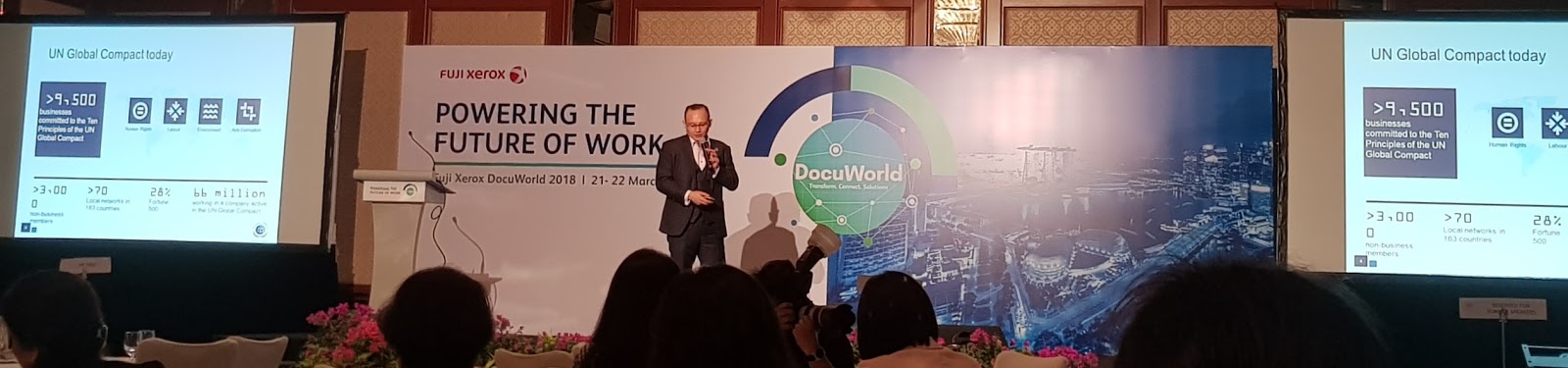
Ang explains why sustainability is important for Singapore SMEs.

Sustainability is a competitive advantage for small and medium sized enterprises (SMEs) as they will then be on the same page as larger companies who are their potential customers.

"It is an opportunity to attract a more sophisticated class of investor," explained Wilson Ang, Executive Director, Global Compact Network Singapore (GCNS) during Fuji Xerox DocuWorld in Singapore. "If you want to be their supplier you must catch up."

GCNS is part of the United Nations Global Compact (UNGC) network, and is tasked with facilitating the progress of companies that are committed to aligning their operations and strategies with UNGC’s 10 universally accepted principles in the areas of human rights, labour, environment and anti-corruption at the country level.

Environmentally-related trends that affect companies in Singapore include an impending carbon tax, announced in February 2018. The tax of S$5 per tonne of greenhouse gas emissions for all facilities producing 25,000 tonnes or more of greenhouse gas emissions in a year from 2019 to 2023 is going to affect businesses downstream, Ang said.

He also noted that green bonds are becoming more popular in Asia. These are loans taken out for green activities, potentially offering business opportunities for SMEs.

The government requires the mandatory reporting of packaging data and packaging waste reduction plans by 2021, Ang added. "It's going to affect your business," he said.

GCNS estimates that there US$12 trillion worth of business opportunities in sustainability globally, US$7 trillion of which are in Asia. According to Ang, there is money to be made in making cities more sustainable, for example in providing more affordable housing, introducing new energy resources, or reducing food wastage.

Financing for such ventures are easily available, he said. The Principles for Responsible Investments platform is one that invests in green ventures, and there is Singapore government support for green bonds. In March 2017, the Monetary Authority of Singapore (MAS) announced that it would introduce a Green Bond Grant scheme to incentivise the issuance of green bonds.

Read the Singapore Sustainable Blueprint (PDF)

Hashtag: #FXD2018

12 September 2017

Innovating in green buildings and construction spaces

Build Eco Xpo (BEX) Asia, the Southeast Asian trade exhibition for the green building market, has kicked off at the Marina Bay Sands Expo and Convention Centre. Visitors from more than 50 countries are expected to attend the event to get a firsthand look at the latest innovations and insights in the Asian green building, HVAC-R*, water, energy and heating industries.

Running until 14 September 2017, BEX Asia is co-located with Mostra Convegno Expocomfort (MCE) Asia, the regional trade exhibition for energy-efficient solutions that power industrial, commercial and residential buildings. The events anchor Singapore Green Building Week (SGBW), and are part of a larger movement contributing to the future wellbeing of the planet. SGBW hosts events that galvanise the community to act on sustainability, reaching out to international green building experts, policymakers, academics, built environment practitioners, end-users, as well as members of the public and students.

A key theme throughout the exhibition were smart devices that promise to power next-generation homes, offices and buildings.

A close up of the Halio glass when it is in transition. These patterns only appear while the glass is becoming darker or lighter, disappearing completely thereafter.
A close up of the Halio glass when it is in transition. These patterns only appear while the glass is becoming darker or lighter, disappearing completely thereafter. Transitions occur in under three minutes and are detectable in 20 seconds. The darker tints can reduce the need for HVAC solutions and artificial light, with savings of up to 22%. There is a 360-degree Halio experience available.

“We are glad to be able to participate in this year’s edition of MCE Asia 2017,” said David Yim, Marketing Manager at AGC Asia Pacific. “It is a great opportunity for us to share Halio, our smart-tinting glass that brings active glass technology into the market to deliver powerful and responsive natural light management. Through the event, we are not only able to reach out to new and potential clients, but are able to network with some of the brightest minds in the industry. We are looking forward to gaining many new insights into the business, and hope to interact with more experts and end-users over the next few days.”

Kinestral's Halio from AGC is a smart tinting glass that can darken and lighten as required for sun-blocking, anti-glare and privacy purposes, automatically or on demand, in just under three minutes. The glass can be voice-controlled or controlled with a dimmer-type switch.

Other companies debuting their latest solutions include: 

The AL-SUS Step Lift takes up 15 cm of the width of the staircase when it is in use. Starting and stopping is extremely smooth.

AL-SUS Technologies’ Step Lift, a lift that can be quickly installed to fit existing staircases, eliminating the need to build expensive escalator or lift shafts. Meant to complement the use of staircases, the step lift is a platform that smoothly and automatically moves up a single flight of stairs, and can take loads of up to 150kg.

Belimo’s Energy Valve is a smart HVAC control valve for air conditioning. With integrated smart sensors, the Energy Valve automatically calibrates the chilled water needed to maintain optimal temperatures in buildings, thereby lowering costs and reducing energy wastage.

The ITALIA WOW snow-textured paint enhancer is brushed onto an emulsion paint surface to give a snow-textured finish. The ITALIA family of textured paints is from SAN Cora Paint, a KANSAI Paint company.

KANSAI Paint ALES-SHIQUY interior lime plaster paint can purify the air.
KANSAI Paint's ALES-SHIQUY air purifying paint can eliminate odour, deactivate bacteria and viruses, and clear indoor air pollution. The company set up two boxes containing vinegar to demonstrate how effective its paint is. The box on the left smelled of paint and vinegar whereas the box on the right - painted with ALES-SHIQUY paint - smelled of vinegar two hours into the exhibition. According to the booth representative the paint would ensure the vinegar smell would also dissipate over time. ALES-SHIQUY paint is recommended for restaurants, hospitals and schools.

KANSAI Paint Singapore will be showcasing its air-purifying paint that detoxifies indoor air pollution to deactivate bacteria and viruses for better health and wellbeing, as well as textured paint that can be overlaid onto existing painted surfaces.

Lumani aims to reduce the global carbon footprint from buildings and reduce energy costs through autonomous lighting control solutions that automatically adjust according to occupants’ needs. Lumani Lumazones, an autonomous lighting and HVAC system, uses sensors to decide the best energy-saving operating mode, without sacrificing user comfort.

Another highlight is the Future Home, curated by Surbana Jurong Consultants, themed Life in the Time of Climate Change. The focal display showcases the integration of building and sustainable innovation in the form of a house, highlighting that sustainable living starts from home. In these spaces, visitors can learn about products that can enable cost savings on energy and water, thermal comfort, digital connectivity and environment wellbeing. Companies featured include AGC Asia Pacific, Cityneon, Ecosoftt, Greenology, Hubble, Hydrabath, Mobike, SoundEye, Waldmann Lighting and Whiteblack – Greenblue.

  Bike sharing, as represented by Mobike bikes outside the Smart Home, offer a green solution to last-mile travel between home and public transport. The bikes can be rented affordably and are located, locked and unlocked using a mobile app.
Bike sharing, as represented by Mobike bikes outside the Smart Home, offer a green solution to last-mile travel between home and public transport. The bikes can be rented affordably and are located, locked and unlocked using a mobile app.

Ecosoftt showcased a smart bathroom in the Future Home which collects lightly-used water from baths, showers and hand basins for flushing toilets and household cleaning.
Ecosoftt showcased a smart bathroom in the Future Home which collects lightly-used water from baths, showers and hand basins for flushing toilets and household cleaning. 
The SoundEye Ark sensor, showcased in the Future Home, detects sounds of distress such as screaming or crying with high accuracy. It can also detect motion and supports a two-way voice intercom and live video feed, helping to monitor the elderly and children.

Hubble harnessed cloud-based mobile and web data analytics platforms for their "ERP for construction" to improve construction management across functions such as quality, safety, workforce, inventory, and fleet management.
Hubble, which had a booth inside the Future Home, harnessed cloud-based mobile and web data analytics platforms for their "ERP for construction" to improve construction management across functions such as quality, safety, workforce, inventory, and fleet management. The solution is uniquely tuned towards sectors where the workforce is typically in the field most of the time, and is used by Woh Hup, Hexacon, Sante, KKL and Chuan Lim.

Greenology is known for its vertical greening solutions. A pavilion created on-site with double-sided vertical greening creates a serene, cool private yet open space. Its Greenologix subsidiary offers sensors and drones to help in plant maintenance.

Other solutions include:

Crestron Singapore’s Crestron Fusion, an intelligent energy management solution that provides data analytics and centralised environmental controls

En-trak Hong Kong’s En-trak Energy, which allows businesses to leverage real-time data to save costs and improve energy efficiency

The exhibition will also shine a spotlight on green building materials that can potentially reduce wastage of natural resources. Products showcased will include eco-friendly tile adhesives from PAREX Group; and Innovative Precast Builders’ patented interlocking precast block system that minimises wastage.

Kel Low, Senior Manager for Specifier Relations, Nippon Paint (Singapore), one of the key exhibitors at BEX 2017, said, “In the paints industry, there have been new innovations. For example, the development of anti-mosquito paints featuring unique knock-down formulation, seeks to provide passive protection to consumers by knocking down mosquitoes when they come into contact with painted surfaces. At Nippon Paint, we are excited to share our innovations with the wider market and are also honoured to be part of the movement towards greener buildings.”

Some companies also launched products and solutions new to Asia. Highlights include:

AET Flexible Space from the UK, which introduced underfloor air conditioning systems that optimise energy performance, leading to cost savings of up to 48%. The solution is highly compatible with green building certifications such as LEED.

The Finch unit showcased is made of solid wood.
The Finch unit showcased is made of solid wood. 

G3 Industry of Netherlands' Finch Buildings, a portable and stackable modular building system that utilises sustainably harvested timber. Finch modules are highly sustainable, due to their long lifespan, energy efficiency and closed-loop system.

Slovakian company TapHome rolled out a smart home energy management system that can control various modules, including thermostats, lighting, and doors. Its heating algorithms can learn the preferred energy requirements of each room. The system is controllable through a mobile app. 

Crestron's Mercury Tabletop Meeting Solution acts as a phone, support web collaboration, wired and wireless presentations, as well as room-booking capabilities. A built-in occupancy sensor offers usage and data reporting. For larger groups, Crestron offers "it just works" presentation facilities that configure automatically based on the number of connected devices.

Big Ass Fans showcased a number of fans, including the Haiku which has an integrated motion sensor so that it knows when to speed up or slow down to adjust the temperature in the room.


BEX Asia and MCE Asia both feature seminars, titled Green View and Mostra Xchange respectively. The seminars will kick off with the Interior Design Confederation of Singapore (IDCS) Forum, which will feature experts discussing strategies for creating living spaces that are not only functional and aesthetic, but sustainable too.

“I am honoured to be able to participate in knowledge and information exchange with my industry peers in the coming days at MCE Asia’s Mostra Xchange,” said Chan Chow Fong, Principal Engineer at ST Electronics (Satcom & Sensor Systems). “Through our intensive R&D efforts over the years, ST Electronics has garnered deep insights into energy conservation that does not compromise user experience. I look forward to sharing these, as well as our experience in designing and deploying smart lighting systems. I’m excited at the prospect of hearing from other industry experts in various fields, as we strive to create more sustainable living environments in Asia and beyond.”

Over the next few days, attendees of the Green View seminars will be hearing from experts such as Vincent Chow, CEO, En-trak Hong Kong, on How to Reduce Lighting Energy Wastage Using One Simple App, as well as Alex Lau, CEO, Anacle System, on A Bold Vision for Energy Management in the Age of IoT. At MCE Asia’s Mostra Xchange, insights will be shared by industry leaders such as Jayant Kaushal, Director – Product & Project Management Office, Camfil Singapore, on Air Filtration Types and its Correct Applications, and Stewart Tai, Manager (Sustainability & Innovation), Khoo Teck Puat Hospital, Singapore, on Air Quality & Water Sustainability in Healthcare. 

Other highlights include the American Society of Heating, Refrigerating and Air-Conditioning Engineers (ASHRAE) Seminar on Designing & Managing Energy Efficient Buildings, conducted by Dr Yang Junjing, a Research Fellow at the Centre for Integrated Building Energy and Sustainability in Tropics, National University of Singapore, as well as Chair of Research Promotion Committee of the ASHRAE Singapore Chapter. Dr Benny Chow, Director of Sustainability at Aedas, will also be sharing the latest research on leveraging computational tools to design people-centric, sustainable urban neighbourhoods. Dr Chow, a sustainable design expert, is also Chairman of the Industry Standards Committee of the Hong Kong Green Building Council, as well as a Committee Member and Expert Panel Member of the China Green Building Council.

In all, professionals can look forward to gain up to 11 professional development units (PDUs) through these seminars over the next two days.

Interested?

View the Instavideos on the
Step Lift from AL-SUS
Hashtag: #bexasia2017

*Heating, ventilation, air-conditioning and refrigeration