Showing posts with label history. Show all posts

14 November 2025

2025 entries for UNESCO's Memory of the World Register

Source: Government of Thailand Facebook page Three Thai heritage items joined the Memory of the World Register in 2025. Collage of three document collections..
Source: Government of Thailand Facebook page
Three Thai heritage items joined the
Memory of the World Register in 2025.

Established in 1992, UNESCO's Memory of the World Programme aims to promote the preservation of – and universal access to – the documentary heritage of humanity. Often extremely fragile, this heritage is exposed to risks of deterioration and disasters.

The programme aims to: 

- Facilitate preservation of the world's documentary heritage, particularly in areas affected by conflict and/or natural disaster 

- Enable universal access to documentary heritage worldwide

- Enhance public awareness about the significance of documentary heritage among the wider public 

UNESCO shares best practices, and maintains the Memory of the World Register to record the broadest threads of human history. Each entry in the register has been recommended by the International Advisory Committee and approved by the Executive Board as significant to the world.

The collections include books, manuscripts, maps, photographs, sound or video recordings. Seventy-four entries were added in April 2025, bringing the total number of inscribed collections to 570. The entries, from 72 countries and four international organisations, cover topics such as the scientific revolution, women's contribution to history and major multilateralism milestones. 

Among the newly inscribed collections are Asia-Pacific archives concerning prominent historical women—still largely underrepresented on the register—such as girls' education pioneer Raden Ajeng Kartini (Indonesia and the Netherlands), and author Katherine Mansfield (New Zealand).

In addition to the International Register, UNESCO has supported the creation of four regional registers and National Memory of the World Committees in more than 100 countries.

2025 entries from the APME region include:

Archives of the expedition of d’Entrecasteaux (1791-1794)
Submitters: Australia and France

The d'Entrecasteaux expedition, a voyage of scientific exploration around the world, explored Tasmania and the coasts of Australia, New Caledonia (France), Tonga, Papua New Guinea and many Pacific islands. The archives consist of 58 boxes and registers including correspondence, logbooks, drawings, plans, maps and coastal surveys, totalling around 27,000 pages. 

The highlight of this voyage was the establishment of one of the first contacts between Europeans and Tasmanian Aborigines (Palawa de Lutruwita), offering a unique example of a cross-cultural encounter. The logbooks contain accounts of these contacts as well as Franco-Palawa vocabularies. 

Cuneiform inscriptions of Dilmun Kings on stone vessels (c. 1700 BCE)
Submitter: Bahrain

The four fragments from stone vessels bear cuneiform inscriptions that authenticate the reign of Dilmun kings, who ruled Bahrain islands and neighbouring territories from around 2250 to 1650 BCE. These inscriptions represent the southernmost use of cuneiform writing in the ancient Near East. 

The nominated items bear the names of two kings: Yaglī-‘el and his father Ri'mum. The linguistic roots of these names point to a West Semitic Amorite origin. The cuneiform texts document what was once a largely mythical kingdom of legend and confirms Bahrain as a major player of international trade, strategically located between Babylonia and the Indus Valley.

The Suizhou Bianzhong of Marquis Yi of Zeng
Submitter: China 

The bianzhong are a set of Chinese bronze bells that were discovered in the tombs of Marquis Yi of Zeng in 1978, in Suizhou City, Hubei Province. The bells date back 2,400 years, making them the largest and most well-preserved set of bronze bells in the world. 

The set bears inscriptions totalling 3,755 characters, representing the only known musical theory documents of the 5th century BCE with such a scale. The set showcases a ‘one bell with two tones’ system, a 12-tone musical temperament and tuning system that was previously unknown. 

The inscriptions and musical information represent the earliest surviving archaeological documents that demonstrate the mathematical relationships in music. 

The Steles of Shaolin Temple (566-1990) 
Submitter: China 

Shaolin Temple, established in 495 AD, is known as the ancestral home of Chinese Buddhism's Chan sect, an ancient royal temple, and one of the birthplaces of Chinese martial arts. The 499 surviving steles present a relatively complete and coherent sequence of historical documents in the form of stone inscriptions dating back to 1424. 

These inscriptions serve as original records created in the process of extensive interactions between Shaolin Temple and national political powers, famous intellectuals, secular society, and overseas monks throughout various Chinese dynasties. The inscriptions cover various aspects such as politics, economy, religion, taxes and corvée, military affairs, culture, and natural landscapes. 

The Shaolin Temple steles exemplify the ingenious integration of stone carving artistry with preserved texts. 

Trilingual Inscription (TribhashaSellipiya) 
Submitters: China and Sri Lanka

The Trilingual Inscription is a stone tablet with Chinese, Persian and Tamil inscriptions praising Buddha, the Hindu god Vishnu and Allah. Dated 15th February 1409, the tablet was installed by the Chinese Admiral Zheng He. Originally inscribed in the Treasure Boat Shipyard Park in Nanjing, it was brought to Sri Lanka during his third voyage. 

The text mentions offerings made to a sacred mountain shrine. This is the only trilingual inscription having texts in Chinese, Tamil and Persian which represent three different regions and cultures. 

Discovered in 1911 in Sri Lanka by a British engineer, it is now preserved in the Colombo National Museum, with a replica exhibited in the Galle National Museum. 

Manuscript of the Nāṭyaśāstra of Bharatamuni: A Seminal text of Indian Performing Art 
Submitter: India 

Preserved at the Bhandarkar Oriental Research Institute and codified around the 2nd century BC, the Nāṭyaśāstra of Bharatamuni is an epitome of the Nāṭyaveda, an oral body of knowledge of performing art containing 36,000 verses known as the Gāndharvaveda. 

The Nāṭyaśāstra embodies a comprehensive set of rules that define nāṭya (drama), abhinaya (performance), rasa (aesthetic experience), bhāva (emotion), saṅgīta (music), among others, thus articulating the character of Indian theatre, poetics, aesthetics, dance and music. 

Bharatamuni makes a groundbreaking statement in Nāṭyaśāstra, asserting that ‘no meaning can blossom forth without rasa’, a profound contribution to world literature. 

Manuscript Collection of Bhagavadgītā: Ancient Saṁgraha-grantha of Indian thought with World-wide Readership and Influence 
Submitter: India 

The Bhagavadgītā, containing 700 verses in 18 chapters, is embedded within the Bhīṣmaparva (adhyāya 23-40) of the epic Mahābhārata. It takes the form of a dialogue between Kṛṣṇa and Arjuna with armies lined up for the great war intended to free Arjuna of dejection (viṣāda). 

Bhagavadgītā is a central text in the continuous, cumulative ancient intellectual Indian tradition, synthesising various thought movements such as Vedic, Buddhist, Jain and Cārvāka. Due to its philosophical breadth and depth, the Bhagavadgītā has been read for centuries across the globe and translated into many languages. 

Archives of Javanese Dance: Mangkunegaran Dance Arts, 1861-1944 
Submitter: Indonesia

These archives document choreography, musical notes, and performances of the traditional Mangkunegaran dance, which was created by Mangkunegara IV and passed down through Mangkunegara VII (1861-1944). 

The collection consists of 1,595 sheets of textual documents and 640 photographs. Serving as the basic reference for the development of traditional classical dance for present and future generations, the archives not only a testament to the legitimacy of Indonesia’s original art but also preserve the cultural heritage of an ethnic group. 

The Sang Hyang Siksa Kandang Karesian Manuscript 
Submitter: Indonesia

The Sang Hyang Siksa Kandang Karesian manuscript (SSKK) is a 16th-century Sundanese manuscript currently stored in the National Library of Indonesia. Written on a rare material – gebang (Corypha gebanga) leaf, it is one of only 30 such manuscripts remaining in Indonesia. 

Dated to the year 1440 Saka, or 1518 CE, the SSKK is written using Old West Javanese quadratic script in the Old Sundanese language, an extinct archaic predecessor to Modern Sundanese. 

The SSKK contains guidelines and moral teachings that reflect customary law in the 16th century, revealing the rich culture of the Sundanese people at that time and shedding light on political trade relations between Sunda and various countries in Asia. 

The Works of Hamzah Fansuri
Submitters: Indonesia and Malaysia

Hamzah Fansuri contributed greatly to Malay culture and intellectual thought during the 16th century, marking the beginning of the Malay spiritual revolution. He initiated the genre of kitab, systematic academic writing in Malay. He was the first to lay the foundations of scholarly debate in the language, using it in poetry and prose. 

His work in the form of poetry (syair) became popular in the Archipelago, greatly influencing the development of Malay literature and laying the groundwork for modern Indonesian and Malaysian literature. Hamzah Fansuri, through his prose and poetry, spread Sufi teachings, particularly the concept of wujudiyah (unity of existence), leading to the burning of his books due to their controversial content. 

This manuscript was donated to the Bataviaasch Genootschap van Kunsten en Wetenschappen (Royal Batavian Society of Arts and Sciences) in 1875 by H. van Dissel, former Secretary General of VAN SWIETEN. It was originally found in the Sultan's residence immediately after the conquest of the palace in Aceh. 

The Birth of the Association of Southeast Asia Nations (ASEAN) (Archives about the Formation ASEAN, 1967 – 1976) 
Submitters: Indonesia, Malaysia, Singapore and Thailand

The archives record the establishment of the Association of Southeast Asia Nations (ASEAN) by its five founding countries: Indonesia, Malaysia, the Philippines, Singapore, and Thailand. This collection includes the 1967 ASEAN Declaration and related records, comprising 16 textual files, one photo, one film, three audio files and 12 oral history interview recordings. 

The archives describe ASEAN’s foundational mission to turn neighbours into cordial friends and build mutual trust where there were once trust deficits. Furthermore, the archives provide evidence that newly-independent, relatively small countries have their own agency in shaping international politics toward a more peaceful and stable landscape. 

The archives serve as a basic reference for ASEAN’s diplomacy, which later became known as the ASEAN Way. 

Kartini Letters and Archive: the struggle for gender equality
Submitters: Indonesia and the Netherlands (Kingdom of the)

These documents form an integral basis for understanding the life and ideas of Raden Ajeng Kartini (1879-1904). Kartini's letters, which are kept in Dutch institutions, serve as the source of her ideas, while their impact of on education, emancipation and the struggle for gender equality is reflected in the Kartini archive in Indonesia. 

Kartini continues to be a major source of inspiration in Indonesian and global discussions on education, feminism, and gender equality.

Collection of documents from Mount Mugh 
Submitters: International Institute for Central Asian Studies (IICAS) and International Center for Documentary Heritage (ICDH) under the auspices of UNESCO

The Sogdian documents from Mount Mugh are the keystone for understanding the history, social and economic life, customs and ethnic diversity of Central Asia during the transition from the pre-Islamic into Islamic period in the early 8th century CE. 

The documents show the life of Dewashtich, the ruler of Penjikent principality, until his defeat by Arab forces in 722. Everyday business records, letters, contracts, diplomatic exchange and spy reports are included in the collection. 

The ethnic diversity of Sogdiana is reflected in Arabic, Chinese and Old Turkic texts found in the collection, while the role of women in the society is documented by a marriage contract.

Three Editions of Buddhist Sacred Canons stored at Zojoji, Japan
Submitter: Japan

The spread of Buddhism from South Asia to China led to centuries of scriptural translation, resulting in a Chinese-language canon totalling over 5,000 fascicles. The Three Editions represent three separate endeavours to print complete collections of these scriptures in China and Korea during the 12th and 13th centuries. 

Some 12,000 volumes of this material have been preserved in near-perfect condition. In the modern era, Japan has printed two critical editions of the Mahayana Buddhist canon based on these references. 

As the first scholarly publications of the Chinese-language Buddhist canon using movable type, they have enabled widespread access to this literature throughout East Asia, contributing to the preservation of Buddhism itself. The content has recently been digitised.

Manuscript Chronicle of Khans
Submitter: Kazakhstan

Chronicle of Khans stands as a vital piece of cultural heritage, shedding light on the original history of the Kazakh people. The manuscript is a genealogical work composed in the Chagatai dialect of the Turkic language spanning from Adam to the Prophet Muhammad, and encompassing the histories of rulers from Turkic-Mongolian, Persian, and Arab eras. 

Analyses suggest that the manuscript dates to the 18th century. 

The Ikaros Inscription
Submitter: Kuwait

The Ikaros Inscription is a Hellenistic limestone stela excavated in 1960 on Failaka Island in the State of Kuwait. The inscription contains 44 lines of Greek carvings, which translate to a letter to ‘the inhabitants of Ikaros’, containing administrative, religious, social, and economic orders. Scholars believe it to be dated between 246 and 226 BC. 

Measuring approximately 0.62 m in width and 1.26 m in length, it is displayed at the Kuwait National Museum. 

The Ikaros Inscription is the only complete letter on a stela discovered in Kuwait and the surrounding region. It is notable for being the first instance of the name ‘Ikaros’ being applied to the island, and it also includes references to the names and dates of Seleucid rulers and their administrators.

Inscription of Khüis Tolgoi 1
Submitter: Mongolia

The inscription is a rock engraving written in the ancient Mongolian language using the Brahmi script. Created in the Mongolian heartland over 1,400 years ago, it is an important source for studying the grammatical structure and lexicon of ancient Mongolian language. 

The scripture also provides insights into the spiritual beliefs of the nomadic people that inhabited the Mongolian steppes. It supports claims that the tribal confederations and nomadic empires practised Buddhism before the rise of the Mongol Empire of Chinggis Khan. 

Deger-e-eče toɣtoɣsan dürsü-yin tusbür-yig bürüdkegsen bičig (A Complete Record of the Body by Imperial Order)
Submitter: Mongolia

The manuscripts provide information on Western and “traditional” Eastern medicine from the mid-18th century. The texts serve as textbooks detailing the structure of the human body and the research of doctors in ancient Mongolian medical schools. 

Written in the ancient Mongolian script, the manuscripts contain a range of medical terms originating from Europe, translated into Mongolian, demonstrating the extensive cultural and knowledge exchange between the regions. 

The collection is one of the earliest forms of medical literature found in Mongolia that reflects both the unique characteristics of European and Eastern approaches to medicine. 

The nomination includes nine parts: the Mongolian translated parts / books 2, 3 and 4 from Volume 1, Parts 1-2 from Volume 2, and a handwritten copy of Volume 1 containing four parts.

Katherine Mansfield literary and personal papers and belongings
Submitter: New Zealand

Katherine Mansfield (the pseudonym of Kathleen Beauchamp, 1888-1923) is New Zealand's most celebrated writer internationally, and one of the world's foremost modernist writers. 

Known for her poetry, reviews and work as an editor for some of London's avant-garde literary journals, Manfield is most renowned for her short stories. She gained international reputation for her reinvention of the modern short story form in English. 

The Mansfield collections include original correspondence, notebooks and journals, personal belongings, including her typewriter and Maori artefacts. They document the writer's artistic preoccupations, development, and methods, as well as her complex personal life. The papers held at the Alexander Turnbull Library represent the largest collection of Mansfield material in the world. 

A’nuwniah Al kubra (An important Omani marine navigation manuscript)
Submitter: Oman

A’nuwniah Al kubra is one of the most important Omani manuscripts in the field of navigation and marine sciences. It records valuable information about ship movements and international shipping routes. Its most significant feature is its scientific contribution to humanity, particularly its deviation from the work of earlier geographers. 

Scientists who preceded Ahmed bin Majid had divided the land into only seven regions, confining these regions to the northern hemisphere. A’nuwniah Al kubra added seven more regions in the south. 

The manuscript offers realistic depictions of the societies the author and his navigational crew encountered during their journeys. It also provides detailed descriptions of the marine environment, its creatures, including creatures such as whales, snakes, and coral reefs, as well as the methods used for docking ships.

Revealing Truth: Jeju 4·3 Archives
Submitter: the Republic of Korea.

The archives consist of 14,673 documents related to Jeju 4·3, an armed uprising led by the Jeju branch of South Korean Labor Party on 3 April, 1948. This event escalated into guerrilla warfare, resulting in atrocities inflicted upon innocent inhabitants. 

These archives preserve suppressed memories of Korea’s post-colonial transition, highlighting endeavours to rehabilitate the honour of victims who had long suffered the stigma associated with communism. The archives also focus on collective efforts to embrace those who had once been perpetrators, fostering a vision of Jeju as a community of coexistence. 

Korea Reforestation Archives: A reforestation model achieved through public-private governance
Submitter: the Republic of Korea

The archives document reforestation projects spearheaded by the Republic of Korea to restore devastated forests. Comprising 9,619 documents – including government gazettes, decrees, official documents, brochures, and photographs, the archives provide insights into policies and programs that address issues such as climate change, soil erosion, and forest ecosystem restoration. 

The Forestry Act in 1961 and the First Ten-Year Forest Rehabilitation Plan in 1973 were pivotal in these efforts, providing various incentives to encourage public participation. Recognised as successful examples of public-private governance in reforestation, the materials contained in the archives are widely used in international training programmes for forest officials in developing countries and forest-oriented Official Development Assistance (ODA) initiatives.

Documents connected with the Pānadurā Vādaya (The Great Debate of Panadura) in 1873
Submitter: Sri Lanka

This transcription spans 27 and a half page of handwritten text on paper using ink. The four documents, kept at the Rankot Viharaya Buddhist temple in Panadura, were created against the backdrop of religious discord between Buddhists and Christians in mid-19th century. They consist of correspondence between the Christian and Buddhist leaders advocating for an open dialogue on doctrinal issues, as well as a transcription of the entire dialogue. 

The event fostered reconciliation and mutual respect between the two religious communities. The English translations, later made available in Europe and the US, had a significant impact on religious activists and scholars in those countries, contributing to the recognition of Buddhism as an advanced religion.

The manuscript of Nanthopananthasut Kamlaung (22 July, 1736)
Submitter: Thailand

This 18th-century, 190-page khoi-paper manuscript contains translated and embellished Buddhist literature depicting the Buddha taming the mythical serpent Nanthopanantha-naga. Khoi paper is made from the khoi tree, Streblus asper.

The manuscript showcases a complex literary form and style, timeless moral values, and a sophisticated multilingual manuscript tradition. It reflects Ayutthaya’s centuries-long cultural interchanges in Buddhism, translation, multilingual literacy, and manuscript culture. 

Transcribed and published to promote wider readership and accessibility and to ensure its proper preservation, the manuscript has inspired studies in palaeography, literature, history, contemporary arts, and international Buddhist relations. 

The manuscript enjoys spiritual support from Buddhist communities worldwide. Its epigraphs, sung by international Buddhist communities and musicians during recent global calamities, convey universal messages of auspiciousness, tolerance and peace. 

The King of the White Elephant and archival documents
Submitter: Thailand

The King of the White Elephant is a Thai 35 mm black-and-white feature film produced in 1940, adapted from an eponymous English-language novel. The film skilfully combines traditional Thai performances with Western cinematic language. 

Emerging at the onset of World War II, the film stands as a testament to peace and diplomacy, promoting a message of harmony. From an archival standpoint, it is the only surviving Thai film from the pre-World War II era. It is also the first Thai film presented in English language, reflecting the filmmaker's intent for international distribution. 

Karatepe-Aslantaş Inscriptions
Submitter: Türkiye

Written around 2,800 years ago, the Karatepe-Aslantaş Inscriptions from the city of Karatepe in ancient Cilicia are a pioneering example of res gestae, a showcase of a ruler's achievements. They contain one of the earliest-known long texts in Semitic Phoenicia and the local Luwian language, both contributing to the development of modern alphabets. 

The inscriptions offer a unique insight into the sociopolitical landscape of the Iron Age Eastern Mediterranean. King Azatiwatas’ fortifications, detailed in the inscriptions, promoted economic and political peace, while fostering an environment in which women played an active role in society. The emotional connection between the local population and the Karatepe site further emphasises its cultural significance.

Camiu't Tevarih/Jāmiʿ al-Tawārīkh
Submitters: Türkiye and Uzbekistan

Câmiu't-Tevârîh, written by Resîdüddîn Fazlullah-i Hemedânî, is the first work to document the history of various tribes and nations across Asia and Europe, as well as the states established in these continents. Its significance lies in its impartial perspective, as it was prepared by a committee consisting of two Chinese, a Buddhist monk, a Mongol and a Christian priest. 

Câmiu't-Tevârîh presents insights that were groundbreaking both for its era and later periods. The manuscript is unique in terms of its content and the accuracy of the information included, much of which as was gathered from hard-to-access sources through the use of state facilities. 

The two oldest manuscripts of Câmiu't-Tevârîh are kept in the Istanbul Topkapi Palace Library, Türkiye (H.1653 and H.1654). Another manuscript is in Uzbekistan (No. 1620).

Composer Hoàng Vân Collection 
Submitter: Vietnam

Hoàng Vân (birth name Lê Văn Ngọ, 1930-2018) was a composer at a pivotal moment in the history of Vietnamese music. The collection, spanning over 700 musical works from 1951 to 2010, is notable for its diversity of materials, musical forms, and genres.

Hoàng Vân's works express a singular relationship between his compositions and Vietnam’s cultural and social history, particularly the fate of women and underprivileged classes, in post-colonial and Cold War contexts. The collection also exemplifies the symbiosis of European and Asian musical traditions.

UNESCO also assists countries in developing safeguarding policies, provides training and funding to memory institutions for the digitisation of their collections, and works with educational bodies to integrate these essential elements of our past into school curricula, ensuring their transmission to future generations. 

4 February 2021

Yip Yew Chong exhibits at Sofitel Singapore City Centre

Source: Sofitel Hotels & Resorts. Yip in the hotel, holding a painting, with two other artworks nearby.
Source: Sofitel Hotels & Resorts. Yip with some of his paintings.

Singaporean artist Yip Yew Chong brings a nostalgic exhibition to the Sofitel Singapore City Centre. Stories From Yesteryear, which features 24 canvas paintings and four digital artworks, will be showcased at the hotel from 26 February to 31 March 2021.

Inspired by Chinatown where he grew up and Tanjong Pagar where he lives today, Yip has been beautifying Singapore's streets with his vibrant street murals for years. His artworks are typically intricately-detailed and tell stories, especially of his childhood, bygone eras and lost places. At times, he mixes past and present seamlessly in the same work.

The scenes in the exhibited paintings feature similar subjects. Painted between 2017 and 2021, the artworks are panoramic yet intimate and provide a visual history of Singapore across major cultural festivals and traditions such as the Mid-Autumn Festival, Hari Raya Haji, the Hungry Ghost Festival and Chingay.

“Sofitel Hotels have always supported the arts and we are proud to showcase such an incredible artist as Yip Yew Chong with an exhibition that will allow our guests, loyalty members, VIPs and team members to step back in time to a golden era in Singapore’s past. The hotel stands near the scene of one of the artworks, so people will be able to get a real sense of how much the city has developed over the years,” said Wouter de Graaf, GM of Sofitel Singapore City Centre, which is at Guoco Tower in Tanjong Pagar.

”Tanjong Pagar is such a colourful neighbourhood and the hotel stands within a short walk to many of Yew Chong’s murals in nearby Everton Park and Chinatown, so it’s the perfect spot to immerse yourself in the works of this amazing artist.”

To bring guests closer to the history and legends of the area and connect more closely with Yip's art, the hotel is offering a special Yesteryear Peranakan menu for the month of March which will highlight some favourite dishes that reflect Yew Chong’s childhood and are depicted in the paintings.

Members of the Accor Live Limitless (ALL) loyalty programme will have the chance to attend special evenings with the artist to hear him share the stories of each artwork and dine on traditional Peranakan dishes depicted in the paintings. Entry to the exhibition is free and guests who stay in-house will be able take away a hand-drawn map by the artist, so they can further explore his murals on a walk around the neighbourhood.

“I am excited to bring this exhibition to the Sofitel Singapore City Centre and to allow the people of Singapore to enjoy these artworks, which not only tell intimate stories of Singapore’s past but are very much a representation of my childhood and my imagination,” said Yip. 

“I painted these works over the past four years including a quite prolific period during the pandemic. I hope they will bring some joy at a time when we can’t travel overseas but we can still travel back in time and space in our minds. I also hope the exhibition will inspire others to share their own stories of yesteryear, and their hopes for the future.”

Sofitel hotels are always destinations where art and culture are celebrated. The Sofitel Singapore City Centre has become an intrinsic part of the cultural life of Tanjong Pagar and regularly hosts exhibitions and events that spotlight art. The hotel has collaborated with numerous artists and exhibitions since opening including William Sim, who produced an exclusive colouring in book featuring the hotel.

Details:

The Sofitel Singapore City Centre is offering dining and stay packages for those who wish to immerse themselves more fully in the artist’s work. 

From S$349++, the Stories from Yesteryear Package includes overnight accommodation in a Luxury Room, access to the exhibition, breakfast for two, a curated Peranakan-inspired set dinner at Racines, a handcrafted drink inspired by the artworks and a selection of Peranakan tapas at 1864, as well as the hand-drawn map so guests can explore some of Yip's murals nearby.

Guests who book a staycation can also enter an Instagram competition to win a high tea experience.

Book a package.

14 September 2018

Soirees, Sojourns & Stories recounts the highlights of the Raffles story

Raffles Hotels & Resorts, a major name in luxury hospitality that owns some of the most prestigious hotel addresses worldwide, has announced Soirees, Sojourns & Stories. 

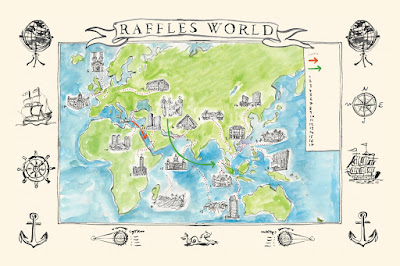
The result of a collaboration with Rizzoli New York, Soirees, Sojourns & Stories by Natasha Fraser-Cavassoni is a 200-page slipcased volume reveals how Raffles created its legacy of bygone elegance and exceptional hospitality across the globe, from the opening of its Singapore flagship in 1887 to the recent unveiling of Raffles in Warsaw, Poland.

Archival materials complement contemporary photography depicting special events, remarkable stories, and celebrity guests and original illustrations by Luke Edward Hall.

“Raffles has entered an exciting new era of expansion,” said Jeannette Ho, VP, Raffles Brand Strategy & Strategic Partnerships. “Yet the brand remains true to its origins, delivering the timeless elegance, first-class travel experiences and the authentic personal charm that our loyal guests have loved for well over a century.”

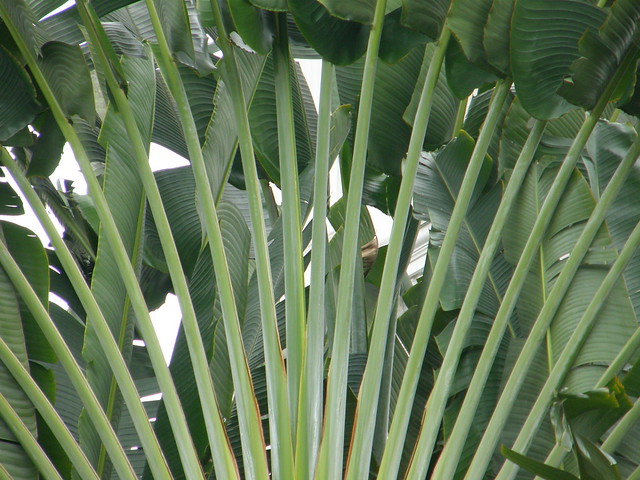
Soirees, Sojourns & Stories reveals the tales behind the traditions, from the story of the traveller’s palm to service like a gentle breeze. From Raffles afternoon tea and much-loved mooncakes to the collection’s architectural achievements and the artists who have graced its halls, readers will find a riveting history of famous luxury hotel stories that covers more than 130 years. 

“We are delighted to partner with Rizzoli to create this captivating volume; it allows us to showcase our time-honoured traditions, remarkable stories and extraordinary portfolio of hotels in a meaningful way, even as we continue to expand and open new addresses in exciting international locales.” said Xavier Louyot, Senior VP, Brand Content, Raffles and AccorHotels Luxury Brands. 
 
Source: Raffles Hotels & Resorts. Illustration from Soirees, Sojourns & Stories.
Source: Raffles Hotels & Resorts. Illustration from Soirees, Sojourns & Stories.

In 1887, Raffles Singapore set the standard for luxury hospitality, introducing the world to private butlers, the Singapore Sling and its legendary service. Today, Raffles continues this tradition in leading cities and resort locales, enchanting travellers with meaningful experiences and service that is both gracious and intuitive. In addition to Raffles Singapore, which is currently undergoing a sensitive restoration and on track for a reopening Q119, properties include Raffles Jakarta; and Raffles Istanbul. 

At every location, Raffles Butlers deliver the ultimate in discreet, bespoke service, while Raffles spas are noted for their aesthetics and quality of service.
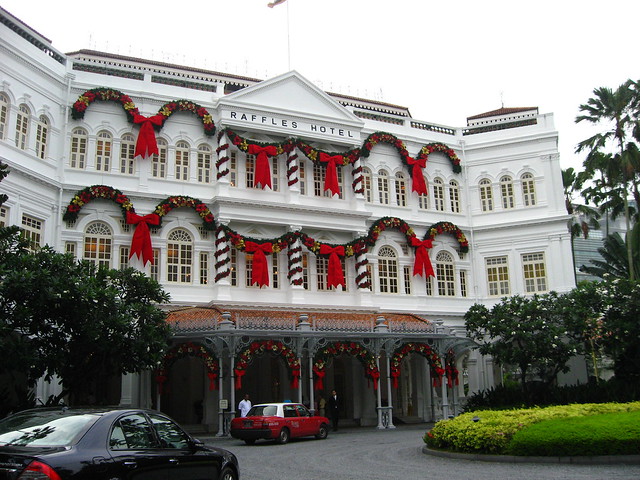
Raffles Hotel, Singapore decorated for Christmas, 2007.

View of a traveller's palm, taken in the garden of Raffles Hotel, Singapore, 2007.


Available as of December 2018 at Raffles Hotels & Resorts worldwide, and wherever fine books are sold, Soirees, Sojourns & Stories is an ideal gift for hotel buffs, armchair travellers and luxury aficionados.

31 August 2018

Amara Sanctuary Resort Sentosa launches Amara Heritage Trail

Amara Sanctuary Resort Sentosa is introducing the inaugural Amara Heritage Trail, a tour to discover the nature, conservation and history hidden within the resort. 

Source: Amara Sanctury Resort Sentosa. The petai tree is one of 26 heritage trees in Sentosa protected by the Heritage Tree Scheme under Singapore’s National Parks Board. The seeds are edible.
Source: Amara Sanctury Resort Sentosa. The petai tree is one of 26 heritage trees in Sentosa protected by the Heritage Tree Scheme under Singapore’s National Parks Board. The seeds are edible.

Amara Sanctuary Resort Sentosa is built on 10 acres – where old British military barracks and air raid shelters stood. These building complexes were constructed sometime between 1897 and 1905; and upgraded in the 1920s. The resort’s owner, Albert Teo, worked with Miyake Masaki, a celebrated Japanese architect, to convert these old buildings into resort suites while preserving as much heritage and nature as possible. 

“It is an honour and privilege that our resort sits on this piece of valuable land. Not only are we part of the history, we are happy to be able to share this heritage with our guests. For the younger generation, they will have an opportunity to learn and appreciate how far Singapore has come,” said Dawn Teo, Senior VP, Amara Hotels & Resorts.

The Amara Heritage Trail is jointly organised by Amara Sanctuary Resort Sentosa and the Singapore Tourism Board and takes 60 minutes to complete on foot. Beginning at the resort’s main lobby, participants will be taken on a walk to explore heritage buildings. Along the way, guests will be asked to spot an artefact – a sole cleaner; relive the experience of hiding in a World War II air raid shelter; and identify some of the common herbs and spices used in local cuisine today, including the one that brought the British to Southeast Asia in the 1800s. 

The British Army-era sole cleaner at the Amara Sanctuary Resort Sentosa.
Source: Amara Sanctury Resort
Sentosa. The British Army-era sole
cleaner at the Amara Sanctuary
Resort Sentosa.
Other highlights include uncovering a heritage tree protected by the Singapore National Parks Board; sharing the story of Mrs Helen Hall; and learning the origins of the name “Sentosa” and some of the road names at Amara Sanctuary.

A specially curated colonial set menu, priced at S$38++ for two persons, has been created in conjunction with the launch of Amara Heritage Trail. Guests can taste common dishes enjoyed by British soldiers while Singapore was still a crown colony under the British administration.
Details:

The guided Heritage Trail will be opened to the public from 8 September 2018, and will occur every Saturday and Sunday at 10am. The one-hour guided tours will be priced at S$18 nett for the public; S$12 nett for in-house guests; and is complimentary for Amara Sanctuary Suite and Villa guests.

The trail can be self-guided as well. Download a copy of the self-guided trail brochure

View the Colonial Set Menu (PDF)

2 August 2018

A look at culture and heritage through the lens of technology

The National Museum of Singapore will launch DigiMuse Presents on 4 August, comprising digitally-led prototype projects that blend history, art and technology.

Co-created with digital designers and creative professionals in partnership with cultural institutions and technology companies, DigiMuse Presents enable visitors to offer new perspectives of culture and heritage via immersive virtual and augmented reality exhibits, dynamic conversations enabled by artificial intelligence, and more.

The newest edition to the wider DigiMuse programme, an initiative by the National Museum of Singapore to lead a vibrant cultural sector invested in digital innovation, DigiMuse Presents highlights seven prototype projects shortlisted from the inaugural DigiMuse Open Call for digital art and innovation concepts that concluded in April this year.

Director of the National Museum of Singapore Angelita Teo said, “We welcome thoughtful applications of technology that strengthen our visitors’ cognitive and emotional connections with Singapore’s history and heritage. Through creative integrations of culture and technology, along with collaborative industry partnerships, we hope to offer even more experiences that resonate with and inspire our visitors. We continue to be committed to growing the museum as a progressive cultural institution that challenges the boundaries of what is possible, driving innovation for the sector in our contributions to Singapore’s vibrant cultural landscape.”

As part of DigiMuse Presents, the museum is introducing the use of wearable mixed reality technology HoloLens for local museum experiences under Project Insight, where visitors can enjoy a unique look into the process of conserving artworks. 

In another first for the cultural scene, DigiMuse Presents will feature a new virtual reality experience, An Excavation Through Time, which allows visitors to “dig up” and uncover buried artefacts from Singapore’s Temasek period. The project by iMMERSiVELY will first be featured at the National Museum this month, with plans for it to be showcased at other local cultural institutions later. 

In addition to An Excavation Through Time, look out for:

- The app-based programme Multiplicity, developed by Singapore social startup Big Red Button, which enables visitors to discover different viewpoints from historical characters to form their own conclusions. 

Source: National Museum of Singapore. The Ask William project.

- Artificial intelligence messenger platform Ask William, created by Internet of Things messaging company Unified Inbox, offers visitors informative nuggets about the William Farquhar Collection of Natural History Drawings from “William” himself. This project is also showcased at the exhibition Siapa Nama Kamu? Art in Singapore Since the 19th Century at National Gallery Singapore.

- Beeing Human by design label Baëlf Design re-imagines the museum’s collection of traditional cheongsam dresses and Peranakan accessories with digital 3D-printing technology. 

Source: National Museum of Singapore. A rickshaw game.
Source: National Museum of Singapore. A rickshaw game, part of the Museum Experiential Guide.

- The Museum Experiential Guide is a mobile-oriented augmented reality experience developed by Singapore multimedia production house Digimagic and Nanyang Technological University’s School of Art, Design and Media. The interactive exhibit at the Crown Colony section of the Singapore History Gallery will bring visitors back in time on a vivid journey charting Singapore’s development as a centre for trade in Southeast Asia. 

- A Harbour of History by 360VR Asia invites visitors to search for historical figures hidden in a gigapixel map of modern-day Singapore, then find out more about their lives.

- Project Insight by HelloHolo enables anyone to try their hand at being a conservator with the help of the Microsoft HoloLens. This experience focuses on the conservation process, and allows participants to try conserving a painting in mixed reality.

Source: National Museum of Singapore. Project Insight focuses on art conservation.
Source: National Museum of Singapore. Project Insight focuses on art conservation.

The Digital Conversations: Open Call 2018 talk organised as part of DigiMuse Presents will explore interventions in digital and cultural spaces. As a follow up dialogue to the featured prototype projects, local and international speakers will share their experience of developing projects with museums and cultural institutions during the talk. 

Programme Director of the DigiMuse Project, Jervais Choo said, “The DigiMuse initiative explores the intersection of technology and culture and opens a gateway for discovering our past to inspire future possibilities. By incorporating a spectrum of digital technologies to communicate our heritage and history in new perspectives, the innovative projects featured in DigiMuse Presents are both educational and enthralling, demonstrating potential instances of how we may interact meaningfully with Singapore’s rich culture and heritage enabled by frontier technologies.”

DigiMuse Presents is presented by the National Museum of Singapore, an institution of the National Heritage Board, in collaboration with the Asian Civilisations Museum, Autodesk, Da Vinci Kids, Heritage Conservation Centre, The Keris Collector, ISEAS-Yusof Ishak Institute, the National Archives of Singapore, the National Gallery Singapore, and the National Parks Board.

Details:

DigiMuse Presents will be on view from 4 to 26 August 2018 at the National Museum between 10 am and 7 pm daily. 

Visitor access to the featured projects is free with general admission.

25 May 2018

Esplanade's Pesta Raya returns in July

The 17th edition of Esplanade – Theatres on the Bay’s Pesta Raya – Malay Festival of Arts returns from 12 to 15 July 2018, coinciding with the celebration of Hari Raya Aidilfitri, which extends till mid-July.

This year, the festival showcases the history of the Nusantara. Said Fezhah Maznan, Programmer, The Esplanade Company, “Pesta Raya has always celebrated the rich Malay heritage, arts and culture from the region, and through the festival we hope to continue forging meaningful relationships with the artists and our audiences. This year, we have works which highlight the Malay identity, with thoughtful re-imagining of Malay folklore and characters in our festival commission Alkesah, and fresh re-interpretations of the traditional keroncong and dikir barat.

"We also look back and pay tribute to the rich history of Malay dance in Singapore, with a special performance by Sriwana. We hope that many will find ways to connect with the diverse programmes at the festival and immerse themselves in some of the very best the Nusantara can offer.”

Dikir barat is a traditional musical form that involves singing in groups, while keroncong is both the name of a musical instrument and the name of an Indonesian musical style.

Festival commissions

• Written by Zulfadli Rashid and helmed by director Aidli Mosbit, this year’s festival commission Alkesah (“as the story goes”) re-imagines Malay folklore. Beloved characters such as Mat Jenin (the hopeless dreamer), Sang Kancil (the mouse deer), Pak Belalang (the village astrologer) and more, come together in Kampung Alkesah in a tale of misfortune, survival and secret love.

This is the first time the festival is commissioning a Malay pantomime at the Esplanade Theatre Studio, and will feature a stellar cast including Siti Khalijah Zainal, Jeff Catz, Siti Hajar Gani, Hatta Said and more. Alkesah will also see musical theatre veteran Elaine Chan and vocal coach Babes Conde working for the first time on a Malay production.

• Another first for the festival is a commission for a non-ticketed performance, GhaMuhyi: Melampaui Sempadan Ghazal, which will open the festival at the Esplanade Outdoor Theatre on 12 July. This collaboration melds contemporary ghazal by the ensemble GhaMuhyi from Malaysia and the work of Singapore traditional Malay music groups Sri Mahligai and Orkestra Sri Temasek.

• Dress vintage and joget during Pesta Berpesta at the Esplanade Annexe Plaza and Annexe Studio on 14 July with popular music from the ’60s to the ’80s. The Esplanade presents Tarakucha!, a kebaya jazz performance conceived by Malaysian singer and actor Sean Ghazi. The event will feature original compositions and songs by P Ramlee, Sudirman and Jimmy Boyle.

There will be free performances by NADA (comprising Singapore musicians Rizman Putra and Safuan Johari), who will present a contemporary visual arts and sound project that specialises in conjuring up lost eras through music, as well as Indonesian duo Iramamama who will be playing nostalgic tunes and quirky sounds, from funk to post-punk music from their home country.

• Singapore-born Kuala Lumpur-based singer-songwriter Imran Ajmain, who sang the hit Seribu Tahun, celebrates a decade in music with a concert, First 10 Years, at the Esplanade Recital Studio. He follows in his father Ahmad Husaini Ajmain’s footsteps, writing for an array of Singaporean and Malaysian musicians such as Taufik Batisah, Hady Mirza, SleeQ and more. Besides featuring songs from his upcoming album, Imran will also be singing hits from the ’70s and ’80s which his father penned.

• Inspired by Indonesian folklore, guitarist Addy Cradle has written an epic love saga about a prince and a warrior princess. In Transcendence – The Legend of Ryu Wuri at the Esplanade Recital Studio, Addy provides the instrumental backdrop to his dark tale where visual artist Muhammad Izdi and video artist Wu Jun Han add to this multidisciplinary performance. This will be the first of three volumes that features a fusion of rock and traditional music from China, Indonesia, Japan and India.

• Trace the history of Malay dance with Singapore’s oldest Malay performing arts group Sriwana as they present Lenggang Legenda: Merintis Sejarah on 13 July at the Esplanade Outdoor Theatre. The audience will be treated to iconic dances by the company that has produced the who’s who of the Singapore Malay dance scene, including Som Said, Osman Abd Hamid, Rizman Kassim and more.

The Classic Tarian Workshop by Sriwana on 14 July will be conducted by Ibu Surianty – also known as Mdm Lim Ah Choon – the Indonesian dance teacher who introduced repertoires of zapin and other Malay dances to Singapore in the ’60s.

• In their first-ever concert in Singapore, and fresh from performing on Astro’s singing competition Gegar Vaganza 2017, Dua Diva features ’80s pop diva Aishah and ’90s sensation Liza Hanim. With music direction by composer Datuk Ramli MS, who was also the judge of Gegar Vaganza, this one-night only performance will see them performing their own songs and also together.

• With 26 albums over the course of their 24-year career, Indonesian pop rock band GIGI returns to Singapore after seven years to perform classics such as 11 Januari, Terbang, Andai and Kepastian Yang Ku Tunggu. 

Screen capture from the Pesta Raya page on the Esplanade website, featuring theatre, music and dance acts as well as workshops.
Screen capture from the Pesta Raya page on the Esplanade website, featuring theatre, music and dance acts as well as workshops.

• Combining Javanese and Western music traditions keroncong is widely believed to be a genre brought to Indonesia by the Portuguese, evolving to become the ukulele, guitar, violin, flute, cello and bass ensemble that many recognise today. For Pesta Raya, Indonesian composer Pak Liliek Jasqee leads his ensemble to pay homage to the musical, cultural and language ties between Indonesia and Singapore in Titian Nada Persaudaraan. Singapore jazz artist Rudy Djoharnaen will also perform familiar tunes and new compositions with the ensemble.

• The festival continues to feature programmes for the young and their families, including Walang Weh, a storytelling performance by the musicians and vocalists of RENTA Collective, Dek Hujan, a performance by P7:1SMA that combines spoken word, dance and soundscapes, as well as Kemas (a Malay term that means “tidy up”), a series of roving site-specific movement pieces performed at venues around Esplanade that examines everyday cleaning rituals as engaging and spiritual chores.

• At the Esplanade Outdoor Theatre, Ceria! Konsert Si Cilik returns this year where Singapore’s Malay children's songs are celebrated in a concert featuring performers between the ages of 10 to 16.

• Over at Esplanade’s dedicated space for children and families—PIP’s PLAYbox—will feature interactive storytelling sessions by Dalifah Shahril, who will also share more about how the sarong plays a significant part of Malay culture and identity, as well as sessions where children will also be able to craft their own kuih-muih (desserts).

• Following previous editions of Dikir Battle, this year’s festival offers another interpretation of the traditional art form of dikir barat. Dikir-pella by JUARA will showcase for the first time, classic dikir songs sung acappella by some of the finest singers in the scene.

• Back by popular demand, Pasar Pesta! curated by online shopping hub LalooLalang returns with a wide range of traditional handicraft as well as specially curated food vendors selling “instagram-able” and unique Malay food items.

Details:

Tickets for Pesta Raya – Malay Festival of Arts 2018 are available from Esplanade’s Box Office at Mezzanine level (call +65 6828 8377), the SISTIC Hotline (call +65 6348 5555) and all SISTIC outlets.


12 March 2018

Raffles Hotel Singapore releases short film by local director

Source: Raffles Hotel, Singapore. The Grand  Lobby, Raffles Hotel, pre-renovation.
Source: Raffles Hotel, Singapore. The Grand
Lobby, Raffles Hotel, pre-renovation.
Raffles Hotel Singapore has announced We Were Built, a short film directed by Singaporean award-winning film-maker and director Kirsten Tan.

The film draws inspiration from the history of Raffles Hotel Singapore, with a focus on its close bond to the history of Singapore and its literary heritage. The film’s title comes from a poem of the same name, specially commissioned by the hotel and penned by writer-poet Amanda Lee Koe, Singapore’s youngest Literature Prize winner.

Tan has had works showcased at over 60 international film festivals. In 2017, she became the first Singaporean to have her debut feature film compete at the Sundance Film Festival; it subsequently won the Special Jury Award for Screenwriting. She was also honoured with the Young Artist Award by the National Arts Council, the highest accolade for artistic achievement for young art practitioners in Singapore.

We Were Built was conceptualised through Kirsten’s personal interactions which she experienced during her stay at Raffles Hotel Singapore. Tan said, “The moment I stepped in, its distinctive quality is inescapable: you feel like you've been transported to a different time altogether. Corinthian pillars, a tinkling piano, dark wood patios, a scented pillow. I wanted to capture that aura of lyrical timelessness, that sumptuous pause that counteracts the hectic fever of modern life.”

“Like many Singaporeans, I’ve felt special reverence for Raffles Hotel through the years: a magical oasis in the heart of Singapore. I've always been particularly moved by the proud literary history of the Raffles – it hosted and inspired world-famous writers from Somerset Maugham to Rudyard Kipling. This film is an ode to these writers, to time, to Raffles' exquisite affiliations with these great minds through the 130 years of its existence. Raffles Hotel is a landmark and a constant, quietly and proudly bearing witness to our shared histories and futures. It was imperative for me to illustrate how she stands silent, strong and storied – as elegant, eternal and essential as time itself,” said Tan. “We’re also deeply honoured to have legendary Chinese American movie star, Lisa Lu, who performed in acclaimed titles like The Last Emperor and The Joy Luck Club, make a special appearance in our film.”

Christian Westbeld, GM, Raffles Hotel Singapore, said, “The film perfectly captures the hotel’s storied history, and offers viewers a glimpse into what it means to be a guest at Raffles Hotel Singapore. We would like to invite the public to view this short film and accompany us, as we journey through time, and discover the story of how a national icon came to be.  This story of Raffles Hotel Singapore continues to be told, while we anticipate the beginning of its next chapter, when the newly restored icon is unveiled later this year.”

Raffles Hotel Singapore is currently in its third and final phase of its restoration, which sees the full closure of the hotel before its planned reopening in 2H18. During the closure of the hotel, signature Raffles experiences will be showcased at 3 Seah Street, which remains open throughout the restoration.

Opened in 1887, Raffles Hotel Singapore is one of the few remaining great 19th century hotels in the world. Till today, its architecture is perfectly preserved both inside and out, giving it an intoxicating blend of luxury, history and classic colonial design. Within its walls are more than a hundred expansive suites, framed by polished teak verandas and white marble colonnades, clustered around lush tropical gardens.  Each is serviced by the legendary Raffles butlers and offers every modern convenience necessary.

Details:

View the film

23 October 2017

Al Ain Cultural Programme for 2017/2018 in full swing

As part of the annual Al Ain Cultural Programme, the Department of Culture and Tourism – Abu Dhabi has hosted three events exploring Emirati culture and heritage.

Events at Qasr Al Muwaiji (قصر المويجعي Al Muwaiji Palace) on 19 October included the Bisht Workshop, which explored the history of the traditional garment worn by UAE rulers, and the different kinds of bisht (البشت) patterns associated with each ruler. Visitors also took part in a practical sewing workshop where they created their own bisht.

The monthly Poetry Evenings season also kicked off at Qasr Al Muwaiji on 19 October where visitors could take part in educational workshops, celebrating the nation’s poets and writers.

Source: Department of Culture and Tourism – Abu Dhabi. Poetry evening at the Qasr Al Muwaiji.

The historic Al Jahili Fort (قلعة الجاهلي) held the season’s first session of Memory of the Emirati Song with a diverse selection of performances, discussions and exhibitions exploring traditional songs from the 50s through to the 70s and original Emirati poetry that are deeply connected to the history and heritage of the UAE.

The 2017/18 programme at Al Jahili Fort will include Abu Dhabi Classics and The Trucial Scouts: Life and Times, an exhibition in collaboration with the UAE GHQ Armed Forces Administration and the Manpower Staff Museum & Military History Centre.

Visitors to Al Jahili Fort will also have the chance to participate in traditional handicrafts workshops every Tuesday, as well as police dog shows at the fort’s courtyard every Wednesday. Military band performances will take place every Thursday.

Details:

Check for upcoming events in the Al Ain Cultural Programme