The Landmark Mandarin Oriental, Hong Kong has started producing its own ecofriendly glass bottled water and is creating a rooftop garden to grow fresh food. Both initiatives form part of a long-term ecostrategy to provide guests with the best in sustainable luxury.
The hotel is the first in the city to partner with leading Swedish fresh water specialist Nordaq FRESH to introduce its own in-house, filtered and purified premium bottled water into guest rooms and suites along with at its bars, restaurants and spa.
Nordaq’s patented filtration system removes impurities from local tap water while retaining natural salts and minerals. The water is served to guests “still or sparkling” in reusable glass bottles. Filtering and bottling on-site eliminates the need for single use bottles and reduces carbon emissions generated by the traditional Hong Kong hotel approach of transporting bottled mineral water from Europe.
When making trips out of the hotel, guests can use BPA-free compressive ‘Grab & Go’ impact resistant bottles or stainless steel alternatives and are encouraged to fill their bottles at the guest lobby’s complimentary ‘central oasis’ water dispenser.
In September 2018, the hotel will launch another new ecofriendly partnership, this time with NGO Rooftop Republic to create a roof garden for growing fresh herbs, flowers and small vegetables. Organic matter normally disposed of in landfill will be used as fertiliser. A rooftop beehive will provide honey and wax for candles.
“Considering our impact on the environment is a natural part of The Landmark Mandarin Oriental, Hong Kong’s culture and values. We are committed to reducing our carbon footprint and single use plastic usage throughout the hotel” says Archie Keswick, GM, The Landmark Mandarin Oriental.
The hotel was the first hotel in Hong Kong to ban plastic straws and use bamboo in place of the disposable plastic version in 2015. Other sustainability initiatives include:
- PDT, the hotel’s newest bar, featuring reconditioned and recyclable furnishings, as well as reusable stainless steel straws for drinks.
- Serving sustainable seafood at Amber and MO Bar. Even abalone shells are recycled with local jewellery brand, niin, which uses them in their designs.
- Chemical-free luxury shower gel, shampoo and body lotion in biodegradable containers are used at The Spa and Fitness Centre.
- Low-volatile organic compound (VOC) paint and LED lighting used for guestrooms and suites
- Guest accommodation that features ethically- and sustainably-sourced Cochine Saigon products.
- Ecofriendly detergents used for laundry since 2016.
Recycling is also encouraged throughout the hotels, including plastic, glass, metal and even soap, partnering with Clean the World.
“Sustainability doesn't mean sacrificing luxury,” says Keswick. “We believe we can protect the environment and maintain the highest level of guest experience and, as an industry leader, we are keen to play our part. Key to the overwhelming success of our different initiatives is explaining our commitment in an encouraging, engaging way.”
Showing posts with label water. Show all posts
Showing posts with label water. Show all posts
11 September 2018
20 June 2016
Jumeirah Dhevanafushi invites guests to explore house reef
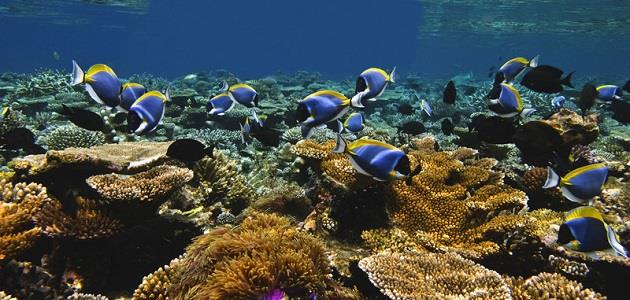 |
| Source: Jumeirah Group. Underwater view of a reef. |
The package offers guests the chance to discover some of the world’s rarest, largest and most beautiful coral reefs under the guidance of Jumeirah’s Dhevanafushi’s marine biologist. The heart-shaped Meradhoo island is located on the Gaafu Alifu Atoll, 400 km from the capital Malé and is one of the most remote islands in the Maldives.
Guests will begin the morning with a talk about ecology and reef preservation, then discover the reef for themselves. Competent swimmers can snorkel along the 850m stretch to the water bungalows. The package also offers the opportunity to help with cleaning the house reef. The resort’s PADI certified Meradhoo dive centre can accommodate those looking to go scuba diving.
The resort comprises 37 suites, including 21 villas on land and 16 over water that are only accessible by boat. The over-water villas are equipped with a small ladder from the decking which leads directly into the ocean. All accommodation options offer a private pool and personal butler.
Interested?
Read more about the Maldives on the Jumeirah blog: Island Hideway, Jumeirah Dhevanafushi.

1 December 2015
Mintel outlines four emerging global beauty trends
Looking ahead to 2025, Mintel Beauty and Personal Care (BPC) has announced four key trends set to impact global beauty markets over the next decade, with implications for both consumers and brands.
In a future where the line between human and technological device blurs, water becomes a protected resource, energy concerns strengthen and natural ingredients take centre stage, beauty brands must innovate to stay relevant, the research consultancy says.
Jane Henderson, Global President of the Beauty and Personal Care Division at Mintel, said: “We are living in exciting times with revolutionary advancements in technology, brand partnerships and product development. However, we think the coming years will bring stark contrasts in personal technology and natural ingredients that will drive beauty innovation over the next decade. Already, beauty manufacturers are working on new generations of beauty products that will satisfy consumers needs for speed and efficacy.”
The line between human and technological device is blurring as smart technology puts consumers in greater control of their individual health and beauty needs. Mintel believes that a bathroom laboratory is closer to existing than consumers might think thanks to ongoing work in augmented and virtual reality, diagnostics, and customised formulations.
The rise in popularity of wearable technology has given consumers unprecedented insight into the inner workings of their own body. Mintel research shows that 18% of Chinese consumers own a wearable device, for example.
Vivienne Rudd, Director of Insight, Beauty and Personal Care at Mintel, said: “As consumers become increasingly familiar with using technology to track their health and well-being, they are looking for beauty brands to offer products and devices that boast similar functionality. New product development in augmented reality is providing the next step in virtual mirrors and real-time visualisation of the effects of beauty products on the skin and hair. What’s more, wearables will increasingly become part of the body, from micro patches that monitor skin condition to ingestibles that send information to connected devices from the stomach, tracking the movement and efficacy of beauty supplements. However, as new technology enables consumers to track the impact of beauty products, brands will be under greater pressure to prove efficacy.”
Water is set to become a precious commodity as consumption outstrips supply. Beauty brands will need to change how they manufacture and formulate products to limit their dependence on water. Where water was once an essential part of some beauty regimes, new environmental formulations require little or no extra water in order to function.
“Our research shows growing consumer interest in alternative water sources that do not place any additional strain on existing resources, and we will see brands scour the earth to find them in order to gain a competitive edge. These products can be positioned as eco-friendly, as well as a source of exclusivity. Brands will not only source water from different oceans, lagoons and glaciers, but they will climb mountains and harvest fogs to gain the purest possible droplets.
"The key to beauty brands’ success lies in younger consumers’ adoption of these innovative measures. They must appeal to their youthful idealism, passion and desire to change the world with products that clearly state how they are addressing the issue of water shortages. There will also be a greater need for brands to help consumers control their water usage, and transparency will be come to the forefront like never before.” Rudd continued.
As energy levels become a key concern for consumers around the world, Mintel forecasts that beauty brands will need to partner with food, drink and leisure brands to create synergistic healthy living product ranges with ingredients and claims that complement one another.
"Energy efficiency claims will also be key in the coming decade as consumers battle against fatigue. Brands must tangibly illustrate how their products can impact consumer energy levels for the better, though work on energy-boosting products is already underway, particularly in skincare and haircare products," Rudd said. "We should expect to see more haircare brands improve the condition and longevity of the hair by stimulating cellular energy. A new generation of colour cosmetics will also emerge, enhancing the energy levels of the skin as well as its outer appearance.”
The saying goes, ‘it’s what’s on the inside that counts’, and there is no better way of knowing the ingredients of a product than preparing it yourself. Beauty products are coming out from the shadows of laboratories and into the spotlight of consumers’ kitchen counters. Attitudinal changes toward natural ingredients have acted as a catalyst in the rise of ‘kitchen beauty’ – products that can be made at the kitchen table, but still reflect the latest beauty styles – and is driven by a desire for consumers to feel in control of their beauty products. “Traditional beauty and personal care remedies are moving into the mainstream as more and more consumers start to ‘cook up’ their own versions. Brands will need to shift their focus to highlight artisanal processes while also making it easier for consumers to make products at home," Rudd said.
"Looking at the decade ahead, we’ll see brands borrow inspiration from the meal kits developed by food companies, propelling the subscription beauty box model to the next level. As well as beauty brands partnering with homewares brands to create kitchen devices and storage products that have beauty brand approval. With the ever growing interest in pursuing more natural lifestyles, consumers will find themselves getting involved in the creation process to ensure their beauty and personal care products are more transparent.”
Interested?
Download the report
In a future where the line between human and technological device blurs, water becomes a protected resource, energy concerns strengthen and natural ingredients take centre stage, beauty brands must innovate to stay relevant, the research consultancy says.
Jane Henderson, Global President of the Beauty and Personal Care Division at Mintel, said: “We are living in exciting times with revolutionary advancements in technology, brand partnerships and product development. However, we think the coming years will bring stark contrasts in personal technology and natural ingredients that will drive beauty innovation over the next decade. Already, beauty manufacturers are working on new generations of beauty products that will satisfy consumers needs for speed and efficacy.”
The line between human and technological device is blurring as smart technology puts consumers in greater control of their individual health and beauty needs. Mintel believes that a bathroom laboratory is closer to existing than consumers might think thanks to ongoing work in augmented and virtual reality, diagnostics, and customised formulations.
The rise in popularity of wearable technology has given consumers unprecedented insight into the inner workings of their own body. Mintel research shows that 18% of Chinese consumers own a wearable device, for example.
Vivienne Rudd, Director of Insight, Beauty and Personal Care at Mintel, said: “As consumers become increasingly familiar with using technology to track their health and well-being, they are looking for beauty brands to offer products and devices that boast similar functionality. New product development in augmented reality is providing the next step in virtual mirrors and real-time visualisation of the effects of beauty products on the skin and hair. What’s more, wearables will increasingly become part of the body, from micro patches that monitor skin condition to ingestibles that send information to connected devices from the stomach, tracking the movement and efficacy of beauty supplements. However, as new technology enables consumers to track the impact of beauty products, brands will be under greater pressure to prove efficacy.”
Water is set to become a precious commodity as consumption outstrips supply. Beauty brands will need to change how they manufacture and formulate products to limit their dependence on water. Where water was once an essential part of some beauty regimes, new environmental formulations require little or no extra water in order to function.
“Our research shows growing consumer interest in alternative water sources that do not place any additional strain on existing resources, and we will see brands scour the earth to find them in order to gain a competitive edge. These products can be positioned as eco-friendly, as well as a source of exclusivity. Brands will not only source water from different oceans, lagoons and glaciers, but they will climb mountains and harvest fogs to gain the purest possible droplets.
"The key to beauty brands’ success lies in younger consumers’ adoption of these innovative measures. They must appeal to their youthful idealism, passion and desire to change the world with products that clearly state how they are addressing the issue of water shortages. There will also be a greater need for brands to help consumers control their water usage, and transparency will be come to the forefront like never before.” Rudd continued.
As energy levels become a key concern for consumers around the world, Mintel forecasts that beauty brands will need to partner with food, drink and leisure brands to create synergistic healthy living product ranges with ingredients and claims that complement one another.
"Energy efficiency claims will also be key in the coming decade as consumers battle against fatigue. Brands must tangibly illustrate how their products can impact consumer energy levels for the better, though work on energy-boosting products is already underway, particularly in skincare and haircare products," Rudd said. "We should expect to see more haircare brands improve the condition and longevity of the hair by stimulating cellular energy. A new generation of colour cosmetics will also emerge, enhancing the energy levels of the skin as well as its outer appearance.”
The saying goes, ‘it’s what’s on the inside that counts’, and there is no better way of knowing the ingredients of a product than preparing it yourself. Beauty products are coming out from the shadows of laboratories and into the spotlight of consumers’ kitchen counters. Attitudinal changes toward natural ingredients have acted as a catalyst in the rise of ‘kitchen beauty’ – products that can be made at the kitchen table, but still reflect the latest beauty styles – and is driven by a desire for consumers to feel in control of their beauty products. “Traditional beauty and personal care remedies are moving into the mainstream as more and more consumers start to ‘cook up’ their own versions. Brands will need to shift their focus to highlight artisanal processes while also making it easier for consumers to make products at home," Rudd said.
"Looking at the decade ahead, we’ll see brands borrow inspiration from the meal kits developed by food companies, propelling the subscription beauty box model to the next level. As well as beauty brands partnering with homewares brands to create kitchen devices and storage products that have beauty brand approval. With the ever growing interest in pursuing more natural lifestyles, consumers will find themselves getting involved in the creation process to ensure their beauty and personal care products are more transparent.”
Interested?
Download the report
posted from Bloggeroid
22 January 2015
Environmentally friendly GROHE smart water system growing in popularity in Asia
 |
| Source: GROHE. The GROHE Blue system in action. |
The GROHE Blue smart water system has seen significant takeup in Asia since a May 2014 study* which found that its carbon footprint is smaller than that of bottled mineral water.
Estimated greenhouse gas emissions were 17.96 g CO2-eq/litre for the GROHE Blue system against emissions of 70 to 600 g CO2-eq/litre for bottled mineral water, depending on the type of packaging and the place of origin. The values achieved by GROHE Blue are also lower than those of conventional water dispensers, which range from about 35 to 50 g CO2-eq/litre. This means that GROHE Blue allows users to save greenhouse gas emissions of at least 25 to 50% over other alternatives.
The system supplies filtered and chilled water in three different variants - sparkling, medium and still - directly from the same custom kitchen faucet, allowing different users in an organisation to enjoy their preferred type of water at any time. Unlike typical office potable water arrangements, no bottles have to be filled, transported or recycled in order to obtain the three types of water from a GROHE Blue system, which adds to its environmental friendliness.
Dorit Grueber, GROHE’s Vice President (Marketing), Asia, noted that Asian businesses are becoming more green and are attracted to GROHE Blue especially in matured markets, where their employees are more time-strapped.
There is definitely an increasing trend as consumers become more environmentally conscious," she said, naming Vodafone and Miele as customers of the product. "Since the publication of the study, we’ve seen a significant increase in orders that have been recorded, especially in the B2B sector. The main attraction for GROHE Blue for businesses would be the convenience of getting filtered water straight from the faucet, and an outstanding design which combines pure drinking water and washing water in a single faucet."
*The May 2014 study was carried out by the Production and Logistics Chair of GeorgAugust University in Göttingen in cooperation with Grohe. Between July and November 2013, the scientists of Göttingen University compared the carbon footprint of one litre of water tapped from the GROHE Blue system with the footprint of one litre of bottled water. The scenario was based on the assumption of 30 users per day who drink one litre of bottled water on 220 days of the year over a period of five years. The calculation of the carbon footprint covered all five lifecycles of GROHE Blue and of bottled mineral water, which range from production and transport of the raw materials as well as transport of the finished product to consumption and disposal.
Subscribe to:
Posts (Atom)