Showing posts with label prediction. Show all posts

2 January 2026

Technology, talent and trust are redefining workplaces: IWG

2026 will see businesses doubling down their focus on their people. As not only their biggest asset, but also one of their greatest investments - companies are ensuring that their teams are being offered the wellbeing, training, development and new technology-driven learning opportunities that they need to thrive, said the International Workplace Group (IWG).

With companies increasingly prioritising their employees, they are also recognising that productivity and engagement are driven by how, when, and with whom they collaborate rather than solely where they work.

Organisations of all sizes are embracing flexible and hybrid working models to attract and retain the best talent. Recent technological advancements will further accelerate this shift, enabling smarter collaboration and more dynamic ways of working as businesses invest in data-driven workplace design and AI-powered personalised experiences. Increasingly, career pathways will be defined by skills rather than traditional degrees, and personalised human-AI collaboration will become an increasingly valuable skill for business success.

In 2026, the attention will now turn from where work happens to focus on a company’s profitability, productivity, and the wellbeing of their teams. Businesses will invest in flexible workspace memberships, allowing employees to work closer to home where they will be most productive, avoiding costly, unnecessary commutes. For most, this will mean working from suburban commuter hubs, small towns or emerging 15-minute cities, with work becoming more local, more personal and more intelligent than ever before.   

IWG's 2026 global predictions include: 

AI in the daily workflow

In 2026, hybrid teams will more regularly integrate AI copilots into their daily operations. These systems will significantly reduce the need for simple tasks such as admin, knowledge retrieval, and scheduling. Employees will find themselves with more time for creative work, able to tackle complex problem-solving tasks, and develop meaningful relationships. Moreover, this transformation will enable individuals to better manage their work-life balance, ultimately leading to increased productivity and job satisfaction.

Recognising this profound shift, Singapore is taking decisive action to secure its future as a leading AI hub and ensure its workforce is AI-ready, IWG said, pointing out that under the refreshed National AI Strategy 2.0, the government has earmarked over S$1 B for AI development and deployment over the next five years. 

Speaking at Singapore FinTech Festival 2025, Singapore's Deputy PM Gan Kim Yong reinforced the importance of upskilling in AI, urging employers to treat training as a form of investment in their workforce, and for Singapore workers to proactively seek out training so that they are “able to adapt, evolve together with the evolution of jobs.”

This proliferation of AI copilots within the workplace is being accelerated by a new wave of intergenerational collaboration. Research from IWG has revealed that 62% of Gen Z employees are already coaching older colleagues on how to use AI to boost productivity and efficiency. In turn, 77% of Directors and Senior Directors have said this has boosted productivity levels, while 80% said it unlocked new business opportunities. 

Capitalising on this trend, employers will increasingly use AI and workplace analytics to create “personalised hybrid plans” for each employee, including optimised schedules, ideal collaboration days, and preferred office or coworking locations. 

Reversing a S$73.6B productivity loss 

Unlike “quiet quitting”, where employees deliberately do the bare minimum, “quiet cracking”describes something subtler: employees who are still performing, but feel mentally and emotionally checked out, resulting in burnout, stalled progression, and a lack of purpose.

In Singapore, the related concept of “job hugging,” where employees stay in their roles despite dissatisfaction, has gained attention. Annual resignation rates hit a historic low of 1.3% in 2024, despite low employee engagement, IWG said. The country ranks second-lowest across Southeast Asia for employee engagement, with 61% of employees reporting burnout and rising stress levels. Experts estimate this disengagement is costing the nation S$73.6 B annually in productivity loss, putting Singapore’s status as a high-performance hub at risk.

With 57% of workers saying they’re more likely to disengage when they feel undervalued or micromanaged, companies will put more emphasis on employee wellbeing and flexible work options to remain competitive, IWG said. As wellbeing becomes a bigger focus, companies are also expected to move past traditional perks and start using new “well-tech” tools - like stress-tracking wearables, AI mental health reminders, and wellness challenges that gamify healthy habits and make them more engaging.

Fractional C-suites

As they navigate economic uncertainty, more companies are turning to fractional executives, opting for part-time or contract-based C-suite talent who bring in laser-focused expertise without the cost of full-time appointments.

With nearly nine in 10 (87%) CEOs and CFOs concerned about the impact of ongoing macroeconomic instability and two thirds (67%) already reducing operating costs, businesses are looking for smarter leadership models. This flexibility allows companies to secure world-class strategic insight when needed, while enabling experienced professionals to work across multiple organisations.  

The concept is only beginning to gain traction in Asia. Organisational consulting firm Korn Ferry reported six times more requests from Singapore-based firms seeking fractional leaders in 2025 compared with last year. This trend is set to accelerate with increased support for Singapore organisations exploring solutions such as fractional work. 

For example, the Association of Small and Medium Enterprises (SMEs) in Singapore is developing a fractional talent model to help SMEs engage senior professionals on a part-time or project basis – a solution which it hopes will address SME’s challenge of attracting and retaining skilled leadership.  

Rising Gen Z workforce

Gen Zs account for nearly a third of the labour force and are projected to be the largest generation in the workplace by 2035. They come with clear expectations that go beyond pay, prioritising wellness, mental health, flexible hours and meaningful work that aligns with their core values, IWG said. 

As the global population ages, retirements accelerate and talent gaps widen, business leaders must understand and respond to these shifting priorities to remain competitive. Companies that embrace flexibility, autonomy, and meaningful work will attract and retain the next generation of leaders; those that fail to do so risk falling behind, IWG said.  

Multi-office work

Companies of all sizes are moving away from loosely-defined hybrid policies toward more structured, multi-location models, IWG forecasted. Employees are increasingly empowered to work from more convenient places closer to home. Instead of a traditional Return to the Office, the shift is now toward a Return to Several Offices

Microsoft recently announced that by 2026, many of its US employees will need to work from their nearest Microsoft office at least three days per week – a policy expected to be implemented across its international offices, including Singapore, IWG noted. Elsewhere, companies are enabling staff to work across a network of coworking or flexible workspace locations.

Skills stacking

Hybrid workers will stack “micro-certifications” - bite-sized, skill-focused credentials - instead of relying on traditional degrees or annual performance reviews. Employers will support this by funding on-demand learning platforms, creating more agile talent pools. This trend will change internal mobility, with skills becoming more portable and accessible.  

Fifteen-minute cities

The 15-minute city concept – where everything from work to leisure is accessible within a short walk or cycle – is entering a new phase in 2026. Until recently, this had been a story of adaptation: retrofitting existing neighbourhoods to bring work, living, and recreation closer together. In 2026, 15-minute cities will be taking an entirely new form, built from the ground up and designed to encourage connectivity, sustainability and community.

According to IWG, Singapore’s URA Draft Master Plan 2025 outlines a future built around self-contained neighbourhoods, with upcoming housing areas, parks, community hubs and local centres designed to support work-live-play needs within short distances. These developments reflect the broader move toward compact, connected urban districts characteristic of 15-minute cities.

Hybrid work is making these urban ecosystems viable, as professionals choose to live and work locally while businesses decentralise their footprints to be closer to where people are.

Hospitality-led environments

The workplace will increasingly look and feel like a boutique hotel, IWG believes. "In 2026, expect concierge-style services, curated food and beverage options, and sensory-led design that elevates comfort and wellbeing," the company predicted.

IWG’s March 2025 partnership with residential design brand YOO exemplifies this shift: by combining design-led hospitality expertise with IWG’s flexible workspace network, these new spaces will blend work, social connection and wellbeing, transforming the office into a lifestyle experience.  

Sensory-led design prioritises wellbeing with the use of lighting, texture and similar design characteristics. 

On-demand offices

Day offices are set to become a key part of the landscape, providing a professional and productive office space whenever and wherever it is needed. Whether employees are seeking quiet, focus rooms or collaboration spaces for ad-hoc team days, these “on-demand” options eliminate the need for long-term commitments while offering all the amenities of a traditional office. 

With wellbeing firmly on the agenda, features such as natural light and on-site wellness amenities will differentiate day offices, helping employees work efficiently, flexibly, and with purpose. 

Local loyalty

Hybrid work will foster a renewed connection to local communities, IWG predicted. Companies may encourage employees to integrate volunteerism, local partnerships, or skill-sharing into their work week, strengthening employer brands while supporting civic engagement in the communities where employees live and work.

Mark Dixon, Founder and CEO of IWG, said: “Continuous improvements in technology including AI and new approaches to training and development will be significant drivers of productivity, engagement, and loyalty, enabling companies to create a future-ready workforce and working environment that propels business growth.

"We will continue to see a fundamental shift in the geography of work with the centre of gravity moving towards local communities. The remarkable advances in cloud technology and video conferencing software – both vital to enabling effective hybrid working – mean workers no longer need to travel long distances on a daily basis. Innovations in technology will continue to advance in years to come and will radically underline and fuel the flexibility of location.

"The rising demand for more localised working has led to the majority of our new IWG centres opening in the heart of local communities, suburbs and rural areas, enabling many people around the world to say farewell to long daily commutes.”

IWG’s 23 centres in Singapore are positioned across major residential and commercial zones, supporting the city’s shift toward decentralised, close-to-home work options.  

14 August 2025

Digital remittances are very popular in APAC: Visa

Visa, a world leader in digital payments, has found that digital applications as the most popular method for sending and receiving remittances, and ease of use, safety, privacy, and security as the top four user experience benefits driving this preference. 

The results, from Visa's annual Money Travels: 2025 Digital Remittances Adoption Report, are based on responses from 44,000 senders and receivers across 20 countries and territories. The report tracks remittance trends around the world, including Asia Pacific, a key region in the US$905 B* global remittance landscape. 

“Remittances have long driven growth across Asia Pacific, uplifting many economies in the region,” said Chavi Jafa, Senior VP, Head of Commercial and Money Movement Solutions, Asia Pacific, Visa. 

“The clear shift to app-based remittances reflects the region’s demographics, the growing prominence of digital payment modes, as well as user preferences for easy, safe and quick ways to send and receive money. This shift is an important one for banks, remitters and fintechs to note as it will shape how they engage and serve evolving consumer expectations.” 

Source: Visa. Clear inflection point for migration to digital remittances in the Asia Pacific region. Graphs for six countries.
Source: Visa. Clear inflection point for migration to digital remittances in the Asia Pacific region.

Key findings for Asia Pacific include:

Digital apps remain the most popular and are perceived as the fastest option

· Digital apps are the most-preferred channel to send/receive remittances in Asia Pacific, with usage rates reaching its highest in India (74% to send/76% to receive), the Philippines (74%/66%), and Singapore (70%/75%). 

· Japan is also seeing steady growth, with digital app usage rising by 10% (58%/56%) in 2025 compared to the previous year. 

· Over half of the respondents in the Philippines (73%/73%), Australia (58%/55%), Singapore (67%/66%), and India (55%/53%) perceive digital payments as fastest way to access funds (73%).

· Most Asia Pacific remittance users surveyed report experiencing no issues with sending/receiving digital remittance transfers across all Asian markets, most positively in Australia (48%/53%), Japan (37%/41%), Singapore (36%/37%), and Mainland China (38%/31%, rising significantly since 2024 at +13%/+8%).

Remittance rationale varies across the region

· Contributing to accounts/investments is a primary reason to send/receive remittances across several markets including Mainland China (45%/36%), Singapore (38%/33%), and Japan (27%/23%).

· Sending for general/specific humanitarian need is a key reason for remittances, cited by respondents in Mainland China (45%/33%), India (40%), Singapore (27%), and Australia (25%).

· Sending remittances for an unexpected need was highest in India (44%), the Philippines (41%), and Australia (31%).

· Receiving regular remittances was cited by approximately a third of respondents in the Philippines (39%), Mainland China (34%), and India (30%).

Security and convenience outweigh pain points such as fees

· Digital apps are viewed as the most secure way to send/receive remittances in Asia Pacific, with top responses from India (50%/53%), Australia (49%/45%), and Singapore (44%/42%). 

· Ease of use to send/receive digital remittances was noted most by respondents in Singapore (51%/51%), the Philippines (48%/54%), Japan (47%/42%), and Australia (42%/40%). 

· Digital app fees for sending/receiving remittances were highlighted as a top pain point across Asia Pacific, led by the Philippines (43%/30%), India (36%/33%), and Singapore (32%/32%). Similarly, high fees were noted as the top pain point for sending physical remittances across all markets, with top responses from the Philippines (45%/29%), India (41%/37%), Singapore (38%/30%), Australia (29%/30%).

· Inconvenience and long travel distances remain key challenges for sending physical remittances, with respondents in India (36%) and Mainland China (27%) citing travel as a barrier. In Australia and Singapore, 29% of respondents each noted the physical remittance process as inconvenient and time-consuming alongside concerns about high fees.

· Across most Asia Pacific countries surveyed, the perceived security of physical remittances was low (3%-6%), with Mainland China reporting slightly higher levels of confidence (10%-12%). 

With one billion people relying every year on remittance services and platforms**, Visa continues to innovate and build solutions to enable payments businesses to enhance operational efficiency in money movement and broaden financial access for their customers. The company works in collaboration with global remitters, such as MOIN, WireBarley, Money Chain World Remittance and EzRemit, to help enable efficient money movement through digitised remittances.

“Remittances have long been a lifeline across Asia Pacific, and they will continue to play a vital role in uplifting communities and livelihoods. At the same time, many small businesses are also beneficiary of remittances driving local growth in local economies,” said Rhidoi Krishnakumar, VP, Head of Visa Direct, Asia Pacific, Visa. 

“At Visa, we recognise the enduring purpose of our role in delivering remittances on behalf of our clients and continue to innovate and build solutions to enable more efficient, reliable and secure ways to move money.” 

*World Bank Blogs: In 2024, remittance flows to low- and middle-income countries were expected to reach US$685 B, larger than foreign direct investment (FDI) and official development assistance (ODA) combined.

**International Fund for Agricultural Development, Remittances

17 January 2025

Three quarters of organisations see social unrest as a top risk in 2025

International SOS has released its 2025 Risk Outlook report, revealing essential insights into the mounting challenges for organisational and workforce resilience, alongside risk predictions for 2025. 

The research uncovers a fragmenting world, with 65% of the surveyed senior risk professionals perceiving that risks have increased over the past year and 69% think it is likely geopolitical tensions will have a significant impact on their business and/or people in 2025. Three quarters of the primary decision-makers surveyed see social and political unrest as a top risk. This comes as 78% think it is likely burnout and stress will have a significant impact on their business and/or people in the coming year.

Even in the ongoing permacrisis environment, the new research highlights that some of the most significant risks are those for which respondents said they were least prepared, including conflict, geopolitical tensions, and protests.

Sally Llewellyn, Global Security Director at International SOS, explained: "The interconnected nature of today’s risks are creating an environment where issues escalate quickly and unpredictably. Geopolitical tensions are triggering supply chain disruptions and cyberthreats, while misinformation and disinformation amplify confusion, eroding trust within organisations and across borders. These complexities demand a shift from reactive to predictive strategies, leveraging intelligence-driven insights and cross-functional collaboration. 

"While the challenges are significant, organisations that take a systematic approach to understanding and mitigating these layered risks can not only protect their people and operations but also strengthen their resilience in an era of uncertainty."

Geopolitical instability ranked as a top concern for organisations heading into 2025, underscoring the fragility of a deeply interconnected global landscape, International SOS said. Businesses are now contending with an environment where conflicts are not confined to political borders but reverberate across industries, economies, and supply chains. 

Report highlights include:

- Three quarters of respondents who are primary decision makers think political and social unrest and protests are likely to have a significant impact on their business and/or people in the next 12 months.  

- Nearly three quarters (74%) of surveyed primary decision makers also express the belief that geopolitical tensions are likely to have a significant impact on their business and/or people in the coming year.

- Seven in 10 (73%) of surveyed primary decision makers highlight their belief that transport risks and disruptions are likely to have a significant impact on their businesses and/or people in the next year. The risks are manifesting in varied and often overlapping ways. In the Middle East, the ongoing crises are intensifying polarisation, for example.

The increasingly volatile geopolitical landscape is taking a profound toll on mental health with 65% of participants predicting that political stress and anxiety will have a significant impact on their business and/or people in 2025. These pressures are compounded by broader wellness risks that the following percentage of surveyed experts predict are likely to have a significant impact on their business and/or people over the next 12 months:

  • Stress and burnout: 78%
  • Impact of the cost-of-living crisis: 75%
  • Mental health conditions: 70%
  • Quiet quitting: 52%
  • Climate change anxiety: 45%

Dr Irene Lai, Global Medical Director at International SOS, said: "The seemingly unstable, unpredictable and uncontrollable nature of global events, coupled with the cost-of-living crisis, are major factors contributing to employee stress and burnout. Businesses that proactively invest in employee wellbeing are building operational resilience. Creating a healthy workplace includes protecting and promoting mental health, which will not only help employees weather these stresses but also drive higher engagement, productivity, and retention – essential for navigating a rapidly changing world."

Despite the many complexities and challenges organisations face today, there are clear pathways to building resilience, International SOS said. According to the report, resilient organisations share three key characteristics:

Access to actionable intelligence

Decision-makers need timely, relevant, and verified information tailored to their organisation's specific risks. This is critical in addressing misinformation and disinformation; 27% of participants reported that their organisation has been impacted by misinformation, with a further 32% reporting being unsure if misinformation has impacted their organisation – a potential blind spot.

Integrated risk management platforms

Unified risk management systems streamline processes and enhance the productivity of risk managers. These platforms also enable seamless communication across teams, which can help leaders support their employees in when dealing with the impacts of risks such as extreme weather (nearly half, or 49% of experts believe that the health impacts of natural disasters and extreme weather events will have a significant impact in 2025). By providing a single platform of reliable information, organisations can respond swiftly to both anticipated and unforeseen risks.

Optimised resource allocation

Consolidating resources allows organisations to prioritise high-risk areas without overextending. For example, 64% of respondents highlight increasing employee expectations about duty of care. This finding makes it essential to embed proactive health, safety, and security measures into operations, International SOS said, to address current and emerging risks.

2 September 2020

OTT video and video games are the winners in 2020 entertainment & media landscape

Consumer habits can take a lifetime to learn – but just a lockdown to lose, says PwC. According to the consultancy's Global Entertainment & Media Outlook 2020–2024, the COVID-19 pandemic has accelerated and amplified ongoing shifts in consumers’ behaviour, pulling forward digital disruption and forging industry tipping points that wouldn’t have been reached for many years.

Digitalisation, one of the major forces shaping all industries, has been intensified by safe distancing and mobility restrictions, PwC said. As a result, the entertainment and media (E&M) world in 2020 has become more remote, more virtual, more streamed, more personal and – for now at least – more centred on the home than anyone anticipated at the start of the year.

PwC has forecast that 2020 will see the sharpest fall in global E&M revenue in the 21-year history of this research, with a decline of 5.6% from 2019 – more than US$120 billion in absolute terms. In Singapore, the expected decline is 5% from 2019, valued at approximately US$274 million.

Oliver Wilkinson, Entertainment and Media Leader, PwC Singapore said: "The year 2020 presents a paradox for many Singapore media businesses. There is more consumption of media than ever before, with Singaporeans stuck at home during the circuit breaker. Yet at the same time, there has been a sharp contraction in revenue and profitability for many industry players.”

While the shockwaves from 2020 will continue to ripple through the global economy, the PwC forecast shows the industry’s fundamental growth trajectory remains strong. The projections show that in 2021, global E&M spending will grow by 6.4% (Singapore: 5.3%). Singapore E&M spending is also expected to bounce back to US$5.5 million, reaching 2019 levels. From 2019 to 2024, the outlook forecasts overall revenue growth running at a 2.8% CAGR globally and a 2.5% CAGR in Singapore.

The current pain in E&M is most acute in segments that COVID-19 literally shut down, such as events: live music, cinema and trade shows. Spending on cinemas in Singapore projected to fall by 59% in 2020 and is expected to make a slow recovery. The current forecast shows that by 2024, cinema spend will remain shy of 2019 levels (US$205 million in 2019, US$200 million in 2024). At the same time, the long-running transition in newspapers from print to digital has been fast-forwarded several years, cutting into papers’ print revenues, for example.

The ongoing decline in global newspapers and consumer magazines has accelerated sharply in 2020, with overall revenues in Singapore slumping by 13%. Consumer magazines are suffering the most. That said, digital offers a silver lining: a tipping point for consumer magazines in 2024 will see their global revenue from digital advertising overtake that from print advertising. Other important sectors will struggle to claw back the growth they lost in 2019. For example, out-of-home advertising is expected to decline by 24% in 2020 but will recover in 2022.

With people staying at home, over-the-top (OTT) video has seen global revenue surge by 26% in 2020 with the Singapore numbers climbing ahead at 32%. And it is forecast to keep rising strongly in the coming years, doubling in size from US$234 million in 2019 to US$477 million in 2024. With more people home, the video games segment has also grown quickly in Singapore amidst the crisis. The segment shows 9% growth this year will remain one of the fastest growing segments going forward to 2024.

Source: PwC. Graphic illustrating the Global Entertainment & Media Outlook.

Wilkinson added: "What is consistent with the outlook from prior years is the wide variance of performance between different segments, particularly given the acceleration of digital media adoption at the expense of traditional. It is in this sense that the pandemic has brought the future forward.

“That said, most affected of all have been the live entertainment and cinema segments. Before this crisis, experiences were amongst the better performing parts of the industry, but they have taken a large hit due to the safe distancing and travel restrictions. We still see a good future for such events and live experiences, but it may be some years before they can adapt to this new normal."

PwC’s 21st annual edition of the Global Entertainment & Media Outlook is an online source of global analysis for consumer and advertising spending. With like-for-like, five-year historical and five-year forecast data and commentary for 14 defined industry segments in 53 territories, the Outlook makes it easy to compare and contrast consumer and advertising spending across segments and territories.

Details:

Buy a subscription or a segment of the Global Entertainment & Media Outlook

*As PwC continually updates the online Global Entertainment & Media Outlook data, the data at the time of writing may not align with the data found online. Please refer to the online Global Entertainment & Media Outlook 2020–2024 as the most up-to-date source of consumer and advertising spend data.

8 January 2020

Food 2030: sustainable, healthier, personalised

- Change, Incorporated: Successful companies will be those that improve the health of the planet and its population.

 - Smart diets: Technology will enable consumers to construct hyper-individualised approaches to physical and mental health.

Source: Mintel. Magazine spread showing a sea view and the headline 'Change, Incorporated'.
Source: Mintel.
- High-tech harvests: Consumer trust in food science and technology will strengthen as these become vital tools to save the food supply.

Mintel, which is all about what consumers want and why, has announced three trends that will shape the global food, drink, and food service industries over the next 10 years:

Expect to see consumers further prioritise plants in their diets, with the planet's health in mind as much as their own. Food waste will lead the way for more sustainable consumption and innovation.

Consumers will gain a better understanding of what makes them unique using health-testing services, artificial intelligence-enabled apps, and increased personal data collection. Meanwhile, with consumers expected to live longer, many will want to learn how their diet can benefit long-term cognitive health.

Expect to see brands use science and technology to create new products, shorten production time, and confirm trustworthiness. Meanwhile, new ingredient-growing regions, such as those in Africa and India, and agricultural innovations, including floating farms, will emerge to tackle global food insecurity.

Alex Beckett, Associate Director, Mintel Food & Drink, says:

Change, Incorporated

“In the next decade, consumers will be hungry for leadership and demonstrable change on environmental issues, ethical business practices, public health, and other important causes. Consumers will reward brands that take action and improve important societal issues. The companies that will win in the next 10 years will be those that fuel the new era of conscious consumption. Tomorrow's conscious consumers will be looking for eco-friendly packaging and products, while also seeking guidance on how to make their diets more sustainable.”

Smart diets

“Looking ahead, more consumers will be able to gain in-depth knowledge of their biology through personal health testing kits which will empower them to personalise their diet and health regimes. Analysis of these tools will inform consumers of the steps they need to take to address every aspect of their health, including brain and emotional wellbeing. As a result, in order to succeed over the next decade, brands will need to offer more personalised product offerings, develop smart home solutions, and assist consumers in addressing mood and brain health.”

High-tech harvests

“Science will interlace with the food supply chain to boost yields and combat climate change. Celebrating the sustainable, health, and cost benefits of lab-grown food will be crucial in educating consumers about nature-identical alternatives. But the food and drink industry will be compelled to elevate the role of nature, and humans, in the storytelling of these new, modern solutions. Transparency of information is essential to building trust in a future where scientists play as integral a role as farmers. And championing the people behind the food—whether it is grown in a laboratory or a field—will remain a timeless way of building trust with consumers."

5 January 2020

Adobe's top four visual trends for 2020

Adobe has identified visual trends for 2020. In a blog post the company shared the top four visual trends that brands should take note of:

All ages welcome 

Mature audiences are not only active but relevant social figures and inspirations – giving rise to the expansion of focus from youth-centric (18-35 years) to wider audiences. Industries have begun to realise the importance of representing mature crowds as relevant figures, full of unique, vibrant, high-energy people, the company said.

Express yourself 

Consumers are eager to see themselves represented authentically – their raw, honest life experiences online and in public — and demanding the same from brands, politicians, and other public figures.

Makeup is not a mask 

Contemporary grooming focuses on celebrating a person’s unique looks and style – one way people are celebrating the genuine is through expressive reimaginings of what “beauty” can be. The use of makeup as a tool for self-exploration and creative experimentation is one facet of this, Adobe said.

From 'me' to 'we'

Consumers of all ages are exercising their growing influence. As such, brands are increasingly finding that images presenting a strong sense of community and meaningful lifestyle choices resonate best.

In 2020, Adobe will also be releasing its inaugural Design Trends and Motion Trends. These will include:

Handmade humanism

Artists are craving a natural touch and creating an emotionally-approachable style that is notable "through its simplicity and handcrafted tone", Adobe stated, predicting that the digital world would see an increase in DIY-influenced elements for the personal touch.

Semi-surreal

Artists will be using new tools and techniques to create the impossible and alter viewers' vision, inspiring creativity with fantastical imagery.

Environmental documentary

The discussion of climate, based on science and real policy ideas, will be a prominent part of many industries’ narratives in 2020. More brands and programmes will be using a documentary film style to portray the challenges and possible future the world faces due to climate change.

21 March 2019

CAGR of 5% for keto diet market

The keto diet has become popular as it reduces weight and body-fat percentages more rapidly than other diets for obese and overweight consumers, says Technavio.

The diet recommends adhering to an extremely low-carbohydrate, high-fat for regime in order to kickstarr a metabolic state known as ketosis, which makes the body more efficient at burning fat.

The research firm predicts that the keto diet market will register a CAGR of close to 5% by 2023. One of the key drivers for the market is the availability of keto diet products across online channels, specialty stores, supermarkets and hypermarkets.

However, a keto diet can have various side effects. The effects could have a negative impact on market growth, Technavio said.

The research has been mixed. A 2017 review noted that keto diets for type 2 diabetics are associated with a better control in glucose homeostasis and a reduction in antidiabetic medications but also warned that improvements seem to be short-term.

Details:

Buy the report

16 January 2019

Dato' Joey Yap shares predictions for Year of the Earth Boar, 2019

- Five thousand participants attended Dato’ Joey Yap’s annual Feng Shui & Astrology seminar in January 2019

- Dato' Yap shared forecasts for the Year of the Earth Boar and shed light on the global economic landscape of 2019.

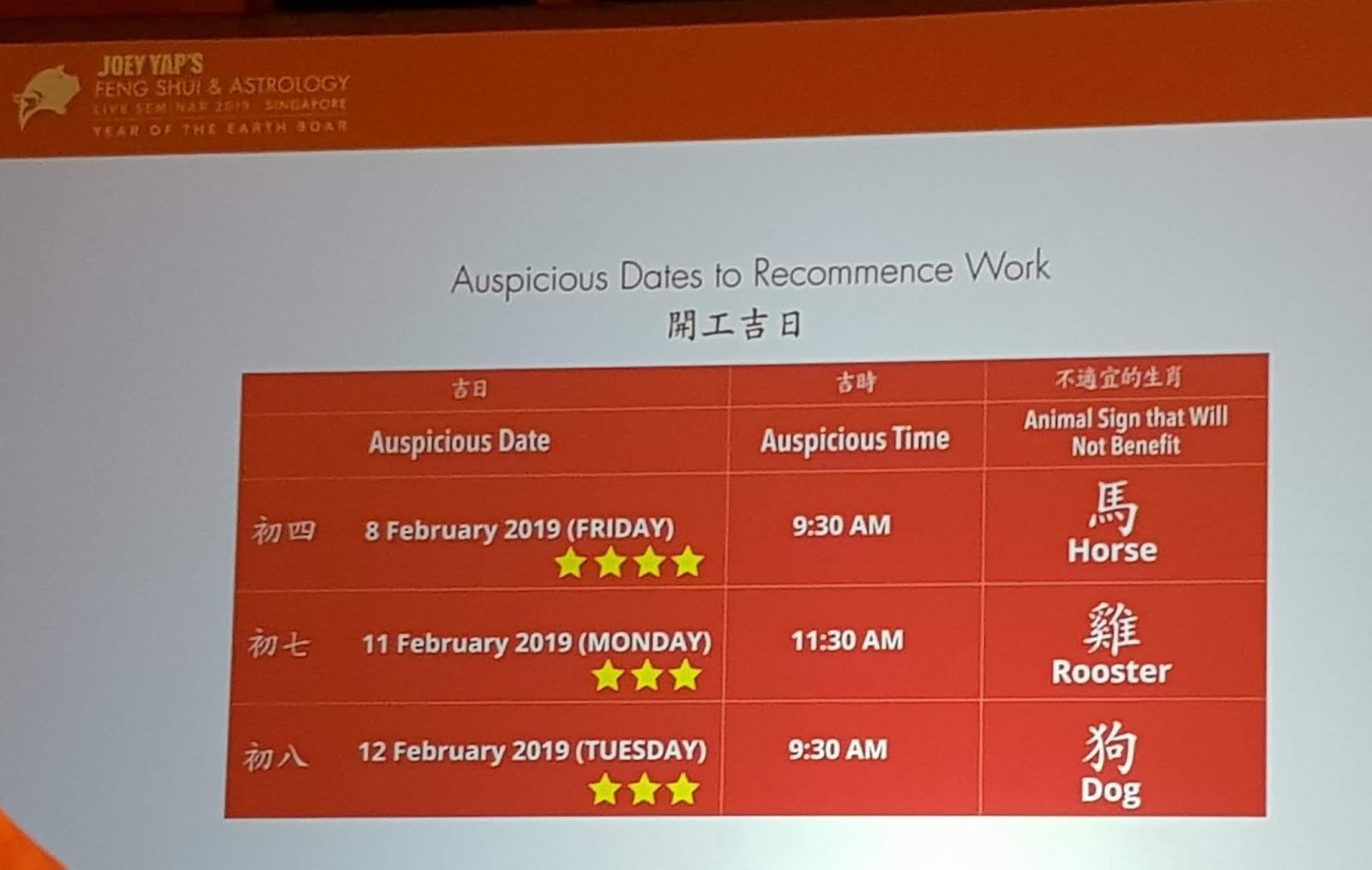
- Auspicious dates to start work in 2019 were also highlighted – 8 , 11 and 12 February

- Yap collaborated with EZ-Link to release a series of limited-edition EZ-Link cards

Source: Joey Yap Group. The event in Singapore was sold out.

On 13 January 2019, global best-selling author and fengshui expert Dato’ Joey Yap shared forecasts for the upcoming lunar new year with 5,000 people at his annual Feng Shui & Astrology seminar in Singapore.

The straight-talking expert engaged the audience at the fully-sold out ticketed event – where people were still asking about buying tickets during the breaks – with lots of practicality, humour, pithy Cantonese phrases and insights from fengshui, qimen philosophy, face-reading as well as his own experience of running a business.

According to him, the Year of the Earth Boar can be summarised into two words: stable progression. On a grand political and economic scale, sluggish development will likely be the theme for the first half of the year. However, things are anticipated to pick up towards the latter half of 2019, as investments in time and resources during the first half start to show tangible results.

Given that the vibrancy of the year favours the fire and water elements, industries that will do well include online retailing due to the mixture of fire element (technology/online) and water element (retail). Industries that emphasise high mobility including the water, hospitality, tourism and fast-moving consumer goods sectors, will see growing potential while the property market will face stagnation.

Prices are forecast to remain sticky while loans from financial institutions are scarce, impacting property purchases negatively. Technology companies are advised to work on securing their customer base in light of the tighter controls and governance being introduced to the industry.

With all these in mind, he advised participants to always fall back on their individual bazi (å…«å­—, literally eight characters) charts* so as to discern all obstructions in the next twelve months. The bazi chart shows the potentials possible, and is a guide on how external energies interact with personal characteristics.

For example, the Year of the Earth Boar is a vibrant year and the market favours the new and risky. If a person's bazi chart is dominated by the water element, the person will be able to handle the new, bold and risky. However, those that has little or no water at all will feel lost or umcomfortable. This can nevertheless be managed by an increase in self-awareness and willingness to accept change.

Dato’ Yap further highlighted auspicious dates for the year. Starting up the business in the new year is best on 8, 11 and 12 February.

Certain dates and times are considered more auspicious than others for beginning work for the first time in the year of the pig.
Certain dates and times are considered more auspicious than others for beginning work for the first time in the year of the pig. However, these dates may be ineffective for those who have specific animals in their bazi charts.

The Year of the Earth Boar is especially good for those who can provide clarity, associated with the fire element. Dato' Yap recommends thinking along the lines of a technology or framework that can help consumers verify a provider via their online footprints. Those born in the years of the monkey, horse, tiger and rabbit will also be exceptionally fortunate.

General predictions for 2019, the Year of the Earth Boar included:


Those who have pigs as part of their bazi

“Everyone is paying attention. This is your year to shine,” Yap said.

He explained that existing problems from the year before will see resolutions in the Year of the Earth Boar. “You're not going to have a year without problems,” he said. “As long as you are alive there are problems. But you want to have better-quality problems than the year before.”

An example of a better-quality problem, Yap said, is when he began his seminars in 1999 with an audience of eight – including himself, and a friend. This year, his seminar in Malaysia saw thousands of people and Singapore's event was sold out.

“Next year's problem is that I need a new place,” he said. “I'd rather have this problem than an eight-person problem.”

“(Pigs) need to be more forgiving, more compassionate - “then your problems are released,” Yap added.

Pigs could become famous or infamous in their year. “Be careful of your posts,” he warned.

Those who have snakes as part of their bazi

They will see change no matter what they do. Female noble friends (贵人), or people who are in a position to help them, such as a boss or a business partner, will be particularly helpful. Noble people, sometimes called benefactors, are able to provide invaluable help to individuals.

Monkeys

Monkeys should just eat and enjoy the year. If they do not, they lose out on the opportunity to meet people. “Make as many contacts (at this event) as possible – but (get in touch) only after February 4,” Yap told the audience, stressing that the predictions only take effect from the first day of the year of the pig, and will not have the same effect before.

Monkeys will attract a lot of people who are generally jealous of their good lives, Yap added. “Since you know that, you might as well party to the max,” he commented.

Rats

“Your job is to be used by others,” Yap said. “You can choose to be useful or useless. Which one do you prefer?

“If you are useful you are the noble person to other people.”

Rats will also be able to buy good properties and cheap, but at the standards of those who are billionaires or multimillionaires. Those who are not can still benefit. Yap said, “If you work for them you can fish these deals for your bosses, take a small cut; you know what to do.”

“Forgetfulness” is also something to watch in 2019, at least for rats. Those who are salesmen or brokers should be careful of ove-rpromising and under-delivering, Yap said.

Horses

Horses will be able to spot good deals for property. “(Whether you) can or cannot buy depends on whether you have enough funds,” Dato' Yap noted, advising those with horses in their bazi to work on partnerships so they can be in the best position to grasp a deal.

Rabbits

People will recognise rabbits for their expertise, if they are in the right place at the right time. “Do something that allows you to be famous, be seen,” Dato' Yap advised. As an example, if a rabbit posts a YouTube video, it has a higher chance of going viral, he said.

Roosters

Roosters will suddenly understand complex things more easily, Yap predicted.

For roosters, things will also tend to break down. “You conflict with items and equipment,” Yap said. “If your job and work heavily depend on tools, you should be careful.”

Goats/sheep

“If you want to learn anything associated with art, this year is the year for it,” Yap said.

Art does not necessarily mean the fine arts alone. Yap suggested that marketing, public relations, networking, presentations, and deal-making can also be arts. “You will master it this year,” he said.

Catching the opportunity is crucial mainly because the stars will not be aligned this way again for another 12 years, when the year of the pig returns, he said.

“Pick up a new skill or research. If you learn something new this year you get maximum benefit from whatever you learn. Learn something beneficial for your career; you can increase your income, your success rate,” he said.

Dogs

Dogs may become depressed, but can banish depression with forgiveness and kindness, Yap said.

“If you can forgive yourself and be kind to yourself, you will free yourself from inner drepression and unhappiness.”

“Karma is cause and effect. If you don't want the effect, remove the cause lah,” he advised.

Dogs will have to deal with above-average amounts of pettiness. “A lot of people will come in and they harbour hatred for you. You should also learn to forgive them in order to move on,” Yap advised.

Tigers

Tigers should learn something to do with business, though learning how to manage a business is important for anyone. “If you rise to (a) very senior (position you) have to know business...(this is) the best time to acquire knowledge about making money,” he said, pointing out that anyone who has to make decisions has to have business skills.

Those whose bazi contain all four animals – rooster, goat, monkey and tiger – will have to pay particular attention to personal safety, Yap said.

Roosters will find themselves near natural disasters, so should avoid dangerous places, while goats may see more physical injuries. Tigers will smash into things while monkeys will suffer cuts “here and there”.

On the subject of health, dogs will tend to be the first to get sick, while pigs may need surgery. Oxen should not attend funerals – not because they attract evil spirits as traditionally believed, but because they will likely catch any viruses that are going round.

“If you don't have the ox in the chart you can attend as many funerals as you want,” Yap said to laughter.

Snakes will be able to solve problems with existing illness. “This is the best year to do (surgery), it reduces potential problems at least by 50% or more,” he said.

In terms of directions, illness is based in the northeast in 2019. “If there are two or more illness stars in your (bazi) I would not suggest sleeping in the northeast sector. You could have a very long downtime,” Yap said. If however a bedroom is in the northeast but the sleeper does not have any of the illness stars, that is fine, he added.

Getting rich is easy, but staying rich is difficult. In the new year, monkeys can lose money, snakes have to spend money and rabbits should save money.

Yap said monkeys should be concerned with losing what they have obtained easily, in trade, partnerships and so on. “On the flip side you have something to lose,” he said.

Snakes should be prepared to spend a lot of money up front. Yap advised them to spend on experiences, but only after February 4.

Rabbits must save money. “It's good if you save 70% but 30% should be actively working hard for you,” he said, noting that it takes a long time for a nest egg to grow from savings alone.

Dogs must use money to serve others, so could serve the community by becoming a community leader, while dragons will be compelled to buy what they do not need. “It's going happen anyway - you might as well do it,” he said. “It doesn't mean you don't have money, (it's just that) there's a different way to treat your money.”

Questions at the event focused mainly on career choices, running the business and investments, though audience members also asked about improving health. Some of the insights Yap shared included:

Improving work-life balance – balance means stasis, while not being balanced means that there is progress towards a desired destination. “Balance is no good,” he said, illustrating his point with a stationary marker standing vertically versus one which is rolling on its side.

Yap advises getting paid more for work or being able to complete the same work more quickly by improving your value instead.

Relationship problems – these occur when you expect the other person to do something and they don't. Yap said that while such problems can be blamed on other things, such as a clash of bazi between a dragon and a dog for example, it is actually about unmet expectations.

“If your expectations are met, you will have longer-lasting relationships,” he said.

Social media – On a related note, Yap observed that “it's all so perfect on Instagram and on Facebook”, while viewers may wonder why their relationship and life is so much worse.

'(It) gives you an unreal expectation of what life should be,” he said. “The whole idea of Instagram and Facebook is to make other people jealous...but in reality their life is not like that.”

“If you want to make things good, be your partner's noble person,” he said, in a take of 'do unto others what you would like others to do unto you'.

Fame – Dato' Yap is a big believer in becoming more well-known. “If you can capitalise on your fame you save on many years of marketing,” he explained. “Fame allows you to enter into the minds of other people and own real estate space...if you own that space in other people's minds, you literally carve out your market.”

Academic merit – Academic prowess does not only refer to studies. For Yap, it is about graduating from the university of life and not “the university that you're studying in, with straight 'A's”.

“It's harder to graduate from life,” he said. “If you knew what you need to know, you'd already be there.”

As an example, he pointed out that the full-house event the audience were at required a lot of effort in the background, from building mindshare to having expertise to share. “To make this happen, (to get from) where you are to where you want to be, (this) needs knowledge,” he said.

Offerings to the god of wealth - the god of wealth is actually a star in the south, personified, Dato' Yap said. While the traditional way of welcoming the god of wealth is with a table of physical offerings, Yap says that it is all about balance.

“If you make a wish, ask for something, the spiritual contract says you must offer something,” he explained.

To request a specific outcome, such as to see sales increase by 30%, there must be efforts to get that 30% such as attending sales classes, or calling 10 people a day.

“Everything you put on the table is an offering.. you offer what you intend to do,” he said.

The idea is that while you can strive to conduct five meaningful conversations with people in a week to increase sales of a product, you are unlikely to be able to control whether they are fertile ground – people who like the product, or may be interested in it. This is where the god of wealth could come in.

“If you don't do your part then the god of wealth will not do their part,” he said. “If you intend to do nothing, I guarantee you won't get anything. Everything is an exchange of energy. Get something that the universe can provide you with.” 

Part of signage that shows the Business
Academy
logo and event details.

In 2019, Dato' Yap will be sharing his own experience in running a business for the first time. While the theories will still be based on Chinese metaphysics, he will be including a lot of business principles, and bringing in billionaires to share their experiences with participants. The event will be held in Malaysia.

The Joey Yap Business Academy is Yap's take on getting started and winning in business, targeted at those starting out or thinking of going into business, or who have not yet broken free of the S$5 million mark.

“Getting real estate in a client's mind, it's what I actually do,” he said.

The first Business Academy will be from 18 - 20 May, in Kuala Lumpur, Malaysia. The gold places were sold out at a soft launch in 2018. Twenty silver places went for S$2,997 at the event.

Dato’ Yap’s first limited-edition Mythical Twelve Chinese Zodiac EZ-Link cards were made available during the seminar. These will be on sale at River Hongbao as well. The series is a unique collaboration between Dato’ Yap and EZ-Link. 

Personally designed by Yap, the series of cards feature individual Chinese zodiac signs as well as his 2019 Chinese zodiac predictions for that animal. At the seminar, the full set of 12 in a presentation pack cost S$120, and S$12 for a single card housed in a presentation card.

The world’s largest fengshui organisation saw 15,000 sell-outs over two days in Kuala Lumpur, Malaysia alone. Over the next two months, the seminar will continue its run around the world. In the Asia Pacific, it is due to take place in the Philippines, Malaysia, Australia, and Cambodia as well.

Explore: 

Check out seminars for other countries in the global series 

Download the Thriver’s Guide 2019. This document contains predictions for individual animals of the zodiac.

Hashtags: #joeyyap, #fsa2019

^This writer attended the event gratis.

*According to the Chinese, fortunes are governed by the date and time of birth. While the animal zodiac is the most well-known aspect of this, the year is not enough – there are actually eight parameters derived from the date and time of birth, or bazi (å…«å­—, literally 'eight characters'), including the hour, day, month and year which affect a person's life. Four of these characters involve animals.

A person's future depends on the prevailing forces for a particular year and how those forces interact with a person's bazi and their existing circumstances, such as the industry they are working in, directions they plan to go into and the people they encounter. The fortunes of one person can clash or be enhanced by the fortunes of others as well; it typically takes years of study to make sense of all the interactions.

15 January 2019

Dubai Chamber releases UAE GDP forecasts

The UAE is forecast to achieve an average real GDP growth rate of 3.8% between 2019 and 2023, supported by an increase in investment flows and private consumption, according to new analysis from Dubai Chamber of Commerce and Industry.

The findings, based on the Dubai Chamber UAE Macroeconomic Model, also forecast a recovery in private consumption and sales of highly cyclical consumer products, extending to products such as vehicles, furniture, household appliances, and medical equipment. Meanwhile, robust growth in investment is projected on the back of government fiscal stimulus.

Real GDP for the UAE’s non-oil sector is projected grow by an average of 4.1% between 2019-2023, compared to the 2.8% accounted for in the 2014-2018 period. Momentum behind the UAE’s GDP growth over the next five years will likely be led by the country’s transport and communication sector which is set to record GDP growth of 7.9%, followed by construction (4.2%), and real estate and business services (3.8%).

In addition, recent measures to reduce cost of doing business in the UAE are expected to support activity within the country’s small and medium sized enterprise (SME) and private sectors in the near future.

The outlook for the global economy over the 2019-2023 period appears more modest, with real GDP growth projected to reach an average of 3.6%, according to recent projections from the IMF. Tightening fiscal policy, higher borrowing costs, and US-China trade tensions, are among the main factors expected to impact economic growth in the medium term. On the other hand, emerging markets are expected to see average real GDP growth of 4.8% between 2019 and 2023, outperforming advanced economies and the global average.

Emerging markets in Asia, Sub-Saharan Africa, and the Commonwealth of Independent States (CIS; excluding Russia) are expected to outperform the rest of the world over the next five years, with real GDP growth projections of 6.1%, 4.1%, and 4.1%, respectively.

The Middle East and North Africa accounts for the largest share of Dubai’s exports (41%), followed by Emerging Asia with 26%, Sub-Saharan Africa (18%), CIS (1%) and Latin America (0.8%), trade data for the first nine months of 2018 revealed.

Chemicals and allied products was the top-performing product category for Dubai’s exports to Asia, which includes perfumes and cosmetics, and fluorides of aluminium.

5 June 2018

ACCA forecasts market demand for professional business and advisory services in ASEAN and China

The Association of Chartered Certified Accountants (ACCA), the largest global professional accounting body in the world, has launched a new report on future demand for professional business and advisory services, supported by the Singapore Accountancy Commission.

Source: ACCA Global website. Cover for the Market demand for Professional Business and Advisory Services report.
Source: ACCA Global website. Cover for
the Market demand for Professional
Business and Advisory Services
 report.
Professional services provided to corporates, including small and medium sized enterprises (SMEs), increasingly include services relating to data science, analytics, and artificial intelligence, ACCA said in the report. As an external aid to corporates, they can act as a powerful catalyst to develop and expand the digital economy and transform Southeast Asia into a smart region.

The report examines market demand for specific professional business and advisory services in Singapore, the ASEAN region, and China over the next three years, based on corporate budgets.

It also states where businesses are leveraging on external advice and aims to help consultancies (including accounting entities) review and tune their service offerings and business models to maximise growth and revenue in coming years.

According to the report, the IT solution business as a service line; including IT advisory as a service category, were among the top three most demanded professional services by corporates in the next three years.

In her keynote address, Idranee Rajah, Minister in the Prime Minister's Office and Second Minister for Law, Finance and Education, noted that the report had identified shifts towards:

- Smart software and systems automating mundane manual work like bookkeeping and expense processing.

- Emerging technologies such as artificial intelligence (AI) fundamentally changing the way complex and multifaceted accounting work is conducted.

"There were mixed feelings, I think, when we first learnt about new technologies like artificial intelligence and robotics. We felt that these technologies would change the way we live, work and play. We also realised that these technologies would destroy jobs," she said.

"But today, we have started to adapt. Today, we are starting to leverage on these technologies to improve our business processes.

"In the accountancy sector, robotic process automation has been used to automate repetitive processes. For example, businesses in retail, e-commerce and hospitality have adopted Xero, an online accounting software that automates manual processes. With Xero, retailers find that they can better manage their businesses such as tracking inventory and costs.

"With technology, professional accountants in business have moved up the value chain, from score keepers and, I dare say, bean-counters, to strategic business leaders. Similarly, in the legal sector, new technologies like lawyer-bots have also automated low value-added work for lawyers."

Minister Rajah also said that the technologies are currently incapable of building relationships, of replacing all systems, or of replacing all staff. "And when it comes to the human intricacies of the work that both the accountancy and the legal profession do, these technologies cannot do it all," she said.

Adaptivity, collaboration and trust will be key for the future. "As we transit into the digital world, these qualities remain relevant, in fact, not just relevant but essential, and will form the foundation for the accountancy and legal professions to effectively harness digital connections," she said.

The report was launched at the 2018 ACCA annual conference, themed Professional Accountants - The Future: ASEAN Digital Perspectives.

Helen Brand, OBE, Chief Executive for ACCA, presented at the conference on Shaping the global accountancy profession across three dimensions: digital, social and ethical. She said, “What this generation recognises is that they have a great opportunity to influence their organisations and lead the way with technology. This could be in terms of improving business processes, driving better knowledge collaboration, influencing employment models and the working at home agenda, virtual working or shaping future learning interventions. They may even be able to help with reverse mentoring of older colleagues with technology in the organisation.”

Leong Soo Yee, Director of ACCA, ASEAN & ANZ said, “ASEAN and the digital economy have great importance and impact in the region across multiple dimensions. This is further compounded with the scale and speed of activity in the digital economyg sector.”

ACCA, NTUC, AI Singapore further pledged to help accelerate capability development in the finance and accounting functions of small and medium enterprises (SMEs) and for small and medium-sized professional services firms in finance and accounting (SMPs) on the sidelines of the ACCA Annual Conference 2018 in Singapore. The partnership will provide training, workshops and solutions in the three areas of talent development, digitisation and internationalisation, under the ACC(X)ELERATE programme.

Insights were drawn from various studies in designing the programme, including ACCA’s Professional accountants – the future: Generation Next, global research that highlight the skills finance and accounting professionals need to enhance their employability. ACCA’s Market Demand for Professional Business and Advisory Services was also a reference. This research revealed a growing demand for non-regulated professional services ranging from IT solutions advisory to risk advisory and process improvements.

Other references included NTUC’s Future Jobs, Skills and Training (FJST) Forum 2018 report, which highlighted the key enablers of success for companies to transform and stay relevant in a changing world of work, and a NTUC roundtable discussion with chief financial officers, 76% of which had indicated technology as the key driver of change for jobs and skills in the accountancy sector. Of the remainder, 20% felt that the change came from changes to business models and the remaining 4% felt that it was due to globalisation.

ACCA will engage SMBs and SMPs to take the lead in leveraging technology to transform their businesses and take active steps to develop their workforce’s skillsets. To enrich accountants and finance professionals’ digital skills and knowledge, it will also provide training and workshops focused on technology education that enhances productivity and facilitates internationalisation, including cloud technology. Tapping on NTUC’s suite of progression and placement programmes, workers will also be guided through this transformative process, enabling and ensuring that they stay competent to take on the jobs of tomorrow.

The programme draws on the digital expertise of AI Singapore and will work with technology solution partners that operate in the cloud and small business space, to accelerate the digital awareness and transformation in the finance function. ACCA and AI Singapore will also explore robotic process automation (RPA) as a potential industry solution and an AI talent recruitment programme for accounting and audit firms.

Reuter Chua, Country Head, ACCA Singapore, said, “ACCA’s global insights present the future of the profession and what global business leaders need from their finance functions to guide the direction of our programme."

Patrick Tay, Assistant Secretary-General, NTUC shared, “As highlighted in various studies including the one done by NTUC’s FJST, our finance and accountancy professionals will increasingly need to incorporate technology into their daily work as businesses and business operations transform."

"We urge employers in this sector, especially our SMEs, to leverage the program to develop their talents, digitalise their businesses and work with NTUC on the continued progression of their workforce. Collective action on the part of all stakeholders is a key driver to enable deep, sustained and meaningful change, and we look forward to partnering our industry partners, our employers and our workers to transform the sector for the future economy,” he added.

More details on the ACC(X)ELERATOR programme will be released end of the year.

Explore:

Download the Market demand for Professional Business and Advisory Services report

24 May 2018

AR, VR show promise in APeJ

Asia Pacific excluding Japan (APeJ) spending on augmented reality and virtual reality (AR/VR) is forecast to reach US$11.1 billion in 2018, an increase of more than 100% from US$4.6 billion the previous year, says research firm IDC.

The latest update of IDC's Worldwide Semiannual Augmented and Virtual Reality Spending Guide shows investments on AR/VR products and services have gained "exceptional market momentum" in 2018 and are expected to achieve a five-year CAGR of 68.5% through the forecast period of 2017 to 2022.

“The availability of new standalone VR headsets such as Oculus Go from Facebook and Mirage Solo from Lenovo is expected to drive adoption as well as content spending in 2018 and beyond, as these headsets eradicate the need for pairing with PCs or consoles that used to drive costs higher for AR/VR experiences," said Avinav Trigunait, Associate Research Director at IDC Asia Pacific.

The consumer sector will continue to drive growth for AR/VR products and services, and accounts for 51.3% of overall spending in 2018. The growth will be primarily driven by the availability of new headsets for VR which will lead to VR consumer spending. 

AR spending will be dominated by the purchase of services – the launch of AR software development kit (SDK) platforms from both Google and Apple are also expected to drive spending on application development and games for mobile platforms. AR games in the consumer sector look  promising and are projected to hit a five-year CAGR of 90.9%, whilst VR games will register a growth of 54.7% in five-year CAGR over the forecast period. 

Source: IDC. Top use cases for AR/VR based on 2018 market share.

Enterprise spending, which represents more than 48% of AR/VR spending in 2018, is expected to overtake the consumer sector in the next five years with 58% share by the end of the forecast period. Each of the five commercial sectors is forecast to register solid growth in spending throughout the forecast period, led by the distribution and services, and public sector. Distribution and services, worth US$2 billion, will be the largest amongst the five commercial sectors in 2018, led by the personal and consumer services, retail, and professional services industries. The second-largest sector will be manufacturing and resources (US$1.7 billion) with balanced spending across the process manufacturing, construction, and discrete manufacturing industries.

The VR games use case has the highest share among all the sectors, garnering a 39.4% share of overall spending in 2018. In the distribution and services sector, training and retail showcases will be the two largest AR use cases with a combined spending of more than US$329 million in 2018. Training, industrial maintenance and project management will be the largest use cases in the manufacturing and resource sector. In the public sector, infrastructure maintenance and government training will be the two largest use cases in 2018.

"The use cases for both AR and VR are proliferating in the enterprise segment as companies across sectors are developing new IT and business applications. Many enterprises in the region have already developed solutions utilising AR and VR such as for design and visualisation, corporate training, field maintenance and customer experience, and marketing applications," added Trigunait.

"AR/VR technologies are quickly crossing the chasm with several real-world applications emerging every day in both enterprise and consumer segments. Although, the Asia Pacific excluding China and Japan adoption is slower when compared with the US or even China markets, the growth trajectory is very promising with enterprises which are utilising AR/VR technologies to accelerate their digital transformation strategies. In terms of spending, the education industry is expected to top the charts from 2019 till the end of the forecast period out of the 19 industries covered in this spending guide. Other key industries driving growth for AR/VR include retail, manufacturing and healthcare," said Swati Chaturvedi, Senior Market Analyst, IDC IT Spending Team.

On a geographic basis, China will be the region with the largest AR/VR spending with 91.3% share of the overall spending (US$10.2 billion) in APeJ in 2018 and this trend is likely to rise over the forecast period with a five-year CAGR of 70.5%. While, AR/VR technology in other countries of APeJ are slowly emerging and experimenting around how AR/VR can improve the retail and other industry experiences.

12 February 2018

Dell: Here's what Singapore business leaders think about future human-machine interaction

- Great potential on the horizon: 80% of business leaders in the Asia Pacific and Japan (APJ) region expect their workforce and machines to work as integrated teams within five years

- Leaders are divided on what this future means: 58% of Singapore business leaders think automated systems free up time, but around four in 10 disagree

- Singapore organisations are united in the need to transform and how, but not moving fast enough: only one in five believe they are leading the way, embedding digital in everything they do

Source: Dell Technologies infographic. More than half of respondents globally think schools should teach how to learn, and not what to learn.

We are entering the next era of human-machine partnerships with a divided vision of the future, according to global research* now available from Dell Technologies. Nearly six in 10 (58%) of Singapore business leaders forecast that automated systems will free up their time. Similarly, 58% believe that smart machines will work as admins that connect individuals to highly personalised goods and services, while 42% disagree. The findings reveal that a reliance on machines will lead to greater efficiency, unity and possibility than ever before.

Singapore business leaders (45%) predict this will impact their ability to compete over the next decade. However, they are less prepared compared to their global counterparts – citing a lack of digital vision and strategy as a top barrier. Singapore business leaders are not progressing quickly or deep enough and only 21% of those surveyed say digital is ingrained in all they do, compared to the global average of 27%.

The quantitative research conducted by Vanson Bourne follows Dell Technologies’ seminal story, Realizing 2030: The Next Era of Human-Machine Partnerships. That study forecasts that by 2030, emerging technologies will forge human partnerships with machines that are richer and more immersive than ever before, helping us surpass our limitations. Business leaders in the APJ region agree: 80% of respondents expect humans and machines will work as integrated teams within their organisation inside of five years.

But Singapore business leaders are also split by whether the future represents an opportunity or a threat, and torn by the need to mitigate these risks. In fact, business leaders are divided by what the shift into the next era will mean for them, their business and even the world at large. For instance: 

- More than half (52%) say the more we depend upon technology, the more we will have to lose in the event of a cyberattack; 48% disagree

- Nearly six in 10 (57%) of business leaders are calling for clear protocols in the event that autonomous machines fail; 43% abstained

- Nearly six in 10 (59%) say computers will need to decipher between good and bad commands; 41% disagree

Specifically, Singapore research data for lifestyles shows that:

Forecast
Agree
Disagree
Automated systems will free up our time
58%

42%

People will take care of themselves better with healthcare tracking devices
50%

50%

People will absorb and manage information in completely different ways
62%

38%

Smart machines will work as admins in our lives – connecting our lives to highly personalised goods and services
58%

42%

It will be harder to disconnect from technology
48%

52%


For workstyles, the Singapore research data showed:

Forecast
Agree
Disagree
We will be more productive by collaborating more

55%

45%

We will have more job satisfaction by offloading the tasks that we do not want to do to intelligent machines
48%

52%

Schools will need to teach how to learn rather than what to learn to prepare students for jobs that don’t exist yet
71%

29%

We will learn on the job with augmented reality (AR)
55%

45%

Not sure what the next 10-15 years will look like for our industry, let alone our employees
57%

43%


Business operations were mostly split 60:40 for Singapore respondents:
                                                                                                                                       
Forecast
Agree
Disagree
Clear protocols will need to be established if autonomous machines fail
57%

43%

The more we depend upon technology, the more we will have to lose in the event of a cyberattack
52%

48%

Computers will need to be able to decipher between good and bad commands
59%

41%

We will be part of a globally connected, remote workforce
63%

37%

Technology will connect the right person to the right task, at the right time
50%

50%


“You can understand why the business community is so polarised,” comments Jeremy Burton, CMO, Dell Technologies. “There tends to be two extreme perspectives about the future: the anxiety-driven issue of human obsolescence or the optimistic view that technology will solve our greatest social problems. These differing viewpoints could make it difficult for organisations to prepare for a future that’s in flux and would certainly hamper leaders’ efforts to push through necessary change.”

Eric Goh, MD and VP, Singapore Enterprise Business, Dell EMC commented: “We’re on the cusp of immense change, fuelled by emerging technologies like artificial intelligence (AI) and the Internet of Things (IoT), that are opening up new frontiers in Singapore and on a global level. While there are differing views in the way leaders forecast the future, Singapore remains ahead of the global curve with more respondents believing in the transformative impact of technology in overcoming the digital barriers ahead.”

The findings also revealed Singapore business leaders’ attitude to the future of skills. Seven in 10 (71%) believe that schools will need to teach students how to learn rather than what to learn to prepare them for jobs that do not exist yet, compared to the global average of 56%.

However, many businesses are not moving fast enough, and going deep enough, to overcome common barriers to operating as a successful digital business. Only 21% of Singapore businesses believe they are leading the way, embedding digital concepts in all they do. Almost half (45%) do not know whether they will be able to compete over the next decade, and 53% of businesses are struggling to keep up with the pace of change.

The main barriers to becoming a successful digital business in 2030 and beyond in Singapore include:
- Lack of a digital vision and strategy: 72%

- Lack of workforce readiness: 66%

- Technology constraints: 48%

- Time and money constraints: 45%

- Law and regulations: 22%

Despite the wide range of views, the majority of businesses believe they will be well on their way to transforming within five years. Singapore business leaders say they are likely to achieve the following within five years in Singapore: 

- Have effective cybersecurity defences in place: 94%

- Deliver their product offering as a service: 93%

- Complete their transition to a software-defined business: 92%

- R&D will drive their organisation forward: 85%

- Delivering hyper-connected customer experiences with virtual reality (VR): 78%

- Using AI to pre-empt customer demands: 83%

Burton adds, “We’re entering an era of monumental change. Although business leaders harbour contrasting views of the future, they share common ground on the need to transform. Based on the many conversations I have with customers, I believe we’re reaching a pivotal moment in time. Businesses can either grasp the mantle, transform their IT, workforce and security and play a defining role in the future or be left behind.”

Explore:

Access the quantitative research report, executive summary and infographic

Read more about the Dell Technologies Realizing 2030 initiative

Hashtags: #Realize2030, #digitaltransformation

*The research was commissioned by Dell Technologies and undertaken by Vanson Bourne, an independent research company, completed in June to August 2017 with 3,800 business leaders from midsized to large enterprises across 17 countries including ANZ, China, India, Japan and Singapore. The respondents were drawn from 12 industries and key functions impacting the customer experience (from business owners to decision-makers in IT, marketing, customer service, R&D and finance, etc.). The research explores the changing relationship between technology and people, emerging technologies’ impact on business and the way we work and how business leaders and CIOs plan to succeed over the next 10 to 15 years.