Showing posts with label hair. Show all posts

31 March 2024

L'Oréal unveils iNOA Red Nebula line of hair colour

Source: L'Oréal Professionnel. The Chic Crimson Collection 2024. Four ladies with hair coloured various shades of red.
Source: L'Oréal Professionnel. The Chic
Crimson Collection 2024
features iNOA
Red Nebula.
L'Oréal Professionnel has unveiled the next generation of reds in hair colour with iNOA Red Nebula, a line of hair colour that celebrates the connection between the colour red and the unique characteristics of women. According to L'Oréal, red embodies strength, passion, power, courage, confidence, love, energy, and allure.

This breakthrough shade collection offers up to 100% grey coverage and a visible improvement in hair quality, making it 48% shinier. At its core lies the company's patented Oil Delivery System (ODS) technology, which has a 60% oil-based vegan formula. INOA Red Nebula also ensures optimal scalp comfort, eliminating unpleasant odors associated with conventional processes. iNOA is also tested water permeable or wudhu-friendly, making it suitable for Muslim customers.

L'Oréal Professionnel's iNOA [iD] integrates augmented reality and colour analysis. It encompasses a five-step process, factoring in grey hair percentage, coverage type, regrowth, length shade, and hair reflect - additional colours that appear in the hair in natural light. The virtual try-on feature allows clients to visualise the two new Red Nebula shades, 4.26 and 5.26.

Details

The new iNOA Red Nebula is available at L'Oréal Professionnel hair salons throughout Malaysia and Singapore. 

Explore

Locate your nearest L'Oréal Professionnel salon at https://hair-salon-en.lorealprofessionnel.com

Download the iNOA [iD] app at https://www.lorealprofessionnel.com/inoa

Hashtags: #iNOARedNebulaMYSG, #InnovationNoAmmonia, #iNOABestColor, #iNOATelusAir, #iNOAiD, #mylorealpro, #lorealprosg, #haircolor, and #noammonia

7 April 2016

Take the heat and keep on colouring with TRESemme Platinum Strength

Unilever Philippines invites individuals who have sustained styling damage to try the TRESemme Platinum Strength Range. From the salon-grade brand, TRESemme Platinum Strength fortifies and strengthens hair like no other, and can repair up to two years of damage caused by everyday hairstyling such as heat styling and colouring, the company said.

The TRESemme Platinum Strength shampoo, conditioner, treatment mask, and Stay Soft Leave In treatment all feature the line’s Platinum Strength Renewing Complex. Intensive moisturisers strengthen hair strands to prevent breakage and further signs of aggression—from colouring that dries the strands and makes them brittle to blow-drying, ironing, and heat-based curling that can damage hair,

According to Unilever, the salon-quality system repairs up to two years’ worth of damage in just five uses by helping to reinforce hair’s natural protective barrier, restoring hair and protecting against future damage.

A video posted by TRESemmé Philippines (@tresemmeph) on

Hashtag: #Standuptostylingdamage

27 May 2015

We're all washing our hair more often

A rapid increase in hair-related problems and pollution have prompted people to start shampooing their hair on alternate days or daily, increasing the overall frequency of shampoo usage and boosting the shampoo industry. This observation, from Technavio;'s report on the global hair shampoo market 2015-2019 global hair care market, explains why shampoos accounted for more than 40% share of the global hair care market in 2014, the research firm said. 

Source: Technavio.
The global shampoo market is expected to grow at a CAGR of 4.69% during the forecast period of 2014 to 2019, driven not only by an increase in the frequency of shampoo usage but also more customised products, higher demand for anti-dandruff shampoo, and more interest from developing countries. 

“Companies have now begun to develop safer and more effective products made from natural ingredients. For instance, Unilever has a natural professional hair shampoo product line under the brand name Suave,” says Faisal Ghaus, Vice President of Technavio.

“Clairol Herbal Essences has also launched the Naked Line range that uses no heavy residues, parabens or dyes.”

Trends to watch for over the forecast period include rising demand for organic shampoos, dry shampoo and professional shampoo as popular categories, and also more men taking an interest in shampoo.

Key vendors mentioned in the report include Henkel, Kao, L'Oréal, P&G and Unilever.

Interested?

Find out more about the Global Hair Shampoo Market 2015-2019.

2 May 2015

Kérastase Résistance Thérapiste promises to do wonders to over-processed hair

Source: L'Oréal.

In 1995, Kérastase created Résistance to help women better care for and repair their hair. Twenty years later, Résistance Thérapiste extends the brand to the needs of over-processed hair. 

Thanks to a pioneering discovery on the structure of hair, the power of an ancient plant and a new sensorial routine, Kérastase invites women to envision the complete renewal of damaged hair. According to the company, one session is enough. 

Résistance Thérapiste has also inspired the creation of an exclusive tongue-in-cheek web series with the hashtag #HairConfession, starring actor Eric "there are no innocent hair habits" Roberts as the hair-obsessed 'therapist'. In the series, women confide "the most embarrassing confessions" on the analyst’s couch.

Interested?

Watch the Thérapiste web series

28 April 2015

Ultra Doux Mythic Olive range uses traditional treatment for restore hair

Source: L’Oréal.

Garnier has introduced Ultra DOUX Mythic Olive, a new hair care range with olive oil to nourish dried-out hair without making it heavy.

Ultra DOUX Mythic Olive draws its inspiration from the Mediterranean region and traditional beauty tips. Virgin olive oil, cold pressed, nourishes the hair and restores hair from roots to tips.

The shampoo and the conditioner are formulated to leave hair light, smooth and shiny, while the intensive and rich mask restores hair so that it has a silky texture.

17 February 2015

Facai could be really bad for you

IMG_2152
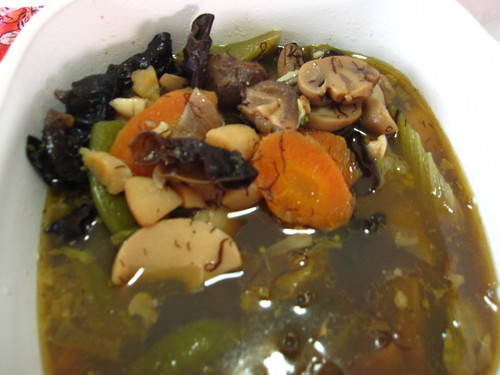
Facai fungus in a vegetarian dish often seen during Chinese new Year.

Facai, a fungus which looks like hair and which is traditionally eaten during Chinese new year because 'facai' sounds like 'gaining prosperity' (發財), is actually a type of toxic bacteria called nostoc flagelliforme.

Over-harvesting has led to China banning the fungus, and most facai today is actually made from starch. One 2009 study in Amyotrophic Lateral Sclerosis found that few samples of facai on sale were actually genuine nostoc flagelliforme, with the genuine ones containing the toxin beta-N-methylamino-L-alanine (BMAA).

BMAA has been implicated in nerve-related diseases such as motor neuron disease or amyotrophic lateral sclerosis, the disease highlighted by the ice bucket challenge; in Alzheimer’s disease as well as in Parkinson’s disease. A 2013 study in PLOS One explains that the body may mistake BMAA for a very similar amino acid that it uses called serine, leading to abnormalities in nerve tissue.

BMAA has definitely caused brain disorders in mice. A 2011 study in Behavioural Brain Research noted that high doses of BMAA injected into adult rats caused "distinct deficits in spatial learning and memory" but it wreaks most of its damage in developing fetuses. An earlier study by the same researchers published in Toxicological Sciences studied adult rats which had been exposed to BMAA as babies. These rats displayed learning impairments as adults, for example in not associating a punishment as a disincentive.

While there seems to be a case for avoiding facai, or rather the BMAA it contains, BMAA is not only found in facai. It can be found in plants, in water, and likely accumulated in the food chain as live seafood eats materials which contain BMAA and are themselves eaten.

Where does that leave the health-conscious consumer? How much BMAA is too much? The research is still scanty and until we know more about whether we should be avoiding BMAA and how we can do it, we can always err on the side of caution through avoiding foods which are known to contain BMAA.