Showing posts with label Road. Show all posts

10 November 2023

Savvy tips for road trips from Kurnia Insurans

Deepavali, also known as the Festival of Lights, marks a long weekend in Singapore and Malaysia, when road trips come to the fore. Ensuring a safe, secure, and splendid trip is paramount, and this is when it’s imperative to remember that the journey is just as crucial as the destination itself, says Kurnia Insurans.

Some tips from Kurnia Insurans include:


The pre-trip vehicle check-up

● Ensure that your brakes and battery are not just functioning, but in good condition.

● Double-check the condition of your tyres and make sure all your lights are shining brightly.

● Before embarking on extensive journeys, a professional vehicle inspection can set the stage for a flawless trip.

Stay vigilant and take breaks

● Strategically plan ample rest stops, particularly for lengthy drives, to ward off drowsiness.

● Stock up on water and wholesome snacks, keeping energy levels high and attention focused.

● Engage with passengers, allowing them to play a role in navigation, or use audio to create a harmonious journey.

Mind the weather

● Get the latest weather updates, and be monsoon-ready in particular.

● In torrential downpours, reduce your speed, increase your following distance, and use your headlights for additional illumination.

● For those sunny spells, sunglasses are your best friend, protecting your eyes while ensuring clear and comfortable vision.

Safe driving practices

● Channel your attention to the road; resist the urge to attend to your mobile phone. If you do have to do so, check it at a safe stop.

● Be vigilant about traffic signs, signals, and road markings.

● Stick to your lane and be mindful of your speed, ensuring a smooth flow and reducing the risk of accidents.

Your emergency kit

● Ensure your emergency kit is complete with first aid essentials, a reliable flashlight, and indispensable tools.

● In an emergency, maintain your composure, prioritise your safety, and immediately reach out to your 24x7 insurance helpline.

● Familiarise yourself with the basic workings of your vehicle; knowing how to change a tyre and jumpstart your car.

By prioritising road vigilance and robust safety measures, you pave the way for a successful journey, Kurnia Insurans said. The company offers auto365 Comprehensive Plus, an economical car insurance option for Malaysian road explorers. The package includes comprehensive coverage, towing aid for accidents and breakdowns, a flood relief allowance, and special care for car keys and window snatch thefts. There is a three-year warranty on workmanship repairs.

7 June 2017

PwC publishes guide on One Belt One Road initiative

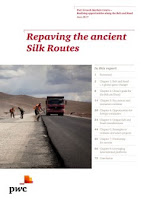
Source: PwC. Cover for the Repaving the ancient Silk Routes report.
Source: PwC.
PwC’s Growth Markets Centre has launched Repaving the ancient Silk Routes. The report covers China’s One Belt and One Road (B&R) initiative and guides foreign companies on participating in B&R projects.

B&R was announced by China’s President Xi Jinping in 2013 to rebuild the ancient Silk Route that connects China to Europe via Central Asia in collaboration with foreign companies. According to PwC, B&R has gained significant economic momentum since. Activities are mainly focused along six economic corridors, which cut through more than 65 developing countries, and are expected to be a catalyst for infrastructure development that will have an impact on a population of about 4.4 billion and one third of the global economy. Kept broad and inclusive by the Chinese government, the B&R ecosystem now include railways, airports, and even a maritime route. The initiative goes beyond just geopolitics and embraces the promotion of commercial interests, trade, culture and social integration, PwC said.

Legitimately gaining knowledge through foreign partnerships can help Chinese enterprises further develop expertise while enhancing global credibility in the infrastructure sector. For foreign companies, a collaboration with Chinese enterprises on infrastructure projects located in third party countries can open up access to new markets and pave the way for access to the China market too. Many of these foreign companies also possess international experience in large scale projects in complex developing countries, which can be invaluable when trying to decrease operational risks.

PwC has identified some project risks which are unique to B&R projects, particularly from a geopolitical, funding and operational perspective:

Geopolitical risks. These often span across many territories, due to the exposure to changes in political regimes and bilateral relations.

Funding risks. Besides financing sources from China, companies also need to take into consideration that many growth markets along the B&R routes have a varied ability to pay back the loans they need.

Operational risks. Interested companies ought to remain vigilant in operational planning, even as state-owned enterprises from both China and the host countries are starting to gain international experience. This includes identifying gaps in stakeholder experience and the increased complexity of B&R transnational projects – both of which could result in delays or costs overruns. Although the B&R initiative holds rich promise, the risks are sometimes accentuated and unique.

Potential investors should also choose their B&R projects carefully, PwC added:

Commercial viability assessment. Companies ought to develop a robust business case, which should address market supply and demand forces, and also to what extent companies are reliant on incentives provided.

Maturity of the infrastructure ecosystem. Companies also need to evaluate the maturity and future plans of the surrounding infrastructure. This includes whether there is a strong strategic partnership for policy development, multimodal linkages and supporting facilities.

Portfolio fit. Companies also need to balance the valuation of their experience against the exposure of too much of the same risk in the company’s internal portfolio. For example, a company that already has a project in operation in Kazakhstan might need to decide whether it makes sense to add another at this time.

Success factors include:

Contingency strategies. For B&R projects which typically attract geopolitical attention and straddle multiple territories across a long period of time – it is critical for companies to plan for disruptions in advance. In the course of contract negotiations, any potential unresolved issues should be accounted for in contingency clauses with a clear exit strategy laid out at the outset.

Alignment with local governments: It is also important to build strong and respected relationships with local authorities, because government influence is widened in many B&R countries, where infrastructure development is critical and regulatory systems are still developing.

Trusted local partnerships. Partnerships with companies having prior experience of working with the local government are critical in B&R projects. The right partners will understand the sequence of events, unspoken sensitivities and key actors in the process to facilitate project progress. This is important in many growth markets which B&R projects operate in, where companies need to deal with the fluidity of business.

Risk sharing. A risk-sharing approach will build trust amongst stakeholders, ultimately lowering cost for all stakeholders. Companies can consider ways to share risk, such as waiving the need for performance bonds, carrying the cost of some equipment in their books, or developing a revenue-sharing mechanism.

David Wijeratne, PwC’s Growth Markets Centre Leader, says: “The B&R initiative has already seen many success stories of partnerships that have resulted in mutual benefits, leading to an increase in demand for foreign capabilities and contributions to B&R projects, which reaffirms that there are commercial opportunities across the infrastructure value chain.

“However, companies need to fully understand the potential risks of infrastructure projects, especially those unique to B&R in order to prepare for success. Acknowledging that B&R projects are different, companies can enhance their chances of success by taking proactive actions. This includes establishing contingency plans to manage short term disruptions, while planning for lengthy project lifespans, in addition to building strong and respected relationships with local authorities in order to effectively navigate the political and local bureaucratic scene.

“The B&R initiative is a vast and ambitious undertaking, possibly the largest transcontinental infrastructure programme the world has known – this is really only just beginning.”

Interested?

Download Repaving the ancient Silk Routes


posted from Bloggeroid

13 March 2017

Bosch calls for more vehicles in SEA to be equipped with safety features

 Road traffic fatalities in ASEAN member countries estimated at 117,000 per year, with more than half attributed to motorcycles 
 Increasing number of countries and territories such as Japan, Taiwan, and India are mandating motorcycle antilock braking systems (ABS) for new vehicles 
 Malaysia is the first and only ASEAN member country to mandate all new cars to be equipped with electronic stability control (ESC) from 2018 onwards


Bosch believes that more can be done to improve road safety in Southeast Asia. Each year, there are approximately 63,000 reported road traffic deaths in the ASEAN member countries, although the World Health Organization believes that the actual number lies at around 117,000 per year due either to inaccurate data or undocumented accidents. While Singapore has one of the fewest traffic-related deaths worldwide per capita, Thailand has one of the highest rates.

“We need to find sustainable solutions for a problem that is the leading death cause among young people in the region, taking the lives of thousands of citizens, and costing the governments a tremendous amount of money, every year,” said Martin Hayes, President of Bosch in Southeast Asia in a keynote address at the EU-ASEAN Business Summit in Manila, the Philippines."The loss of lives, and cost of damage to property and safety reputation pose an extensive threat to the social and economic progress of the ASEAN member countries.

“For Bosch, every traffic-related death is one too many. As an automotive supplier, we believe that the most substantial impact the auto industry can make is to produce safer vehicles equipped with modern safety systems.”

The world’s first antilock braking system (ABS) for passenger cars, the technology that prevents a car’s wheels from locking up during an emergency braking scenario, dates back to 1978. This innovation allows the driver to maintain steering control and in most situations, shortens the braking distance without skidding. In 1995, Bosch improved the technology by developing the world’s first electronic stability program (also known as ESP or ESC) which is today equipped in 64% of all new cars worldwide. In Europe alone, ESP has saved more than 8,500 lives and prevented more than a quarter of a million traffic accidents to date.

Southeast Asia, the third-largest two-wheeler market in the world, also sees motorcycle riders constitute more than half of all road traffic fatalities. Every year, 21,000 fatal motorcycle accidents occur in Indonesia and Thailand alone. A key technology to enhance motorcycle safety is ABS, which enables hard braking without the wheels locking, so that the vehicle remains stable and the rider stays upright. Introduced in 1995, the motorcycle ABS significantly reduces the risk of falling, shortens the stopping distance, and therefore the risk of collision. Bosch research estimates that if every powered two-wheeler was equipped with ABS, around one in four of all motorcycle accidents in the ASEAN countries could be prevented. Worldwide, an increasing number of countries and territories such as Japan, Taiwan, and India are mandating motorcycle ABS for new vehicles. 

“It is the governments that play a crucial role in the adoption of safety systems. Legislative measures to mandate safety features have been introduced in nearly all developed and many developing countries all over the world,” said Hayes. "Countries that have yet to make safety features such as ABS, ESC, and Motorcycle ABS mandatory – neither in passenger cars nor in motorcycles – can be found in Africa, some parts of South America, the Middle East, and most of Southeast Asia. To date, Malaysia is the first and only ASEAN member country to mandate all new cars to be equipped with ESC from 2018 onwards."

Vehicles with high safety standards, equipped with airbags, ESC, or ABS for instance, do not only protect passengers, they also help local manufacturers realise export opportunities into major automotive markets. “It is our view that governments should have a strong interest in promoting these safety features if they want to develop ASEAN into a world-class automotive manufacturing hub that is globally competitive, and can contribute positively to the economic and social progress of the region,” said Hayes.

“The improvement of road safety is not something that will happen overnight. We understand that it’s a gradual process that needs the involvement of various stakeholders including governments, the scientific community, NGOs, and the industry.”

In November 2015, ASEAN transport ministers adopted the ASEAN Regional Road Safety Strategy which provides a framework of strategies and actions to halve the number of road fatalities in the region by 2020. The strategy also received the commitment of the economic ministers of ASEAN and the ASEAN Economic Community Council in February 2017, who will also be working towards improving road safety policies and programmes, and harmonising the region’s safety regulations in line with UN regulations. The UN General Assembly has proclaimed the period from 2011 to 2020 as the Decade of Action for Road Safety with the goal to stabilise and reduce the level of road traffic fatalities around the world. 

8 February 2017

Road quality to improve in Laos

The Lao Ministry of Finance and the World Bank have signed a US$25 million agreement to further strengthen road maintenance systems and improve road connectivity throughout the country.  Lao PDR is one of the ASEAN countries most vulnerable to floods, droughts and storms with local transport infrastructure particularly exposed due to the climate-related increase in the frequency and intensity of natural disasters.

“Our partnership with the World Bank on road maintenance has resulted in better and safer roads. With this new agreement, people in rural areas will benefit from more reliable roads throughout the year,” said Dr Bounchanh Sinthavong, Minister of Public Works and Transport.

The new Lao PDR Road Sector II Project is part of the country’s national programme to build climate-resilient roads and infrastructure. The project will support road maintenance work in six provinces that are highly vulnerable to flash floods, landslides, and other natural disasters - Phongsaly, Houaphan, Oudomxay, Xiengkhouang, Xayabouly and Bolikhamxay. This will provide year-round access to basic services, schools, and markets for around 1.6 million people, the World Bank said.

Said Ulrich Zachau, World Bank Country Director for Southeast Asia, “Better roads will help prevent disaster-related road closures, ensuring better connectivity and access to income opportunities and basic social services.”

The new financing comes from the International Development Association, the World Bank’s fund for developing nations. The programme is also supported by funds from the Government of Lao PDR and the Nordic Development Fund. The World Bank has been supporting roads in Lao PDR since the 1990s.

Interested?

Read the WorkSmart Asia blog post about what the World Bank is doing for roads in Lebanon

7 February 2017

World Bank Group sets aside US$200 million for upgrading Lebanon's roads

The World Bank Group has earmarked US$200 million for upgrading Lebanon’s road network, seen as a risk to public safety as well as an impediment to urban-rural development and equitable economic growth. The funds will be used to repair around 500 kilometres of roads in the first phase of a broader government plan to revamp the country’s crumbling road sector.

The Roads and Employment Project includes a US$45 million grant from the Bank-administered Concessional Financing Facility (CFF). It is the first time Lebanon has received funding from the CFF, a facility created in 2016 to support middle-income countries that have in the past been recipients of regular World Bank financing, but are currently experiencing unusual social and economic duress.

“This is to help Lebanon continue to offer basic services both to its citizens and to Syrian refugees in the country,” said Ferid Belhaj, the World Bank’s Director for the Middle East. “By hosting refugees, Lebanon is offering the international community a global public good. International financial support needs to increase to match its generosity.”

The presence of more than 1.5 million Syrian refugees has put unprecedented pressure on Lebanon’s already strained infrastructure. It has also fuelled social tensions, and changed the labour market by increasing the workforce by 35%. The road repair works would help provide more low-skilled jobs.

“Historically, the construction sector has been a primary source of income for poorer Lebanese and Syrians,” stated Ziad El Nakat, Senior World Bank Transport Specialist. “And it continues to play this role.”

The Roads and Employment Project would “also improve the quality and safety of the road network, particularly in less developed regions of the country, improving connectivity, reducing the cost of transport, and helping local economies develop through better access to markets and services,” he said.

Lebanon has one the highest per capita rates of road accidents in the world. The World Health Organization estimated the total number of road traffic fatalities in 2015 at 1,088, and their associated economic cost at between 3% and 5% of GDP.

The importance of regaining public confidence by investing in the road sector is highlighted in a five-year, US$510 million government plan. The Bank-financed project is aligned with this, and will help the government mobilise other international development partners to provide additional funding.

The first phase of the plan has four key objectives:

i) the rehabilitation and maintenance of existing road networks;

ii) the improvement of road safety systems;

iii) the purchase of equipment for emergency roadworks; and

iv) the capacity building to improve management and efficiency in the sector.

The project will include a survey of up to 6,000 kilometres of primary, secondary, and tertiary roads in all Lebanese regions to identify those in most need for rehabilitation.

The non-grant US$155 million loan portion of the package is repayable over 32.5 years, including a seven-year grace period. With this new package, the World Bank’s current commitment to Lebanon in grants, loans, and other concessional financing rises to US$1.3 billion.

16 October 2015

Mobile phone use affects road safety

The World Health Organisation (WHO) has identified a "marked increase" around the world in the use of mobile phones by drivers that is becoming a growing concern for road safety.

The distraction caused by mobile phones can impair driving performance, the WHO said, listing slower reaction times (notably braking reaction time, but also reaction to traffic signals), impaired ability to keep in the correct lane, and shorter following distances as some of the dangers.

Text messaging, popular with younger drivers, also results in "considerably reduced driving performance", the WHO said.

Drivers using a mobile phone are approximately four times more likely to be involved in a crash than when a driver does not use a phone. Worse, hands-free phones are not much safer than handheld phone sets.

While there is little concrete evidence on how to reduce mobile phone use while driving, the WHO recommends that governments be proactive. Actions that can be taken include:

Adopting legislative measures,
Launching public awareness campaigns, and
Regularly collecting data on distracted driving to better understand the nature of this problem.

posted from Bloggeroid

21 September 2015

Globebill to set up payment and bank card settlement system in KSA

Worldwide online payment provider Globebill has signed a bank card settlement cooperation agreement in Saudi Arabia as part of its drive to set up cross-border trade settlement facilities in countries along "One Belt and One Road" concept initiated by China.

Globebill will set up a payment and bank card settlement system in Saudi Arabia for issuing credit cards to individuals and enterprises, ensuring that the trade between China and Saudi Arabia can be paid and settled through Globebill's platform. Both sides have further agreed to jointly promote the implementation of Globebill's payment and settlement service and issuance of personal and corporate credit cards in the entire Middle East and North Africa region.

Globebill is among the first batch of enterprises to provide such a third party payment platform. The company has an Internet payment license and a bank card acceptance license from the People's Bank of China, and was among the first cross-border e-commerce and foreign exchange payment pilot enterprises approved by Visa QSP and the China's State Administration of Foreign Exchange. Globebill mainly provides cross-border payment and financial services, establishing a financial channel for merchants and global trade.

According to Globebill, China is KSA's second-largest trading partner.

14 August 2015

DHL Global Forwarding rolls out pan-Asian road freight network

DHL Global Forwarding, a provider of air, sea and road freight services in Europe and Asia, has rolled out an integrated road freight network that links five key Asian cities - Singapore, Penang, Bangkok, Hanoi and Shenzhen. The new service taps the acceleration of road freight growth in Asia Pacific which is forecast at a CAGR of 8.3% from 2014 to 2019 and expected to drive the sector to a value of US$822 billion by the end of 2019*.

Source: DHL.

Delivered under DHL AsiaConnect's Less-than-Truckload (LTL) service, the interconnecting five-city service offers a seamless interconnecting delivery service with improved time and cost efficiencies and assures a consistent level of service quality regardless of the destination. DHL AsiaConnect was launched in 2011 connecting Singapore, Malaysia and Thailand and now links to the existing Vietnam-China connection.

Road freight offers a viable alternative to other transportation modes, providing a more cost-effective option than air freight as well as faster shipment than sea freight. For instance, the transit time for ocean freight between Shenzhen and Bangkok takes around 13 days while the road freight option only takes five days. In comparison, air freight takes a shorter transit time of four days but will cost significantly more. There are daily departures from five cities and a sample of the transit time is as follows: 

Singapore to Penang: One day
Bangkok to Hanoi: Three days
Shenzhen to Hanoi: Two days
Shenzhen to Bangkok: Five days
Penang to Shenzhen: Six days

The five-city interconnecting road freight network comes at a time when China's One Belt, One Road2 initiative is taking shape and expected to strengthen cross-border economic ties in markets between Europe and Asia. Specifically, the land-based Silk Road Economic Belt aims to enhance economic cohesiveness through infrastructure and wider trade links across the markets between Europe and Asia while the 21st Century Maritime Silk Road is oriented towards ASEAN, putting DHL's integrated five-city road freight network in good stead to tap the growth potential of the One Belt, One Road strategy.

"DHL's integrated road freight network touches five crucial Asian markets - Singapore, Malaysia, Thailand, Vietnam and China - which are expected to play prominent roles in China's One Belt, One Road and other initiatives in the region such as the ASEAN Economic Community," said Kelvin Leung, CEO, DHL Global Forwarding Asia Pacific. 

"Across the region, the total GDP of all 10 ASEAN countries combined was US$2.4 trillion3 in 2013 while China's GDP alone was US$10.3 trillion4 in 2014. ASEAN's global trade hit US$2.51 trillion3 in 2013 and China consistently appears among the top five trade partners for ASEAN members5. We are confident that intra-Asia trade will continue to grow and our road freight network stands ready to support the potential trade expansion from these initiatives." 

DHL's integrated road freight network will be advantageous for upcoming economic initiatives promoting trade and integration, having laid the groundwork that already links key Asian markets. For example, the ASEAN Economic Community (AEC)6 which is set to be established by the end of 2015, aims to create a single ASEAN market and production base facilitated by bilateral trade agreements and financial policies. The blueprint encompasses cross-border cooperation in various focus areas including capacity building, enhanced infrastructure and communication connectivity, and the development of electronic transactions. Brought to fruition, AEC will lead to a thriving ASEAN region amid the free movement of goods, services, investment and skilled labour.

DHL's multimodal network includes air, rail, road and sea, is positioned to support trade expansions across different regions. DHL's road freight network features GPS-equipped trucks to ensure customer goods are monitored for safety and tracked every step of the way, providing complete supply chain visibility. Road vehicles are also armed with anti-hijacking tools and are constantly in touch 24x7 with DHL's Command Center, which will be alerted immediately should the need arise. 

23 July 2015

One Belt, One Road initiative has many advantages for China, says Moody's

The One Belt, One Road initiative (also called Belt and Road, 一带一路) will promote China’s regional integration, says Moody's Investor's Service in a sector report titled One Belt, One Road Is Credit Positive, Despite Rising Overseas Risk Exposure dated 20 July 2015. The company says the initiative as it will improve intra-regional commercial and financial links and boost renminbi internationalisation.

Within China, the report's authors say the initiative will channel investment into China’s underdeveloped inland and western provinces, stabilising widening regional disparities. Financial institutions with regional presence or experience in intra-regional financing will benefit from the One Belt, One Road initiative, as will large, financially strong Chinese corporates.

Geopolitical considerations and the large infrastructure financing requirement are risks to implementation, however.

Interested?

Access the One Belt, One Road Is Credit Positive, Despite Rising Overseas Risk Exposure report (subscription required)
Read the TechTrade Asia blog post about The Media Foundation's plans to leverage on One Belt, One Road

30 October 2014

Singaporeans can hail a cab with Hailo

Hailo, the world’s highest-rated taxi app, is operational in Singapore as of October 29. The app has 23,000 five-star reviews in the App Store and Google Play, which the company points out is more than any other taxi app. Hailo says a Hailo 'hail' is accepted around the world every two seconds from Hailo’s global network of over 60,000 drivers and more than 1.4 million passengers. 

Source: Hailo. From left: Benny Lim, Managing Director, SMRT Road Holdings; Ron Zeghibe, Co-Founder & Executive Chairman, Hailo Global, and Yu Hsiang Wong, General Manager, Hailo Singapore.


The Hailo passenger app helps people get a cab with just two taps on their smartphone. Mobile payments eliminate the need to carry cash, and trip receipts are sent instantly by email. Singapore’s taxi drivers can use the Hailo driver app to complete more jobs in less time, earning up to 30% more on every shift they work.

The news follows the 
announcement of Hailo’s partnership with SMRT Road Holdings. In agreeing to work together, Hailo and SMRT share a common vision to create an inclusive platform that provides equal access and benefits for all of Singapore’s taxi companies and their drivers. Hailo Singapore confirmed today that fleet operator Prime Taxi has joined with SMRT to support the new platform.

Hailo is available to passengers as a free download from the App Store and Google Play. New customers can enter promo code HELLOSING to receive a free S$10 credit on their first ride this week.

Taxi drivers can register via the Hailo website or email singapore.drivers@hailocab.com. The new Hailo Driver Office is located at 46 Kim Yan Road.


Launched in November 2011, Hailo is available in Asia in Osaka as well as Singapore. Hailo has carried over twenty million passengers and sees annualised sales of well over US$100 million.

Read the blog post about the partnership here.